


Systematic Review and Meta-Analysis on Colorectal Anastomotic Techniques
- PMID: 35548666
- PMCID: PMC9081039
- DOI: 10.2147/TCRM.S335102
Systematic Review and Meta-Analysis on Colorectal Anastomotic Techniques
Abstract
Purpose: Anastomosis creation after resective gastrointestinal surgery is a crucial task. The present review examines the techniques and implants currently available for anastomosis creation and analyses to which extent they already address our clinical needs, with a special focus on their potential to enable further trauma minimization in visceral surgery.
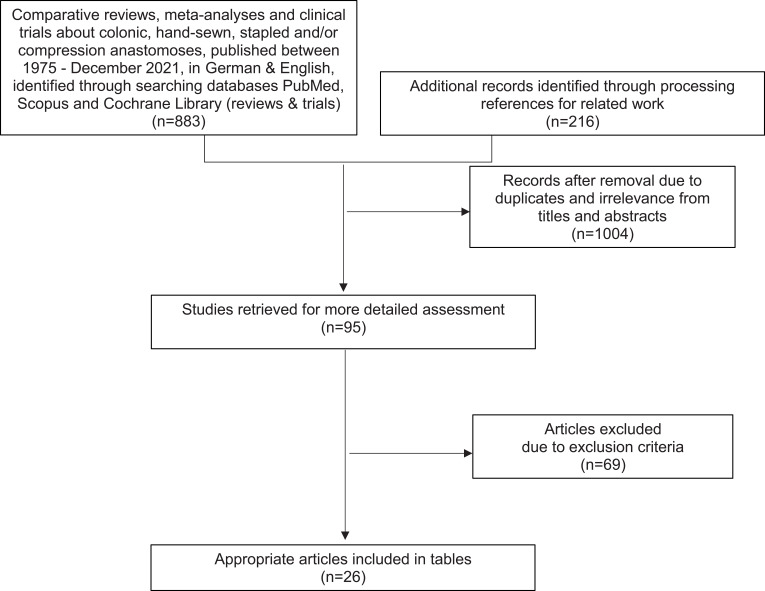
Methods: A multi-database research was conducted in MEDLINE, Scopus, and Cochrane Library. Comparative controlled and uncontrolled clinical trials dealing with anastomosis creation techniques in the intestinal tract in both German and English were included and statistically significant differences in postoperative complication incidences were assessed using the RevMan5.4 Review Manager (Cochrane Collaboration, Oxford, UK).
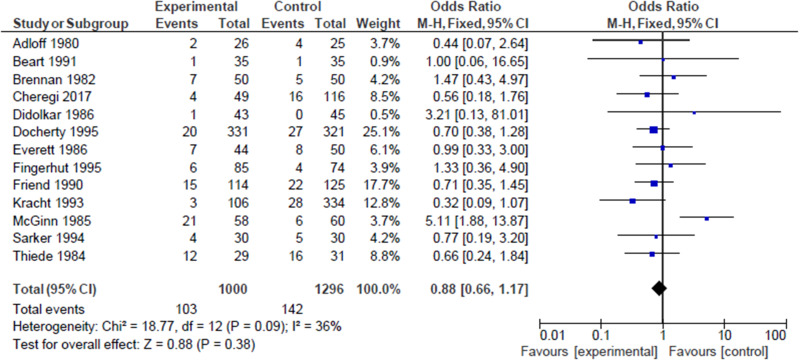
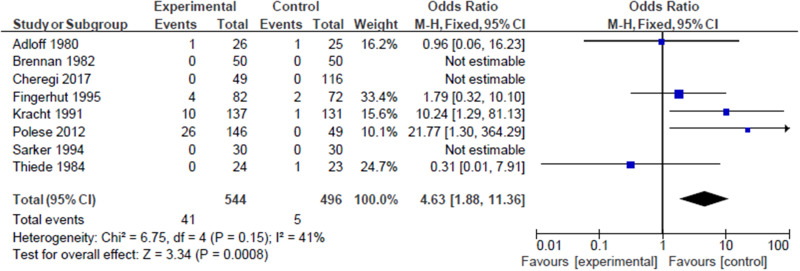
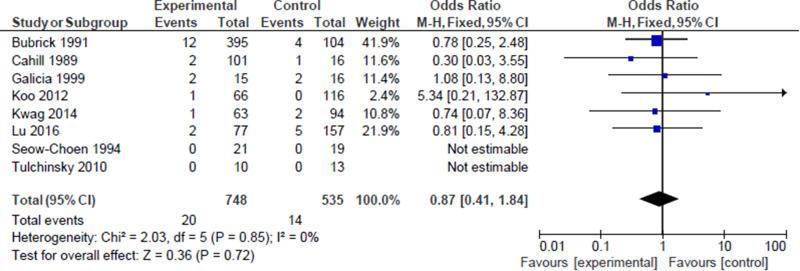
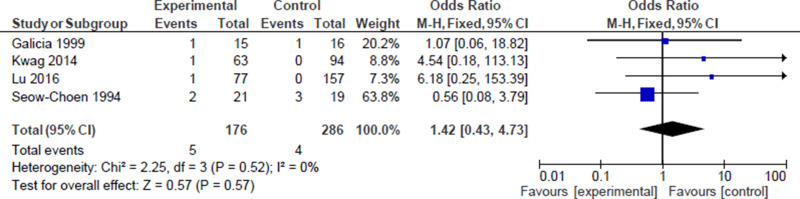
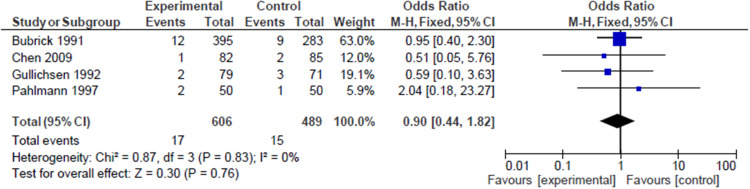
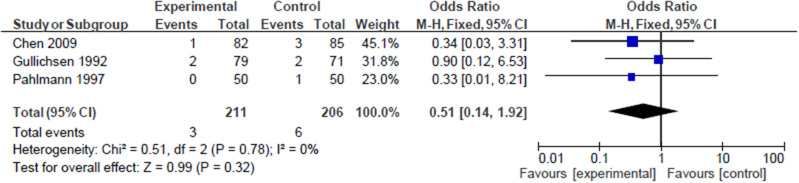
Results: All methods and implant types were analyzed and compared with respect to four dimensions, assessing the techniques' current performances and further potentials for surgical trauma reduction. Postoperative outcome measures, such as leakage, stenosis, reoperation and mortality rates, as well as the tendency to cause bleeding, wound infections, abscesses, anastomotic hemorrhages, pulmonary embolisms, and fistulas were assessed, revealing the only statistically significant superiority of hand-suture over stapling anastomoses with respect to the occurrence of obstructions.
Conclusion: Based on the overall complication rates, it is concluded that none of the anastomosis systems addresses the demands of operative trauma minimization sufficiently yet. Major problems are furthermore either low standardization potentials due to dependence on the surgeons' levels of experience, high force application requirements for the actual anastomosis creation, or large and rigid device designs interfering with flexibility demands and size restrictions of the body's natural access routes. There is still a need for innovative technologies, especially with regard to enabling incisionless interventions.
Keywords: anastomotic technique; ideal anastomosis; intraoperative trauma; postoperative complications.
© 2022 Steger et al.
Conflict of interest statement
Prof. Wilhelm, Prof. Mela, Dr. Eblenkamp, Dr. Jell, Mr. Ostler, Ms. Ficht and Ms. Steger report grants from DFG, German Research Foundation, during the conduct of the study. In addition, Prof. Wilhelm, Prof. Mela, Dr. Eblenkamp, Mr. Ostler, Ms. Ficht and Ms. Steger have two patents pending; 1) Clamping device and applicator for joining flexible tubular walls (International publication number: WO 2022/049196 A1) and 2) Implant and implant applicator for surgical anastomosis (International publication number: WO2022/049197 A1). The authors report no other conflicts of interest in this work.
Figures
References
-
- Covidien Medtronic: covidien Medtronic signia stapling system. Online verfügbar unter: https://www.medtronic.com/covidien/en-us/products/surgical-stapling/sign.... Accessed September 4, 2020. zuletzt geprüft am 21.02.2022.
-
- Johnson & Johnson: ECHELON CIRCULAR™ Powered Stapler. Online verfügbar unter: https://www.jnjmedicaldevices.com/en-US/product/echelon-circular-powered.... Accessed September 4, 2020.zuletzt geprüft am 04. 09.2020.
Publication types
LinkOut - more resources
Full Text Sources
