Review
. 2018 Oct 1;8(59):33828-33844.
doi: 10.1039/c8ra06423g. eCollection 2018 Sep 28.

Arylhydrazines: novel and versatile electrophilic partners in cross-coupling reactions

Affiliations
Review

Arylhydrazines: novel and versatile electrophilic partners in cross-coupling reactions

Akram Hosseinian et al. RSC Adv. .

Abstract

Arylhydrazines are extremely valuable compounds in organic chemistry that are widely used for the synthesis of a variety of biologically active molecules such as indoles, indazoles, pyrazoles, aryltriazoles, β-lactams and quinazolines. These compounds have also been widely utilized as arylation agents in oxidative cross-coupling reactions. In this review, we will highlight the most important explorations and developments in the carbon-carbon and carbon-heteroatom (nitrogen, phosphorus, sulfur, and selenium) cross-coupling of arylhydrazines. The literature has been surveyed from 2001 to June 2018.


Conflict of interest statement

There are no conflicts of interest to declare.

Figures
Scheme 1
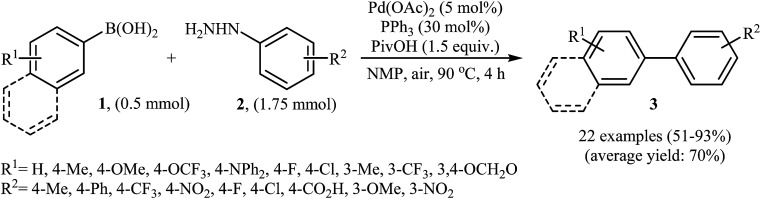
Scheme 1. Direct denitrogenative cross-coupling of arylboronic acids 1 with arylhydrazines 2.

Scheme 2
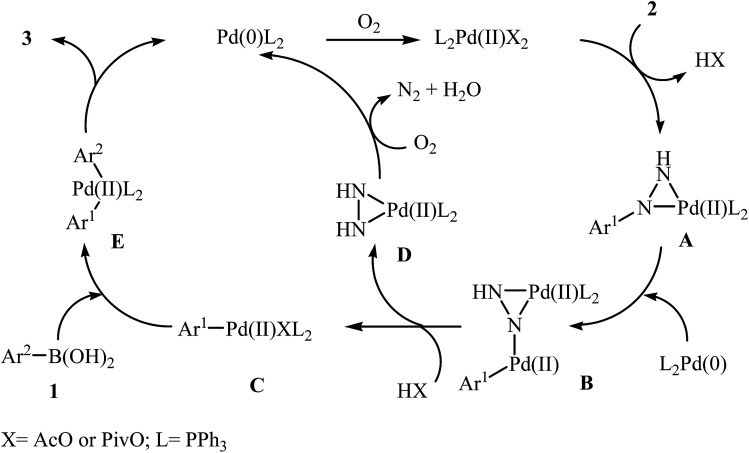
Scheme 2. Mechanism that accounts for the formation of biaryls 3.

Scheme 3
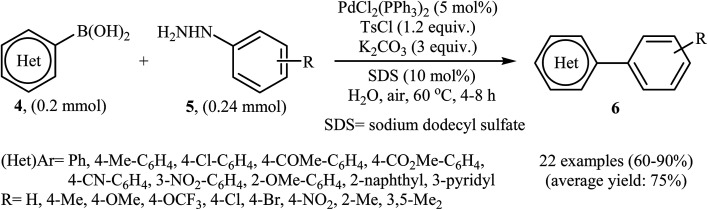
Scheme 3. Pd-catalyzed Suzuki cross-coupling of (het)aryl boronic acids 4 with arylhydrazines 5 in water.
Scheme 4
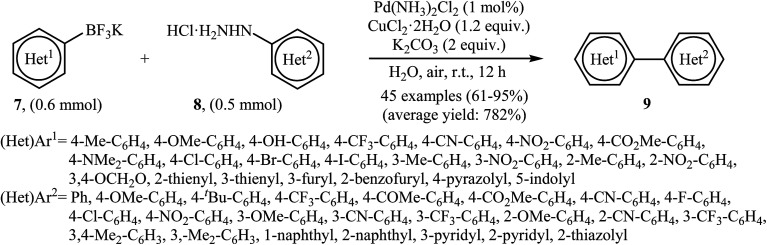
Scheme 4. Wang's synthesis of biaryls 9.
Scheme 5
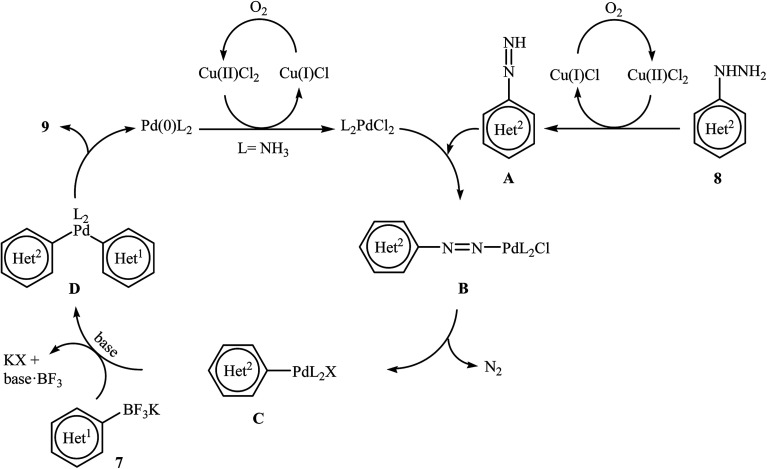
Scheme 5. Plausible mechanism for the formation of biaryls 9.
Scheme 6
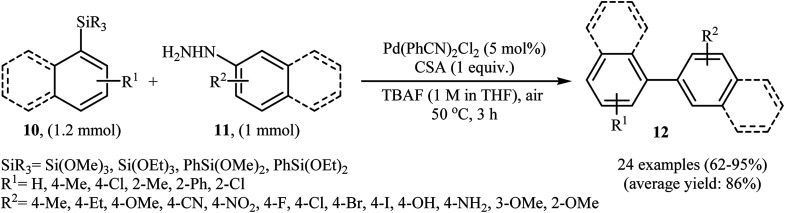
Scheme 6. Denitrogenative Hiyama cross-coupling of aryl silanes 10 with arylhydrazines 11 developed by Zhang.
Scheme 7
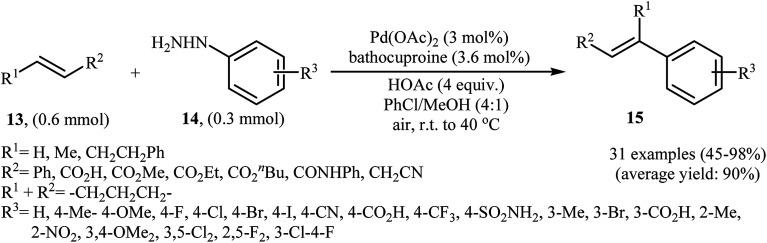
Scheme 7. Pd(ii)-catalyzed C–C bond formation of alkynes 13 with arylhydrazines 14 reported by Loh.
Scheme 8
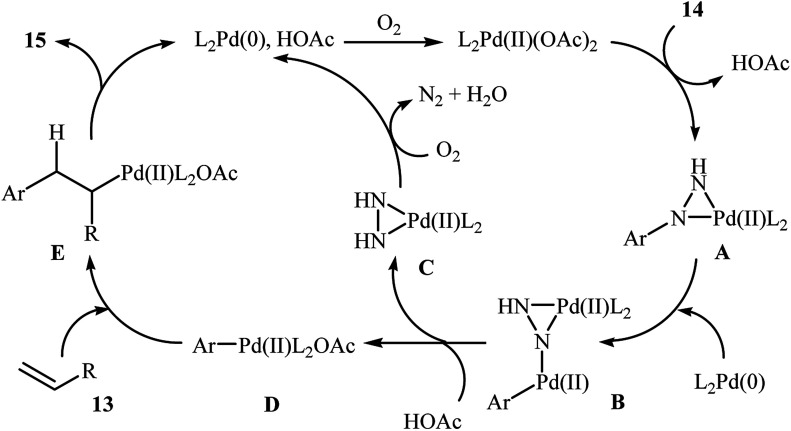
Scheme 8. Mechanistic proposal for the reaction in Scheme 7.
Scheme 9
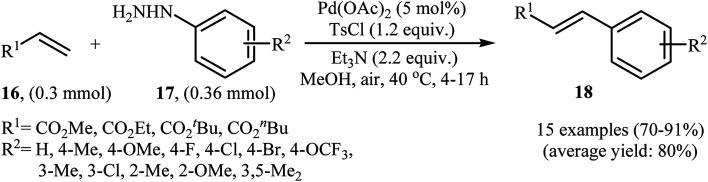
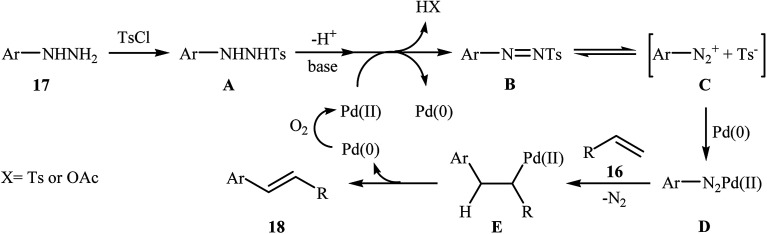
Scheme 9. Synthesis of arylalkenes 18 through Pd(ii)-catalyzed coupling of terminal alkynes 16 with arylhydrazines 17.
Scheme 10
Scheme 10. Mechanistic proposal for the formation of arylalkenes 18.
Scheme 11
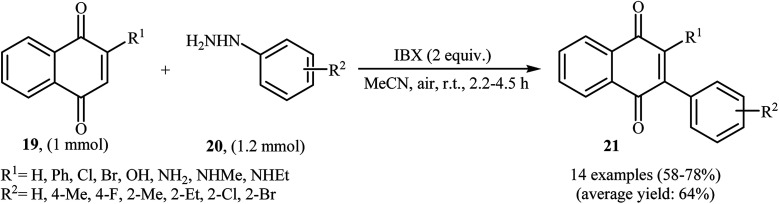
Scheme 11. Akamanchi's synthesis of 3-arylated naphthoquinones 21.
Scheme 12
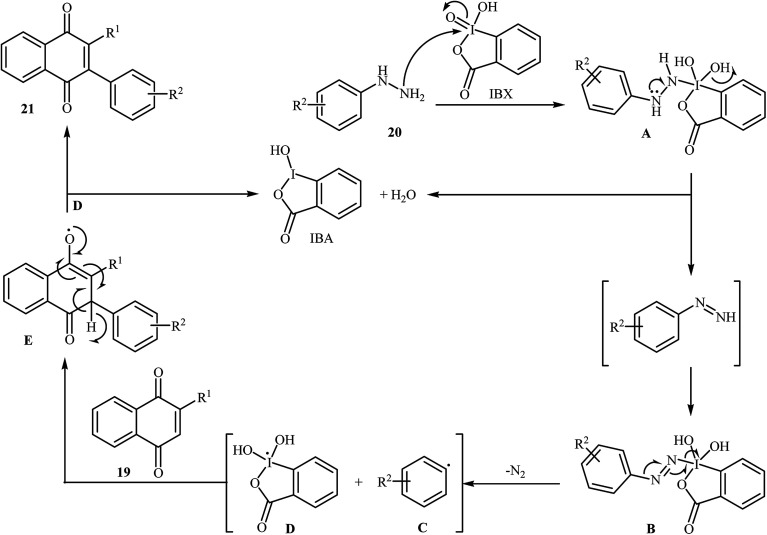
Scheme 12. Mechanistic explanation of the synthesis of 3-arylated naphthoquinones 21.
Scheme 13
Scheme 13. Palladium-catalyzed Sonogashira reaction of aromatic terminal alkynes 22 with functionalized arylhydrazines 23.
Scheme 14
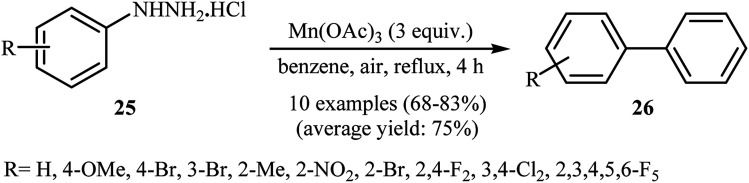
Scheme 14. Mn(OAc)3-mediated oxidative coupling of benzene with arylhydrazines 25.
Scheme 15
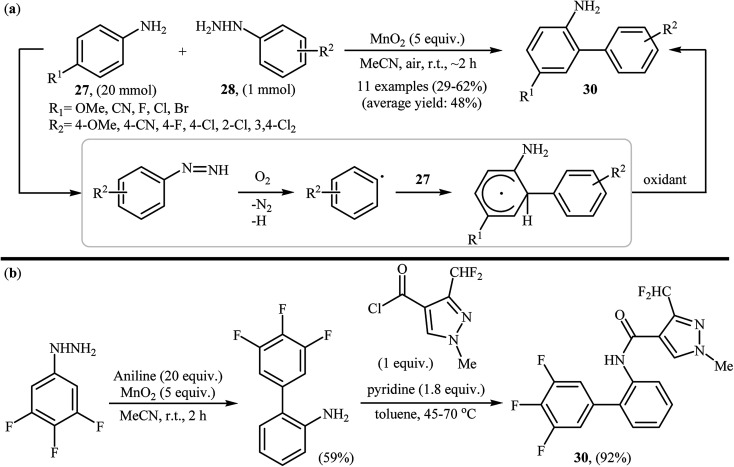
Scheme 15. (a) MnO2-mediated regioselective C2-arylation of anilines 27 with arylhydrazines 28; (b) Heinrich's synthesis of Xemium 30.
Scheme 16
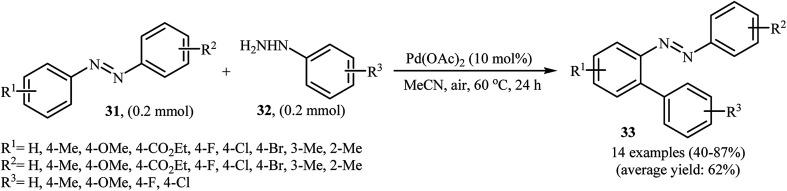
Scheme 16. Pd-catalyzed regioselective 2-arylation of azoarenes 31 with arylhydrazines 32.
Scheme 17
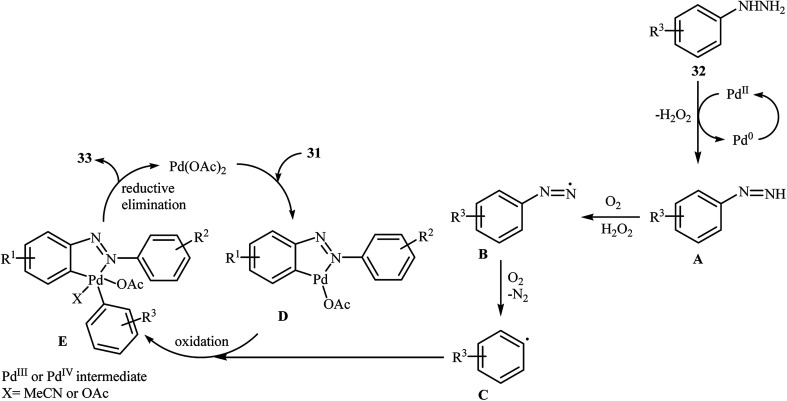
Scheme 17. Mechanistic proposal for the reaction in Scheme 16.
Scheme 18
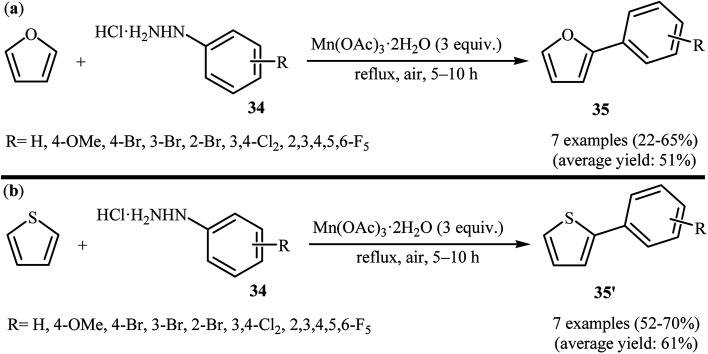
Scheme 18. Demir's synthesis of (a) 2-arylfurans 35; (b) 2-arylthiophenes 35′.
Scheme 19
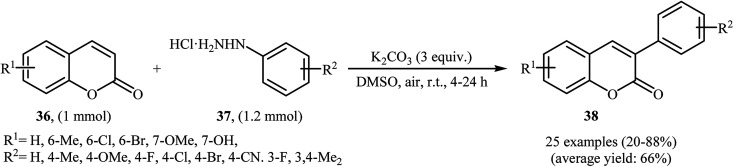
Scheme 19. K2CO3-mediated regioselective α-arylation of coumarins 36 with arylhydrazines 37.
Scheme 20
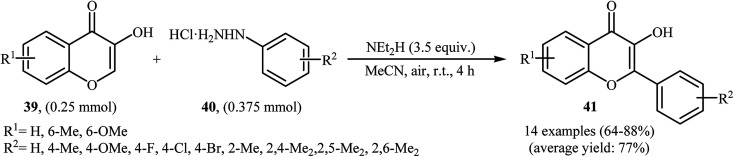
Scheme 20. Base-mediated direct C-arylation of 3-hydroxychromones 39 with arylhydrazines 40.
Scheme 21
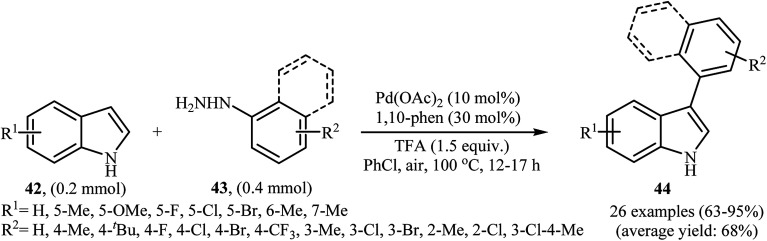
Scheme 21. Pd-catalyzed regioselective C3-arylation of 1H-indoles 42 with arylhydrazines 43.
Scheme 22
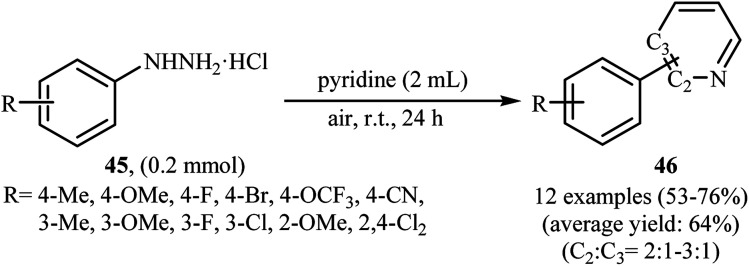
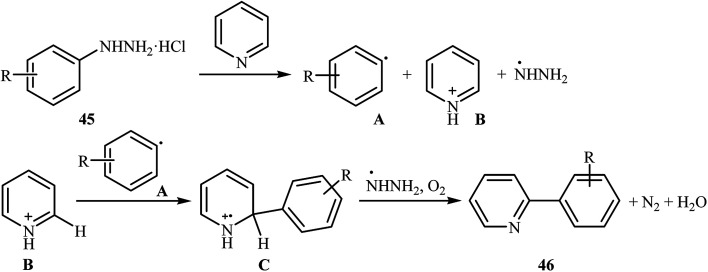
Scheme 22. Transition-metal free arylation of pyridine with arylhydrazine hydrochlorides 45.
Scheme 23
Scheme 23. Mechanistic proposal for the reaction in Scheme 22.
Scheme 24
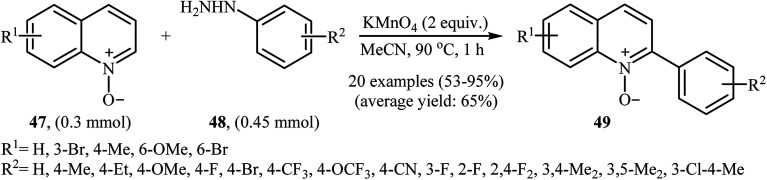
Scheme 24. Direct C2-arylation of quinoline N-oxides 47 with arylhydrazines 48.
Scheme 25
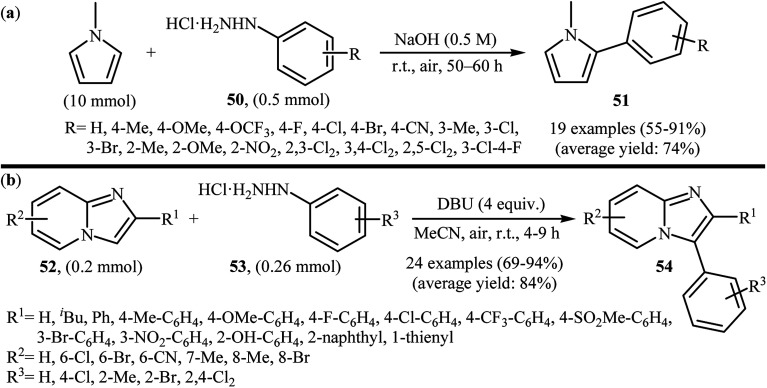
Scheme 25. (a) Talaz's synthesis of 2-arylated pyrroles 51; (b) Hajra's synthesis of 3-arylated imidazopyridines 54.
Scheme 26
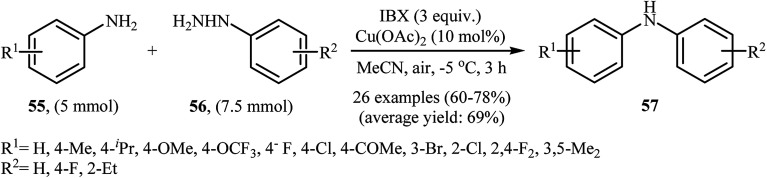
Scheme 26. Synthesis of diarylamines 57 through N-arylation of aromatic amines 55 with arylhydrazines 56.
Scheme 27
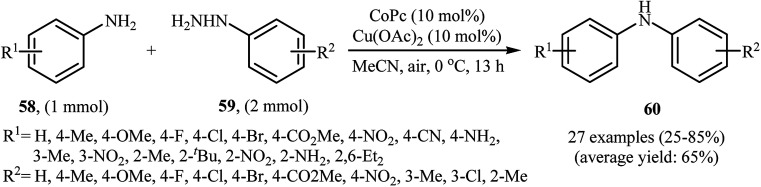
Scheme 27. Co/Cu-catalyzed C–N coupling of anilines 58 with arylhydrazines 59.
Scheme 28
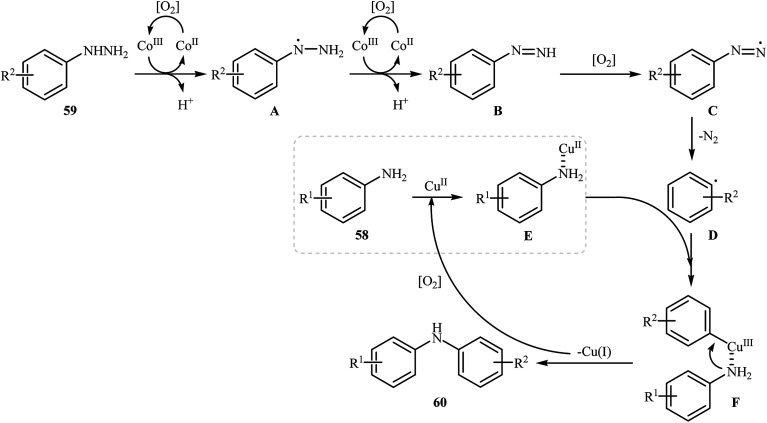
Scheme 28. Mechanistic proposal for the reactions in Scheme 27.
Scheme 29
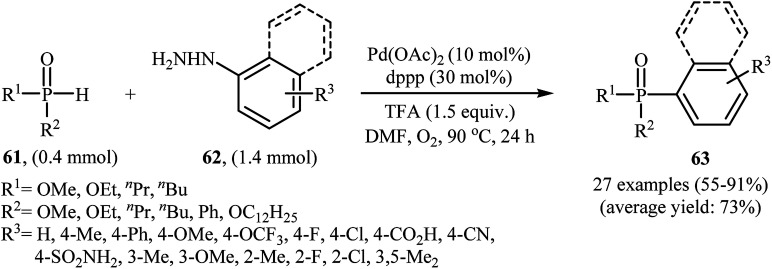
Scheme 29. Pd-catalyzed C–P cross-coupling of P(O)H compounds 61 with arylhydrazines 62 developed by Gao and Yin.
Scheme 30
Scheme 30. Synthesis of unsymmetrical diaryl selenides 66 from diaryl diselenides 64 and arylhydrazines 65 reported by Taniguchi.
Scheme 31
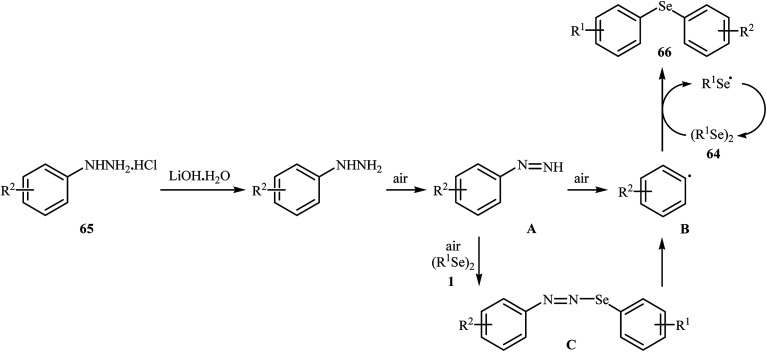
Scheme 31. Mechanism that accounts for the formation of diaryl selenides 66.
Scheme 32
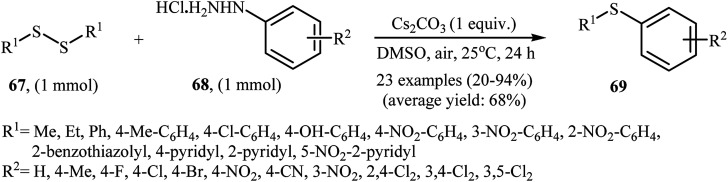
Scheme 32. Synthesis of unsymmetrical thioethers 69via the Cs2CO3-mediated cross-coupling of disulfides 67 with arylhydrazines 68.
Scheme 33
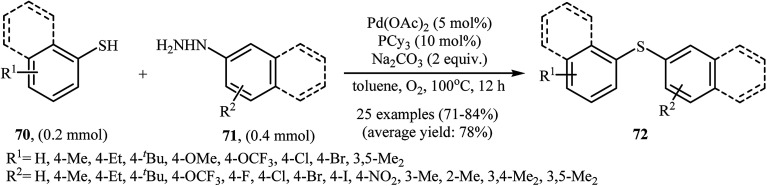
Scheme 33. Pd-catalyzed S-arylation of aromatic thiols 70 with various arylhydrazines 71.
Scheme 34
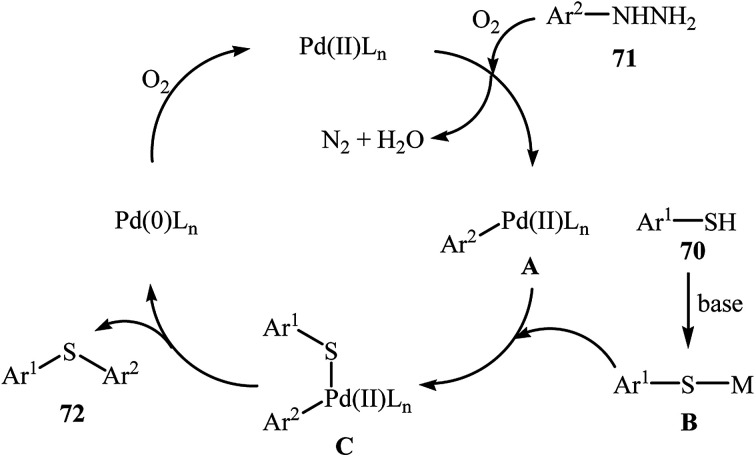
Scheme 34. Mechanistic proposal for the formation of thioethers 72.
None
Akram Hosseinian
None
Robab Mohammadi
None
Sheida Ahmadi
None
Aazam Monfared
None
Zahra Rahmani

References

    1. Johansson Seechurn C. C. Kitching M. O. Colacot T. J. Snieckus V. Angew. Chem., Int. Ed. 2012;51:5062–5085. doi: 10.1002/anie.201107017. - DOI - PubMed
    2. Rodriguez N. Goossen L. J. Chem. Soc. Rev. 2011;40:5030–5048. doi: 10.1039/C1CS15093F. - DOI - PubMed
    3. Varun B. V. Dhineshkumar J. Bettadapur K. R. Siddaraju Y. Alagiri K. Prabhu K. R. Tetrahedron Lett. 2017;58:803–824. doi: 10.1016/j.tetlet.2017.01.035. - DOI
    1. Beletskaya I. P. Ananikov V. P. Chem. Rev. 2011;111:1596–1636. doi: 10.1021/cr100347k. - DOI - PubMed
    1. So C. M. Kwong F. Y. Chem. Soc. Rev. 2011;40:4963–4972. doi: 10.1039/C1CS15114B. - DOI - PubMed
    1. Abdoli M. Saeidian H. J. Sulfur Chem. 2015;36:556–582. doi: 10.1080/17415993.2015.1057512. - DOI
    1. Kovács S. Csincsi Á. I. Nagy T. Z. Boros S. Timári G. Novák Z. Org. Lett. 2012;14:2022–2025. doi: 10.1021/ol300529j. - DOI - PubMed