


No-nonsense: insights into the functional interplay of nonsense-mediated mRNA decay factors
- PMID: 35551602
- PMCID: PMC9162471
- DOI: 10.1042/BCJ20210556
No-nonsense: insights into the functional interplay of nonsense-mediated mRNA decay factors
Abstract
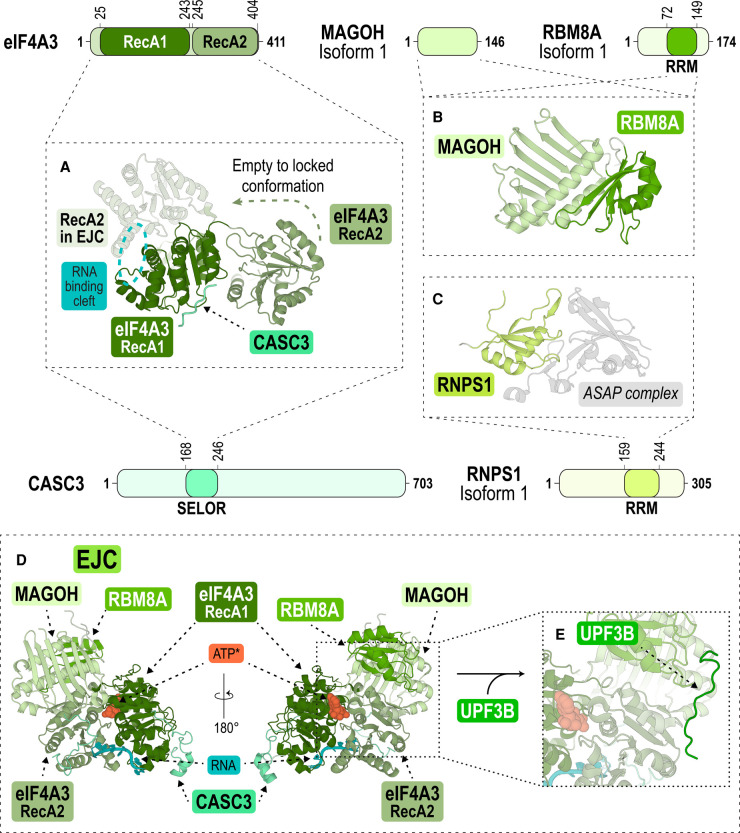
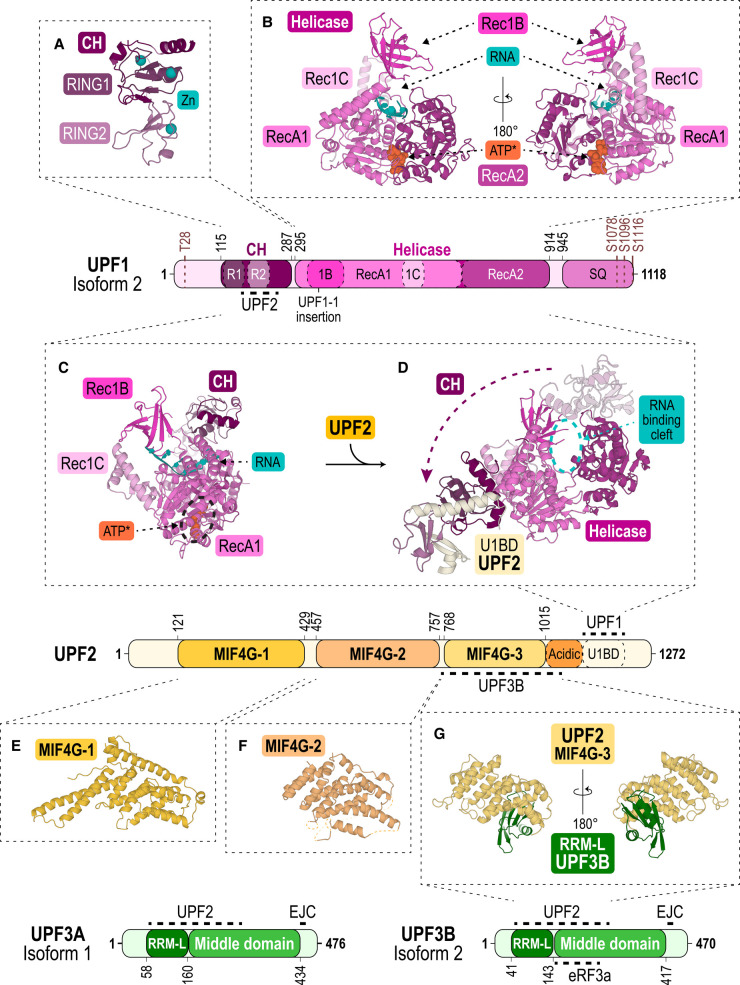
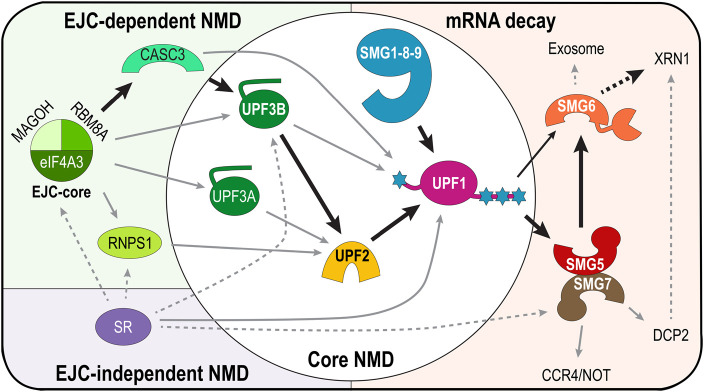
Nonsense-mediated messenger RNA decay (NMD) represents one of the main surveillance pathways used by eukaryotic cells to control the quality and abundance of mRNAs and to degrade viral RNA. NMD recognises mRNAs with a premature termination codon (PTC) and targets them to decay. Markers for a mRNA with a PTC, and thus NMD, are a long a 3'-untranslated region and the presence of an exon-junction complex (EJC) downstream of the stop codon. Here, we review our structural understanding of mammalian NMD factors and their functional interplay leading to a branched network of different interconnected but specialised mRNA decay pathways. We discuss recent insights into the potential impact of EJC composition on NMD pathway choice. We highlight the coexistence and function of different isoforms of up-frameshift protein 1 (UPF1) with an emphasis of their role at the endoplasmic reticulum and during stress, and the role of the paralogs UPF3B and UPF3A, underscoring that gene regulation by mammalian NMD is tightly controlled and context-dependent being conditional on developmental stage, tissue and cell types.
Keywords: exon-junction complexes; nonsense-mediated mRNA decay; regulation of gene expression; translational control; up-frameshift proteins.
© 2022 The Author(s).
Conflict of interest statement
The authors declare that there are no competing interests associated with the manuscript.
Figures

References
Publication types
MeSH terms
Substances
Grants and funding
LinkOut - more resources
Full Text Sources
Research Materials
