Design of a Wearable Vibrotactile Stimulation Device for Individuals With Upper-Limb Hemiparesis and Spasticity
- PMID: 35552152
- PMCID: PMC10139869
- DOI: 10.1109/TNSRE.2022.3174808
Design of a Wearable Vibrotactile Stimulation Device for Individuals With Upper-Limb Hemiparesis and Spasticity
Abstract
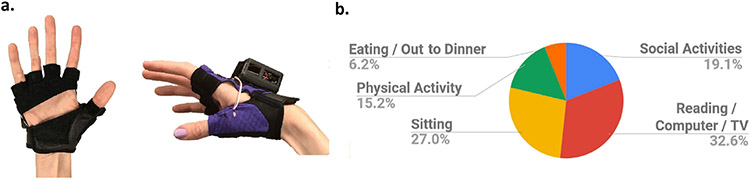
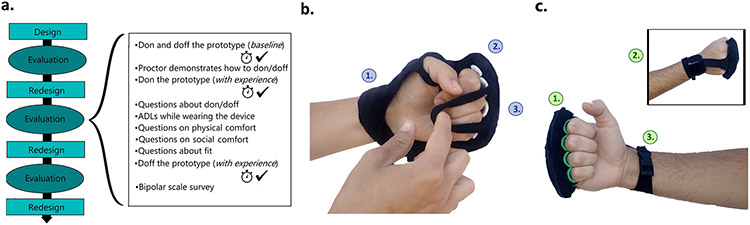
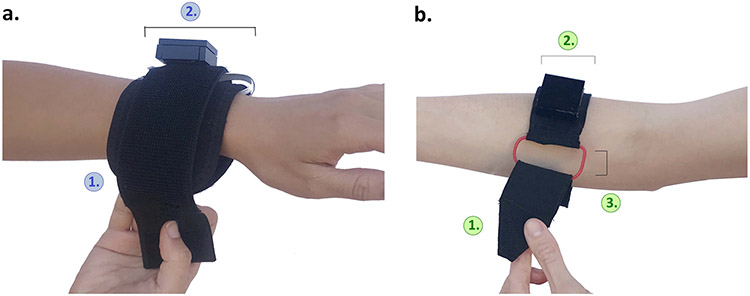
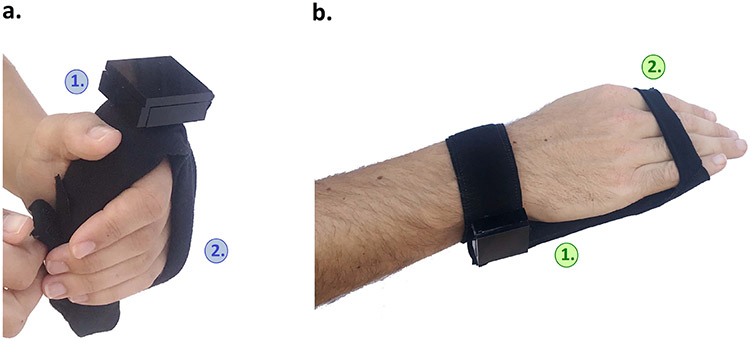
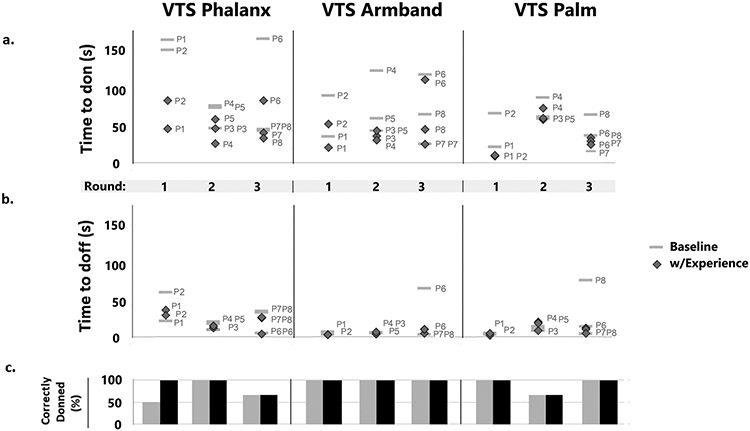
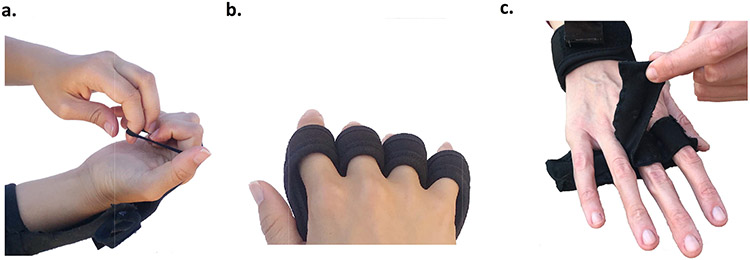
Vibratory stimulation may improve post-stroke symptoms such as spasticity; however, current studies are limited by the large, clinic-based apparatus used to apply this stimulation. A wearable device could provide vibratory stimulation in a mobile form, enabling further study of this technique. An initial device, the vibrotactile stimulation (VTS) Glove, was deployed in an eight-week clinical study in which sixteen individuals with stroke used the device for several hours daily. Participants reported wearing the glove during activities such as church, social events, and dining out. However, 69% of participants struggled to extend or insert their fingers to don the device. In a follow-up study, eight individuals with stroke evaluated new VTS device prototypes in a three-round iterative design study with the aims of creating the next generation of VTS devices and understanding features that influence interaction with a wearable device by individuals with impaired upper-limb function. Interviews and interaction tasks were used to define actionable design revisions between each round of evaluation. Our analysis identified six new themes from participants regarding device designs: hand supination is challenging, separate finger attachments inhibit fit and use, fingers may be flexed or open, fabric coverage impacts comfort, a reduced concern for social comfort, and the affected hand is infrequently used. Straps that wrap around the arm and fixtures on the anterior arm were other challenging features. We discuss potential accommodations for these challenges, as well as social comfort. New VTS device designs are presented and were donned in an average time of 48 seconds.
Figures
References
-
- Mozaffarian D et al., “Heart disease and stroke statistics–2016 update: A report from the American Heart Association,” Circulation, vol. 133, no. 4, p. e38, 2016. - PubMed
-
- Connell L, Lincoln N, and Radford K, “Somatosensory impairment after stroke: Frequency of different deficits and their recovery,” Clin. Rehabil, vol. 22, no. 8, pp. 758–767, Aug. 2008. - PubMed
-
- Parker VM, Wade DT, and Hewer RL, “Loss of arm function after stroke: Measurement, frequency, and recovery,” Int. Rehabil. Med, vol. 8, no. 2, pp. 69–73, Jan. 1986. - PubMed
-
- Dajpratham P, Kuptniratsaikul V, Kovindha A, Kuptniratsaikul PS-A, and Dejnuntarat K, “Prevalence and management of poststroke spasticity in Thai stroke patients: A multicenter study,” Med. J. Med. Assoc. Thailand, vol. 92, no. 10, p. 1354, 2009. - PubMed
-
- Watkins CL, Leathley MJ, Gregson JM, Moore AP, Smith TL, and Sharma AK, “Prevalence of spasticity post stroke,” Clin. Rehabil, vol. 16, no. 5, pp. 515–522, 2002. - PubMed
Publication types
MeSH terms
Grants and funding
LinkOut - more resources
Full Text Sources
Medical