


Design, synthesis and characterization of novel chromone based-copper(ii) antitumor agents with N, N-donor ligands: comparative DNA/RNA binding profile and cytotoxicity
- PMID: 35557803
- PMCID: PMC9089433
- DOI: 10.1039/c8ra06722h
Design, synthesis and characterization of novel chromone based-copper(ii) antitumor agents with N, N-donor ligands: comparative DNA/RNA binding profile and cytotoxicity
Abstract
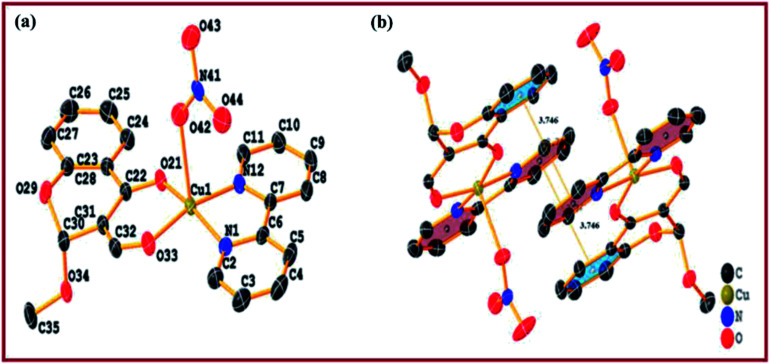
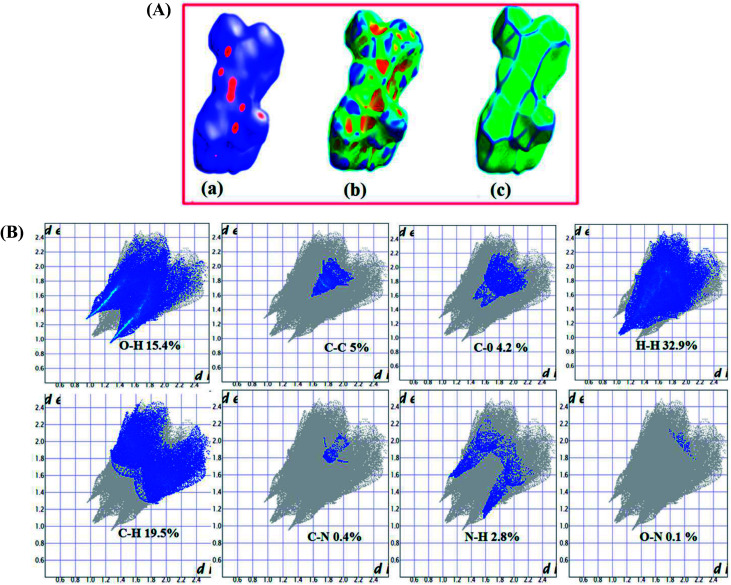
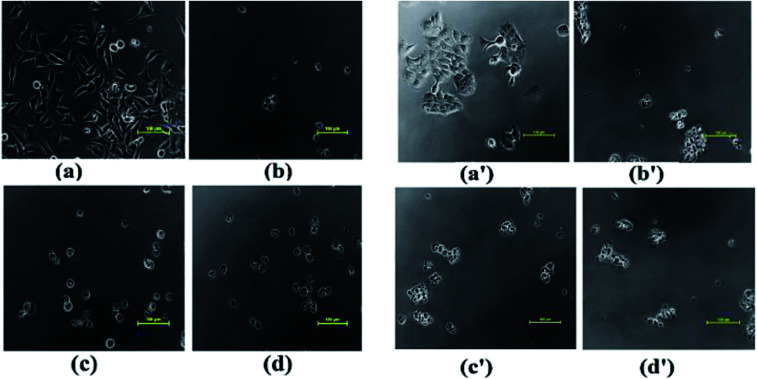
A series of new chromone based-Cu(ii) complexes 1-3 derived from bioactive pharmacophore, 3-formylchromone and N,N-donor ligands viz., 1,10-phenanthroline, 2,2'-bipyridine and 1R,2R-DACH were synthesized as potential antitumor agents and thoroughly characterized by UV-vis, FT-IR, EPR, ESI-MS and elemental analysis. Single X-crystal diffraction studies of complex 2 revealed triclinic P1̄ space group with square pyramidal geometry around the Cu(ii) center. Comparative in vitro binding studies with ct-DNA and tRNA were carried out using absorption and emission titration experiments which revealed intercalative mode of binding with higher binding propensity of complexes 1-3 towards tRNA as compared to ct-DNA. Additionally, complex 1 exhibited high binding affinity among all the three complexes due to the involvement of phen co-ligands via π-stacking interactions in between nucleic acid base pairs. Furthermore, Hirshfeld surface analysis was carried out for complex 2 to investigate various intra and intermolecular non-covalent interactions (H-bonding, C-H⋯π etc.) accountable for stabilization of crystal lattice. The cleavage activity of complex 1 was performed by gel electrophoretic assay with pBR322 DNA and tRNA which revealed efficient DNA/tRNA cleaving ability of complex, suggesting tRNA cleavage both concentration and time dependent. Furthermore, in vitro cytotoxic activity of complexes 1-3 on a selected panel of human cancer cell lines was performed which revealed that all three complexes exhibited remarkably good cytotoxic activity with GI50 value < 10 μg mL-1 (<20 μM).
This journal is © The Royal Society of Chemistry.
Conflict of interest statement
There are no conflicts to declare.
Figures






References
-
- Gandin V. Tisato F. Dolmella A. Pellei M. Santini C. Giorgetti M. Marzano C. Porchia M. J. Med. Chem. 2014;57:4745–4760. doi: 10.1021/jm500279x. - DOI - PubMed
- Gou Y. Qi J. Ajayi J. P. Zhang Y. Zhou Z. Wu X. Yang F. Liang H. Mol. Pharmaceutics. 2015;12:3597–3609. doi: 10.1021/acs.molpharmaceut.5b00314. - DOI - PubMed
LinkOut - more resources
Full Text Sources
Research Materials
Miscellaneous
