


Study of the effects of cognitive behavioral therapy versus dialectical behavior therapy on executive function and reduction of symptoms in generalized anxiety disorder
- PMID: 35559733
- PMCID: PMC10039721
- DOI: 10.47626/2237-6089-2020-0156
Study of the effects of cognitive behavioral therapy versus dialectical behavior therapy on executive function and reduction of symptoms in generalized anxiety disorder
Abstract
Introduction: The effects of dialectical behavior therapy on generalized anxiety disorder have not been examined to date, whereas cognitive behavioral therapy is a well-known psychotherapy for generalized anxiety disorder.
Objectives: This study investigated the effects of cognitive behavioral therapy versus dialectical behavior therapy on executive function and reduction of symptoms in generalized anxiety disorder.
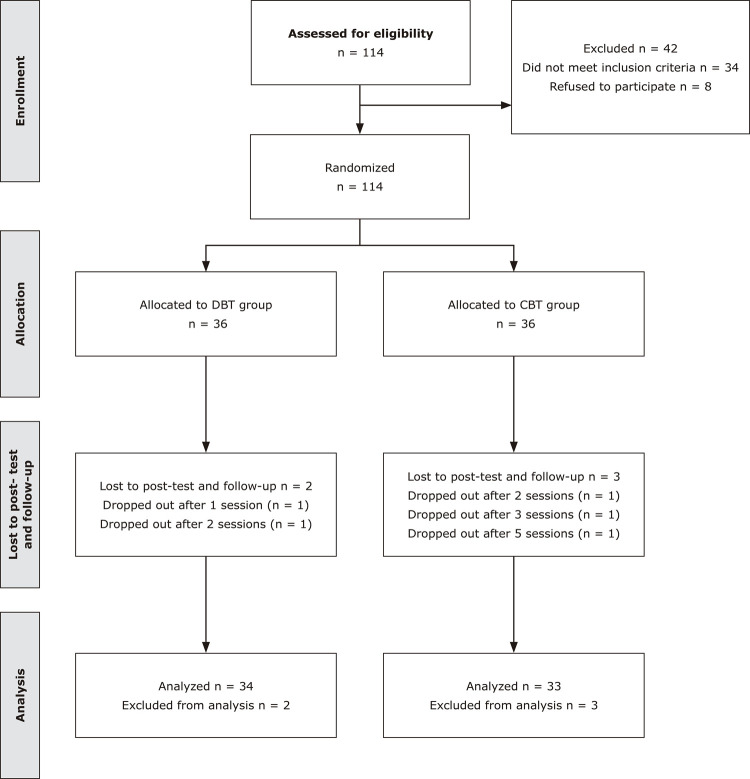
Method: In the present study, 72 generalized anxiety disorder patients were randomly assigned to one of two groups: dialectical behavior therapy or cognitive behavioral therapy. Evaluations were performed at baseline, post-test, and three months after interventions as a follow-up. Measures included the Structured Clinical Interview for DSM-IV Axis I disorders, the Generalized Anxiety Disorder scale, the Beck Anxiety Inventory, the Beck Depression Inventory, the Tower of London Task, and the Wisconsin Card Sorting Task.Results: The results of the present study showed that both groups had reduced scores for depression and anxiety and increased scores for executive function after the psychotherapies. These changes were maintained at follow-up.
Conclusion: Although depression and anxiety symptoms were significantly reduced by cognitive behavioral therapy, dialectical behavior therapy was more effective for improving executive function.
Keywords: Generalized anxiety disorder; cognitive behavior therapy; dialectical behavior therapy; executive function.
Conflict of interest statement
No conflicts of interest declared concerning the publication of this article.
References
-
- Behar E, DiMarco ID, Hekler EB, Mohlman J, Staples AM. Current theoretical models of generalized anxiety disorder (GAD): conceptual review and treatment implications. J Anxiety Disord. 2009;23:1011–1023. - PubMed
-
- American Psychiatric Association . Arlington: American Psychiatric Publishing; 2013. Diagnostic and Statistical Manual of Mental Disorders, Fifth Edition (DSM-5)
-
- Marganska A, Gallagher M, Miranda RJ. Adult attachment, emotion dysregulation, and symptoms of depression and generalized anxiety disorder. Am J Orthopsychiatry. 2013;83:131–141. - PubMed
-
- Kruger GH. Executive functioning and positive psychological characteristics: a replication and extension. Psychol Rep. 2011;108:477–486. - PubMed
Publication types
MeSH terms
LinkOut - more resources
Full Text Sources
