


Osteoarthritis Pain
- PMID: 35563035
- PMCID: PMC9105801
- DOI: 10.3390/ijms23094642
Osteoarthritis Pain
Abstract
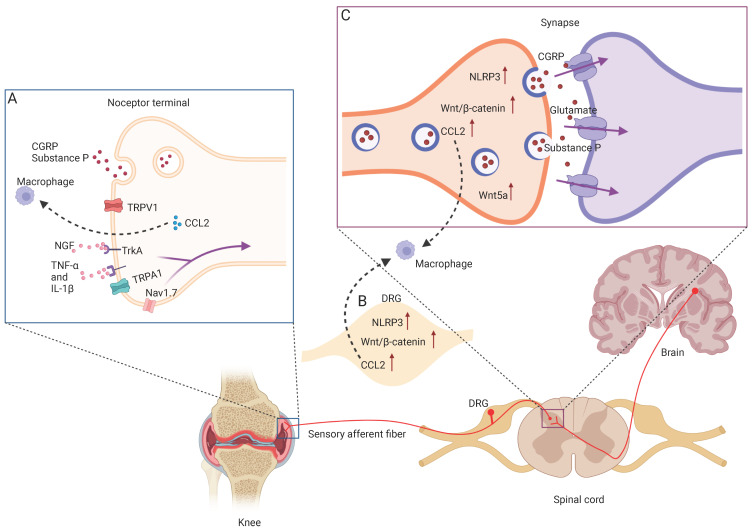
Joint pain is the hallmark symptom of osteoarthritis (OA) and the main reason for patients to seek medical assistance. OA pain greatly contributes to functional limitations of joints and reduced quality of life. Although several pain-relieving medications are available for OA treatment, the current intervention strategy for OA pain cannot provide satisfactory pain relief, and the chronic use of the drugs for pain management is often associated with significant side effects and toxicities. These observations suggest that the mechanisms of OA-related pain remain undefined. The current review mainly focuses on the characteristics and mechanisms of OA pain. We evaluate pathways associated with OA pain, such as nerve growth factor (NGF)/tropomyosin receptor kinase A (TrkA), calcitonin gene-related peptide (CGRP), C-C motif chemokine ligands 2 (CCL2)/chemokine receptor 2 (CCR2) and tumor necrosis factor alpha (TNF-α), interleukin-1beta (IL-1β), the NOD-like receptor (NLR) family, pyrin domain-containing protein 3 (NLRP3) inflammasome, and the Wnt/β-catenin signaling pathway. In addition, animal models currently used for OA pain studies and emerging preclinical studies are discussed. Understanding the multifactorial components contributing to OA pain could provide novel insights into the development of more specific and effective drugs for OA pain management.
Keywords: CCL2/CCR2; CGRP; IL-1β; NGF/TrkA; NLRP3; TNF-α; osteoarthritis; pain; β-catenin.
Conflict of interest statement
The authors declare no conflict of interest.
Figures
References
-
- Safiri S., Kolahi A.A., Smith E., Hill C., Bettampadi D., Mansournia M.A., Hoy D., Ashrafi-Asgarabad A., Sepidarkish M., Almasi-Hashiani A., et al. Global, regional and national burden of osteoarthritis 1990–2017: A systematic analysis of the Global Burden of Disease Study 2017. Ann. Rheum. Dis. 2020;79:819–828. doi: 10.1136/annrheumdis-2019-216515. - DOI - PubMed
Publication types
MeSH terms
Substances
Grants and funding
LinkOut - more resources
Full Text Sources
Medical
Research Materials
