Review
. 2022 Apr 28;23(9):4874.
doi: 10.3390/ijms23094874.

Epigenetic Mechanisms of Epidermal Differentiation

Affiliations
Review

Epigenetic Mechanisms of Epidermal Differentiation

Chiara Moltrasio et al. Int J Mol Sci. .

Abstract

Keratinocyte differentiation is an essential process for epidermal stratification and stratum corneum formation. Keratinocytes proliferate in the basal layer of the epidermis and start their differentiation by changing their functional or phenotypical type; this process is regulated via induction or repression of epidermal differentiation complex (EDC) genes that play a pivotal role in epidermal development. Epidermal development and the keratinocyte differentiation program are orchestrated by several transcription factors, signaling pathways, and epigenetic regulators. The latter exhibits both activating and repressive effects on chromatin in keratinocytes via the ATP-dependent chromatin remodelers, histone demethylases, and genome organizers that promote terminal keratinocyte differentiation, and the DNA methyltransferases, histone deacetylases, and Polycomb components that stimulate proliferation of progenitor cells and inhibit premature activation of terminal differentiation-associated genes. In addition, microRNAs are involved in different processes between proliferation and differentiation during the program of epidermal development. Here, we bring together current knowledge of the mechanisms controlling gene expression during keratinocyte differentiation. An awareness of epigenetic mechanisms and their alterations in health and disease will help to bridge the gap between our current knowledge and potential applications for epigenetic regulators in clinical practice to pave the way for promising target therapies.

Keywords: ATP-dependent chromatin remodeler; DNA methyltransferases; atopic dermatitis; epidermal differentiation complex; epigenetic regulators; histone modifications; keratinocytes; microRNAs; polycomb proteins; psoriasis.


Conflict of interest statement

The authors declare no conflict of interest.

Figures
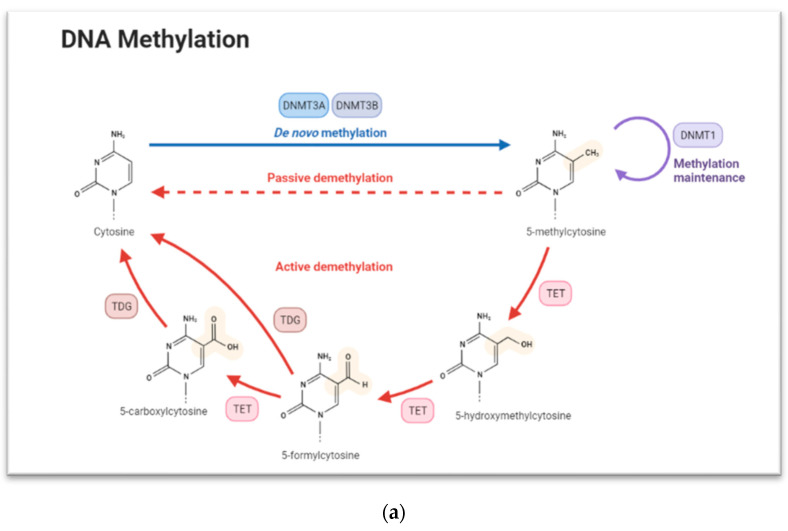
Figure 1
Figure 1
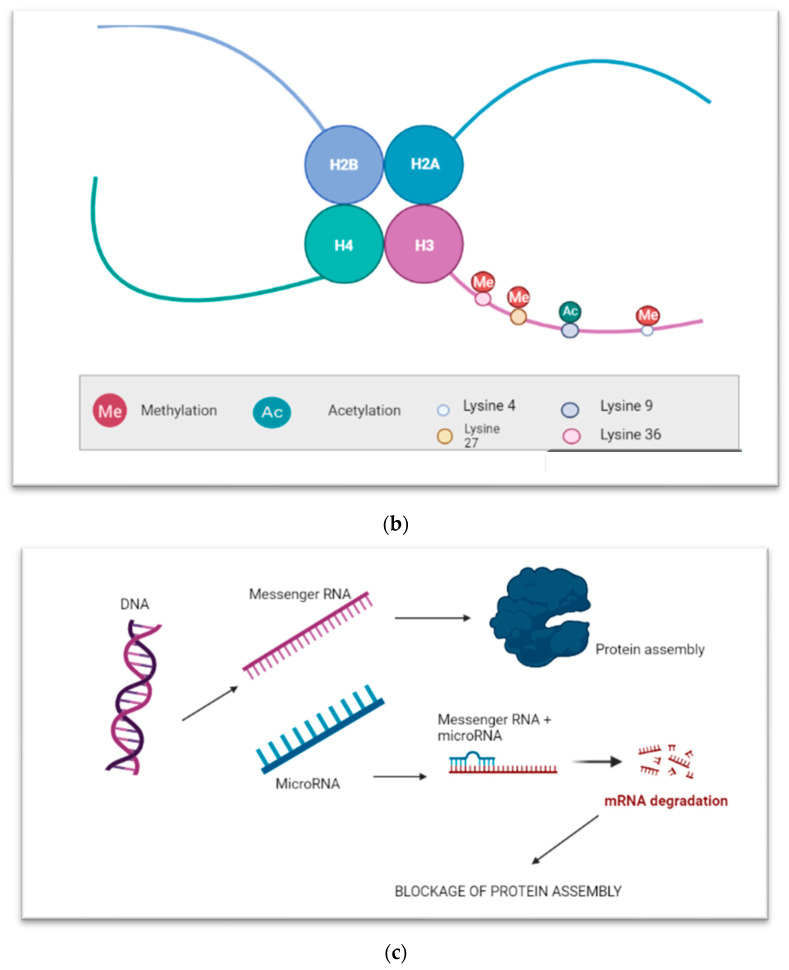
(a) The concurrence of DNA methylation and demethylation. Exported by Biorender.com (accessed on 1 April 2022). (b) Histone modifications including acetylation and methylation of lysine. Created in Biorender.com. (c) MicroRNA formation and their role in protein degradation. Created in Biorender.com.
Figure 1
Figure 1
(a) The concurrence of DNA methylation and demethylation. Exported by Biorender.com (accessed on 1 April 2022). (b) Histone modifications including acetylation and methylation of lysine. Created in Biorender.com. (c) MicroRNA formation and their role in protein degradation. Created in Biorender.com.
Figure 2
Figure 2
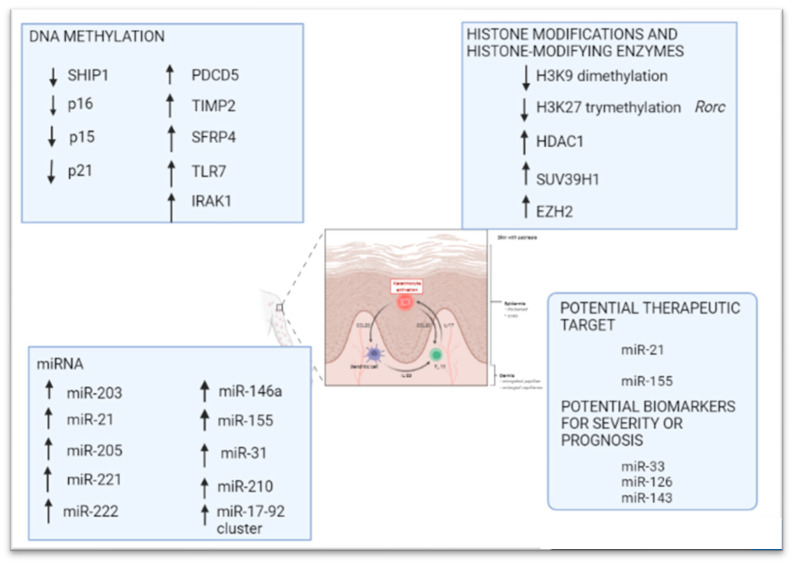
Epigenetic modifications in psoriasis: DNA methylation, histone modifications and microRNAs, including the microRNAs that can be considered as potential therapeutic targets and biomarkers for severity or prognosis. Created in Biorender.com.
Figure 3
Figure 3
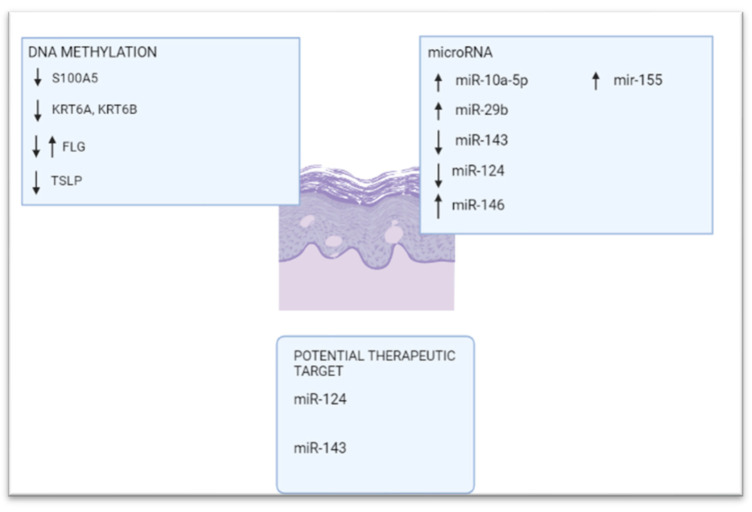
Epigenetic modifications in atopic dermatitis: DNA methylation and microRNAs, including the microRNAs that can be considered as potential therapeutic targets. Created in Biorender.com.
Figure 4
Figure 4
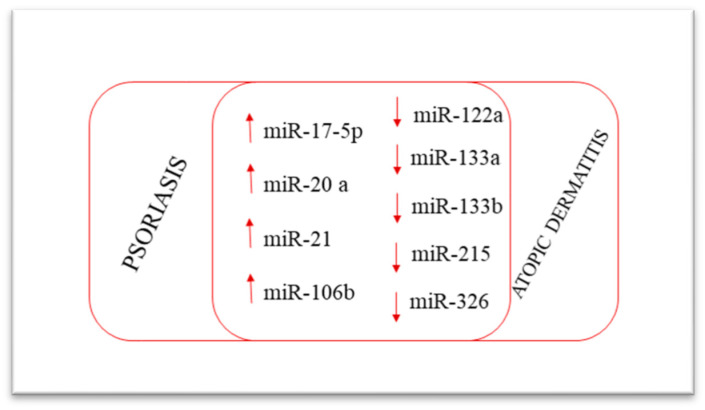
MicroRNAs involved in both psoriasis and atopic dermatitis.

References

    1. Lanpain C., Fuchs E. Epidermal stem cells of the skin. Annu. Rev. Cell Dev. Biol. 2006;22:339–373. doi: 10.1146/annurev.cellbio.22.010305.104357. - DOI - PMC - PubMed
    1. Simpson C.L., Patel D.M., Green K.J. Deconstructing the skin: Cytoarchitectural determinants of epidermal morphogenesis. Nat. Rev. Mol. Cell Biol. 2011;12:565–580. doi: 10.1038/nrm3175. - DOI - PMC - PubMed
    1. Li J., Sen G.L. Post-Transcriptional Mechanisms Regulating Epidermal Stem and Progenitor Cell Self-Renewal and Differentiation. J. Investig. Dermatol. 2016;136:746–752. doi: 10.1016/j.jid.2015.12.030. - DOI - PubMed
    1. Slominski A.T., Zmijewski M.A., Plonka P.M., Szaflarski J.P., Paus R. How UV Light Touches the Brain and Endocrine System Through Skin, and Why. Endocrinology. 2018;159:1992–2007. doi: 10.1210/en.2017-03230. - DOI - PMC - PubMed
    1. Raddatz G., Hagemann S., Aran D., Söhle J., Kulkarni P.P., Kaderali L., Hellman A., Winnefield M., Lyko F. Aging is associated with highly defined epigenetic changes in the human epidermis. Epigenet. Chromatin. 2013;6:36. doi: 10.1186/1756-8935-6-36. - DOI - PMC - PubMed

MeSH terms