


Polyethylenimine-Coated Ultrasmall Holmium Oxide Nanoparticles: Synthesis, Characterization, Cytotoxicities, and Water Proton Spin Relaxivities
- PMID: 35564300
- PMCID: PMC9101814
- DOI: 10.3390/nano12091588
Polyethylenimine-Coated Ultrasmall Holmium Oxide Nanoparticles: Synthesis, Characterization, Cytotoxicities, and Water Proton Spin Relaxivities
Abstract
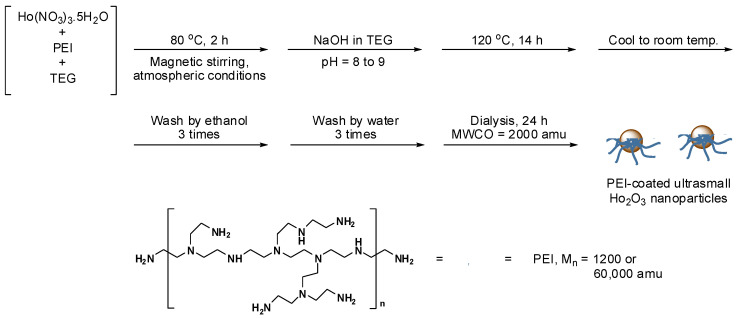
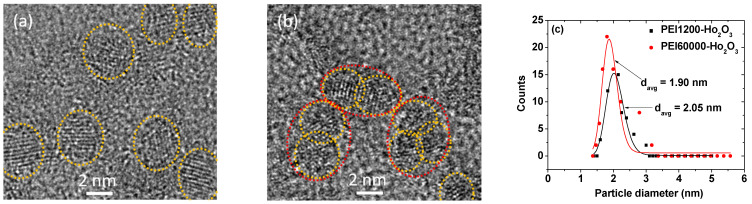
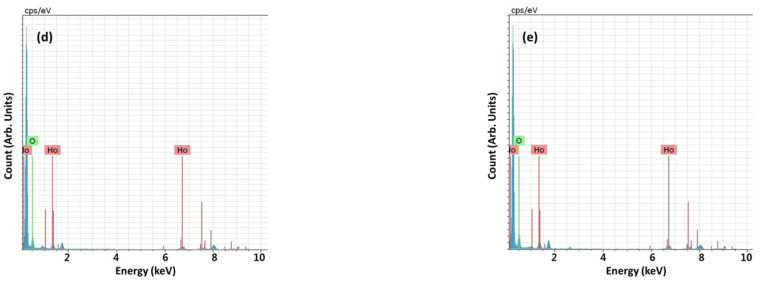
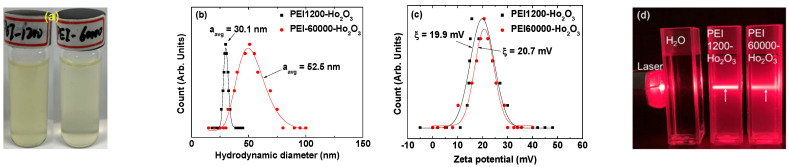
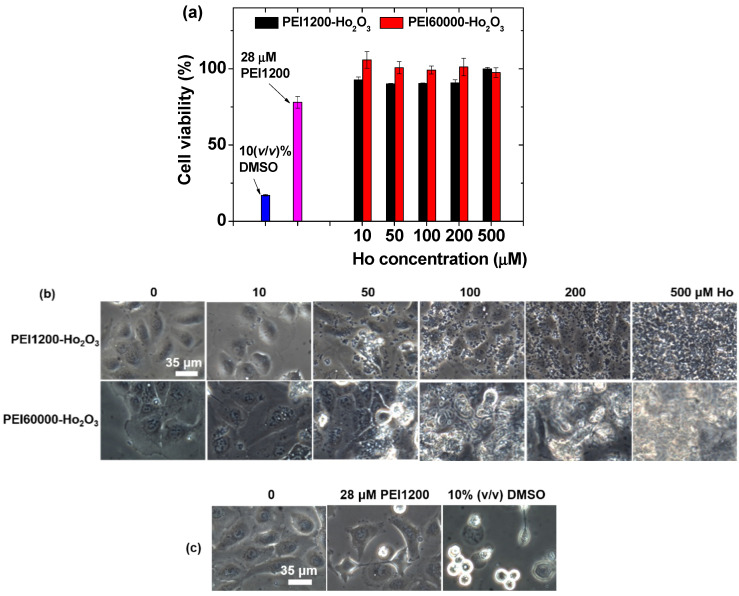
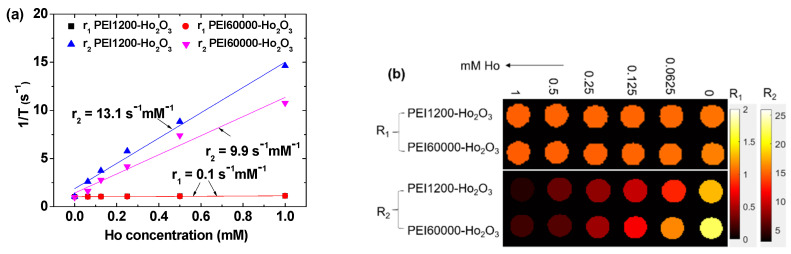
Water proton spin relaxivities, colloidal stability, and biocompatibility of nanoparticle magnetic resonance imaging (MRI) contrast agents depend on surface-coating ligands. In this study, hydrophilic and biocompatible polyethylenimines (PEIs) of different sizes (Mn = 1200 and 60,000 amu) were used as surface-coating ligands for ultrasmall holmium oxide (Ho2O3) nanoparticles. The synthesized PEI1200- and PEI60000-coated ultrasmall Ho2O3 nanoparticles, with an average particle diameter of 2.05 and 1.90 nm, respectively, demonstrated low cellular cytotoxicities, good colloidal stability, and appreciable transverse water proton spin relaxivities (r2) of 13.1 and 9.9 s-1mM-1, respectively, in a 3.0 T MR field with negligible longitudinal water proton spin relaxivities (r1) (i.e., 0.1 s-1mM-1) for both samples. Consequently, for both samples, the dose-dependent contrast changes in the longitudinal (R1) and transverse (R2) relaxation rate map images were negligible and appreciable, respectively, indicating their potential as efficient transverse T2 MRI contrast agents in vitro.
Keywords: Ho2O3; cytotoxicity; polyethylenimine coating; relaxivity; ultrasmall nanoparticle.
Conflict of interest statement
The authors declare no conflict of interest.
Figures
References
-
- Roch A., Gillis P., Muller R.N. Theory of proton relaxation induced by superparamagnetic particles. J. Chem. Phys. 1999;110:5403–5411. doi: 10.1063/1.478435. - DOI
-
- Lauffer R.B. Paramagnetic metal complexes as water proton relaxation agents for NMR imaging: Theory and design. Chem. Rev. 1987;87:901–927. doi: 10.1021/cr00081a003. - DOI
Grants and funding
LinkOut - more resources
Full Text Sources
