


Global DNA Methylation Profiles in Peripheral Blood of WTC-Exposed Community Members with Breast Cancer
- PMID: 35564499
- PMCID: PMC9105091
- DOI: 10.3390/ijerph19095104
Global DNA Methylation Profiles in Peripheral Blood of WTC-Exposed Community Members with Breast Cancer
Abstract
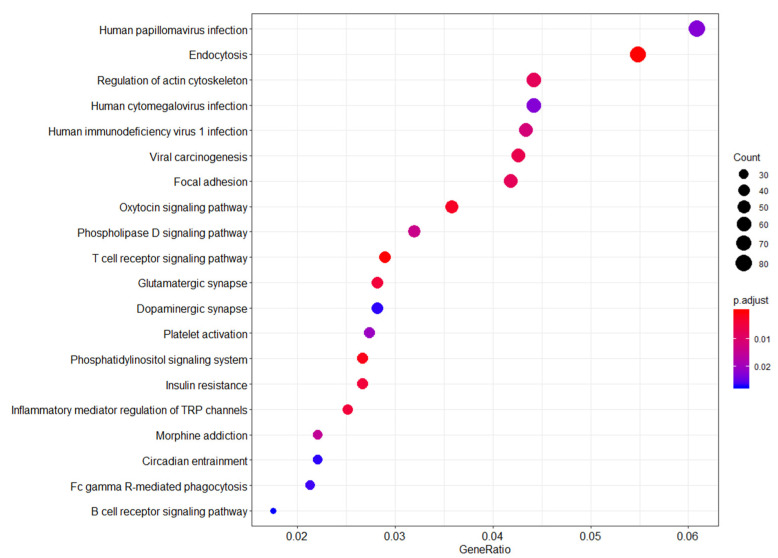
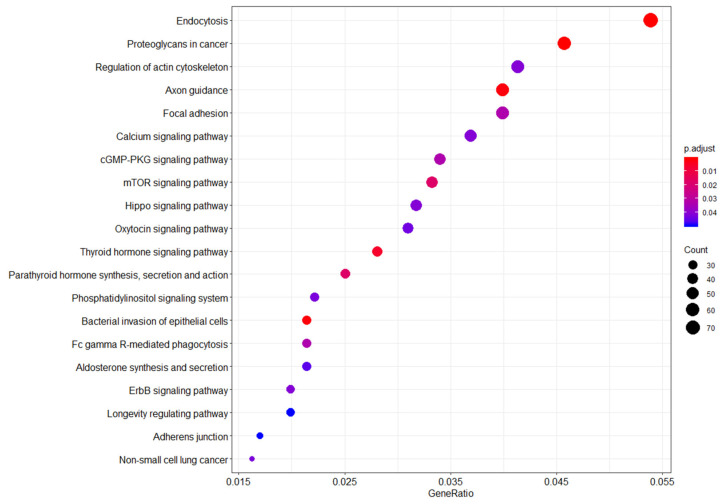
Breast cancer represents the most common cancer diagnosis among World Trade Center (WTC)-exposed community members, residents, and cleanup workers enrolled in the WTC Environmental Health Center (WTC EHC). The primary aims of this study were (1) to compare blood DNA methylation profiles of WTC-exposed community members with breast cancer and WTC-unexposed pre-diagnostic breast cancer blood samples, and (2) to compare the DNA methylation differences among the WTC EHC breast cancer cases and WTC-exposed cancer-free controls. Gene pathway enrichment analyses were further conducted. There were significant differences in DNA methylation between WTC-exposed breast cancer cases and unexposed prediagnostic breast cancer cases. The top differentially methylated genes were Intraflagellar Transport 74 (IFT74), WD repeat-containing protein 90 (WDR90), and Oncomodulin (OCM), which are commonly upregulated in tumors. Probes associated with established tumor suppressor genes (ATM, BRCA1, PALB2, and TP53) were hypermethylated among WTC-exposed breast cancer cases compared to the unexposed group. When comparing WTC EHC breast cancer cases vs. cancer-free controls, there appeared to be global hypomethylation among WTC-exposed breast cancer cases compared to exposed controls. Functional pathway analysis revealed enrichment of several gene pathways in WTC-exposed breast cancer cases including endocytosis, proteoglycans in cancer, regulation of actin cytoskeleton, axon guidance, focal adhesion, calcium signaling, cGMP-PKG signaling, mTOR, Hippo, and oxytocin signaling. The results suggest potential epigenetic links between WTC exposure and breast cancer in local community members enrolled in the WTC EHC program.
Keywords: 9/11; World Trade Center; breast cancer; environmental exposure; epigenome-wide association study; exposure assessment; methylation; pathway analysis.
Conflict of interest statement
The authors declare no conflict of interest.
Figures
References
-
- Yiin L.-M., Millette J.R., Vette A., Ilacqua V., Quan C., Gorczynski J., Kendall M., Chen L.C., Weisel C.P., Buckley B., et al. Comparisons of the Dust/Smoke Particulate That Settled inside the Surrounding Buildings and Outside on the Streets of Southern New York City after the Collapse of the World Trade Center, September 11, 2001. J. Air Waste Manag. Assoc. 2004;54:515–528. doi: 10.1080/10473289.2004.10470935. - DOI - PubMed
-
- Zeig-Owens R., Webber M.P., Hall C.B., Schwartz T., Jaber N., Weakley J., Rohan T.E., Cohen H.W., Derman O., Aldrich T.K., et al. Early Assessment of Cancer Outcomes in New York City Firefighters after the 9/11 Attacks: An Observational Cohort Study. Lancet. 2011;378:898–905. doi: 10.1016/S0140-6736(11)60989-6. - DOI - PMC - PubMed
-
- Solan S., Wallenstein S., Shapiro M., Teitelbaum S.L., Stevenson L., Kochman A., Kaplan J., Dellenbaugh C., Kahn A., Biro F.N., et al. Cancer Incidence in World Trade Center Rescue and Recovery Workers, 2001–2008. Environ. Health Perspect. 2013;121:699–704. doi: 10.1289/ehp.1205894. - DOI - PMC - PubMed
Publication types
MeSH terms
Substances
Grants and funding
LinkOut - more resources
Full Text Sources
Medical
Research Materials
Miscellaneous
