


Strength Training in Swimming
- PMID: 35564764
- PMCID: PMC9100337
- DOI: 10.3390/ijerph19095369
Strength Training in Swimming
Abstract
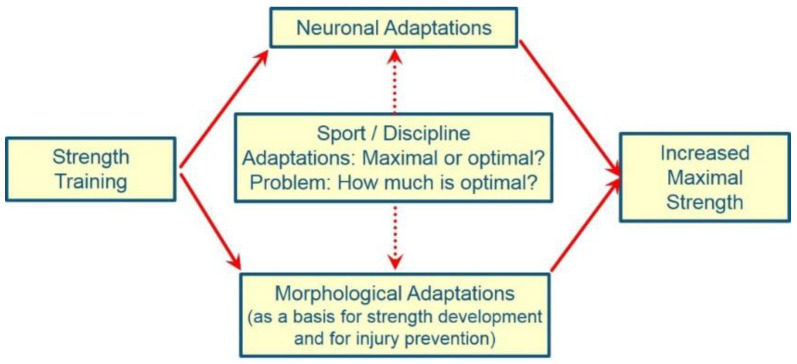
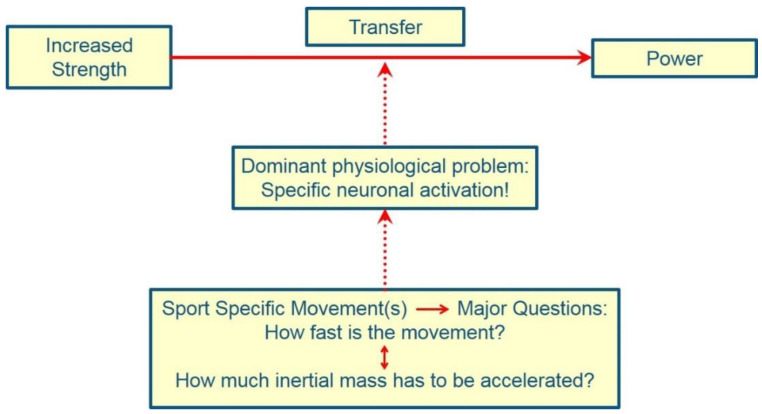
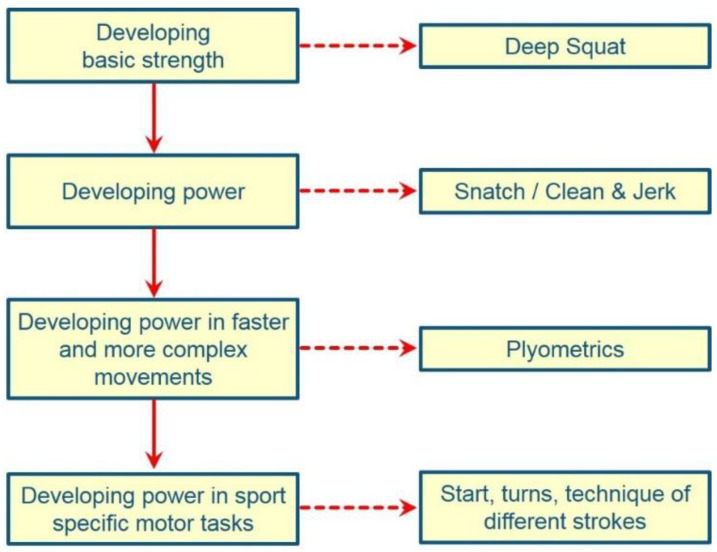
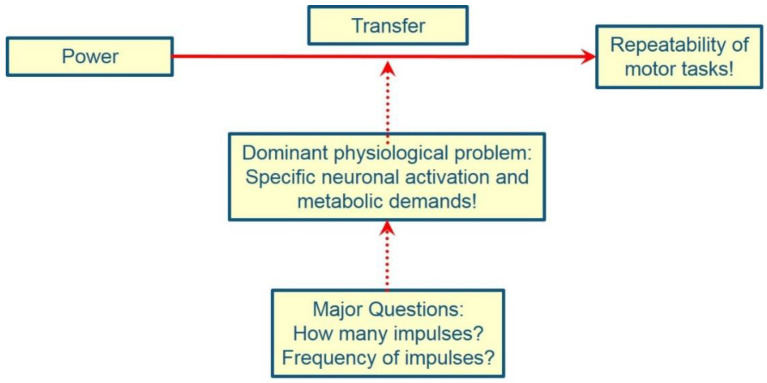
This narrative review deals with the topic of strength training in swimming, which has been a controversial issue for decades. It is not only about the importance for the performance at start, turn and swim speed, but also about the question of how to design a strength training program. Different approaches are discussed in the literature, with two aspects in the foreground. On the one hand is the discussion about the optimal intensity in strength training and, on the other hand, is the question of how specific strength training should be designed. In addition to a summary of the current state of research regarding the importance of strength training for swimming, the article shows which physiological adaptations should be achieved in order to be able to increase performance in the long term. Furthermore, an attempt is made to explain why some training contents seem to be rather unsuitable when it comes to increasing strength as a basis for higher performance in the start, turn and clean swimming. Practical training consequences are then derived from this. Regardless of the athlete's performance development, preventive aspects should also be considered in the discussion. The article provides a critical overview of the abovementioned key issues. The most important points when designing a strength training program for swimming are a sufficiently high-load intensity to increase maximum strength, which in turn is the basis for power, year-round strength training, parallel to swim training and working on the transfer of acquired strength skills in swim training, and not through supposedly specific strength training exercises on land or in the water.
Keywords: elite swimmers; preventive training; resistance training; start performance; turn performance.
Conflict of interest statement
The authors declare no conflict of interest.
Figures
References
-
- Cureton T.K. Biomechanics of swimming with interrelationships to fitness and performance; Proceedings of the First International Symposium on Biomechanics in Swimming, Waterpolo and Diving; Brussels, Belgium. 14–16 September 1970; pp. 31–52.
-
- Cureton T.K. Factors governing success in competitive swimming: A brief review of related studies; Proceedings of the Second International Symposium on Biomechanics in Swimming; Baltimore, MD, USA. 9 June 1979; pp. 9–39.
-
- Holmer I. Energetics and mechanical work in swimming. In: Hollander A.P., Huijing P.A., de Groot G., editors. Biomechanics and Medicine in Swimming, International Series on Sport Science. Volume 14. Human Kinetics; Champaign, IL, USA: 1983. pp. 154–164.
-
- Morouço P.G., Marinho D.A., Amaro N.M., Peréz-Turpin J.A., Marques M.C. Effects of dry-land strength training on swimming performance: A brief review. J. Hum. Sport Exerc. 2012;7:553–559.
Publication types
MeSH terms
Substances
LinkOut - more resources
Full Text Sources
Medical
