


Molecular Epidemiology of Antibiotic Resistance Genes and Virulence Factors in Multidrug-Resistant Escherichia coli Isolated from Rodents, Humans, Chicken, and Household Soils in Karatu, Northern Tanzania
- PMID: 35564782
- PMCID: PMC9102629
- DOI: 10.3390/ijerph19095388
Molecular Epidemiology of Antibiotic Resistance Genes and Virulence Factors in Multidrug-Resistant Escherichia coli Isolated from Rodents, Humans, Chicken, and Household Soils in Karatu, Northern Tanzania
Abstract
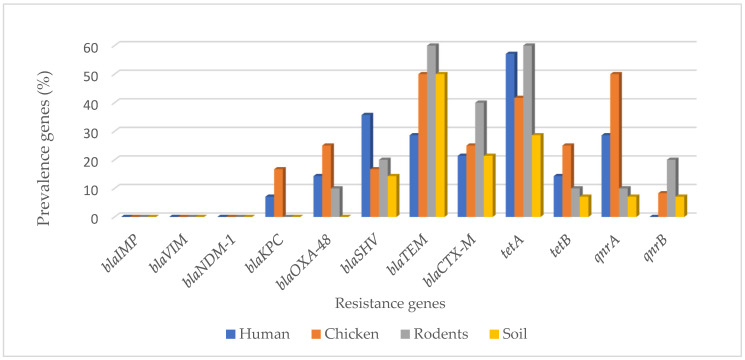
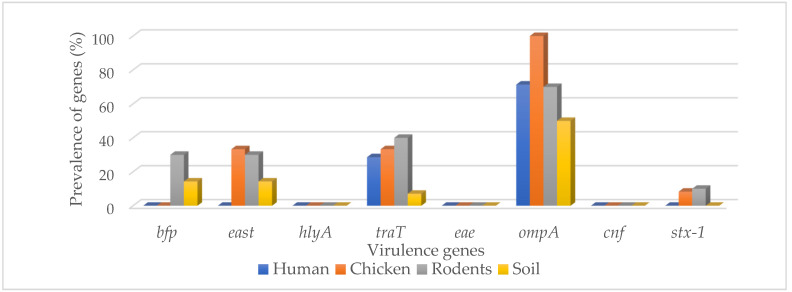
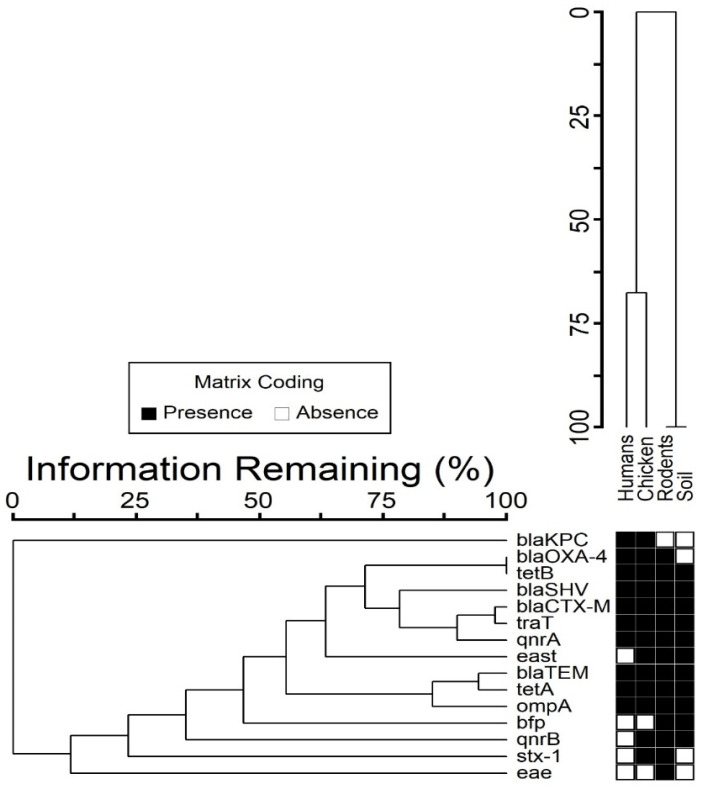
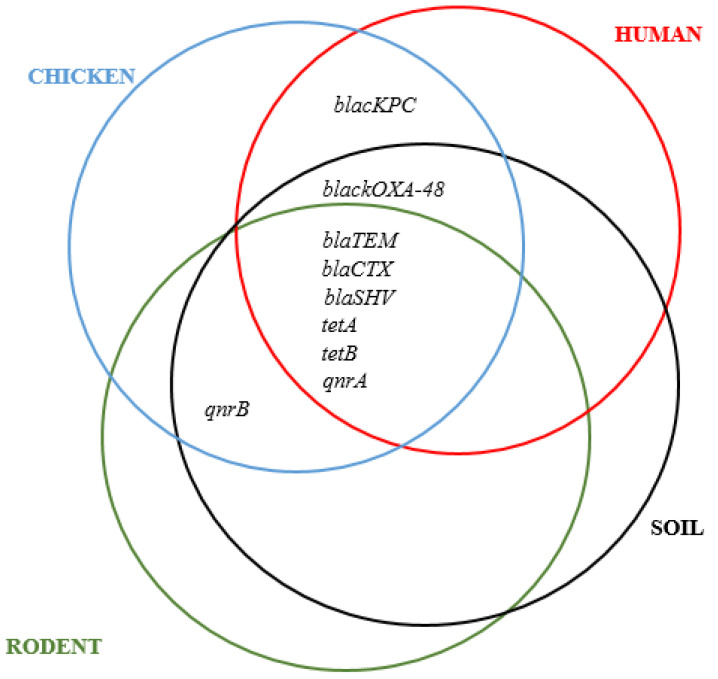
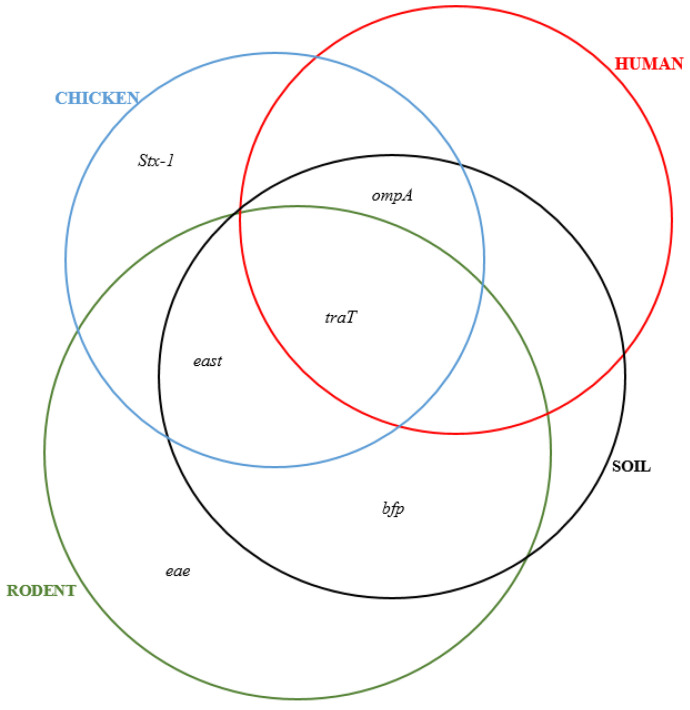
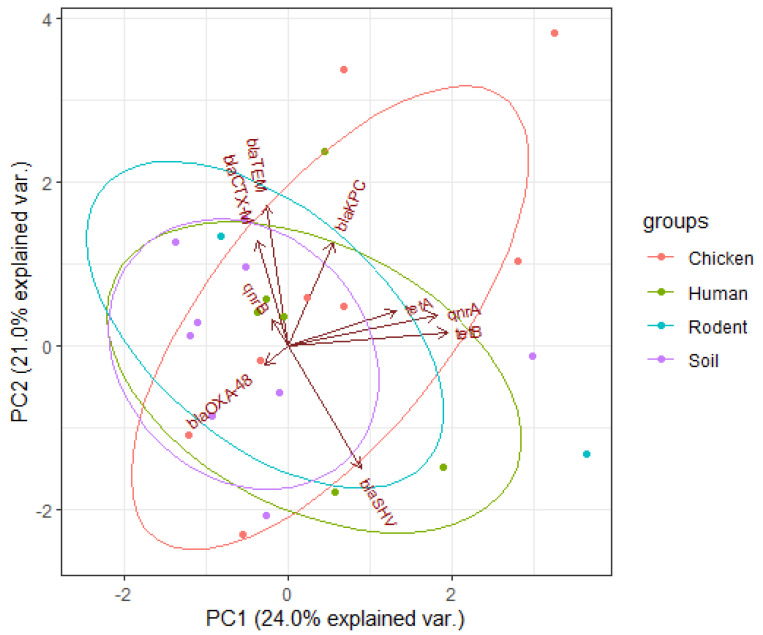
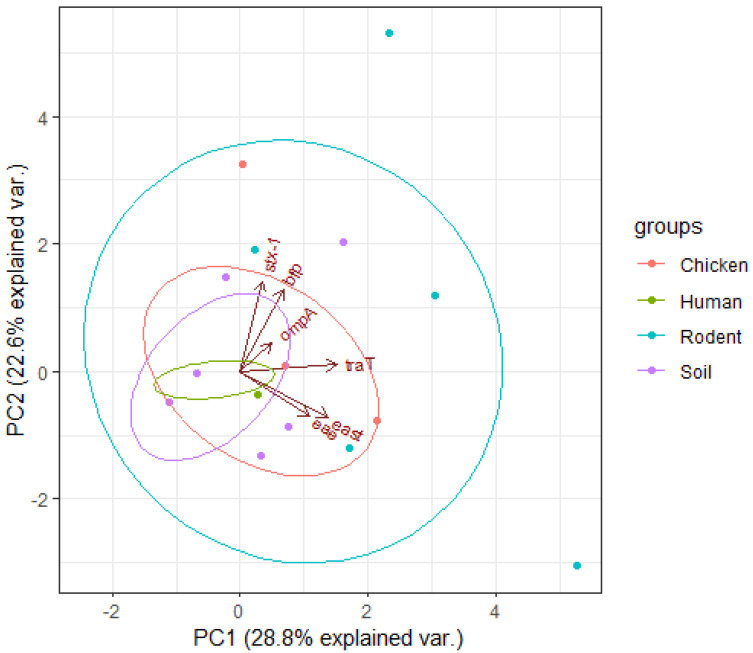
The interaction of rodents with humans and chicken in the household environment can facilitate transmission of multidrug-resistant (MDR) Escherichia coli (E. coli), causing infections that are difficult to treat. We investigated the presence of genes encoded for carbapenem, extended spectrum beta-lactamases (ESBL), tetracycline and quinolones resistance, and virulence among 50 MDR E. coli isolated from human (n = 14), chicken (n = 12), rodent (n = 10), and soil (n = 14) samples using multiplex polymerase chain reaction (PCR). Overall, the antimicrobial resistance genes (ARGs) detected were: blaTEM 23/50 (46%), blaCTX-M 13/50 (26%), tetA 23/50 (46%), tetB 7/50 (14%), qnrA 12/50 (24%), qnrB 4/50 (8%), blaOXA-48 6/50 (12%), and blaKPC 3/50 (6%), while blaIMP, blaVIM, and blaNDM-1 were not found. The virulence genes (VGs) found were: ompA 36/50 (72%), traT 13/50 (26%), east 9/50 (18%), bfp 5/50 (10%), eae 1/50 (2%), and stx-1 2/50 (4%), while hlyA and cnf genes were not detected. Resistance (blaTEM, blaCTX-M, blaSHV, tetA, tetB, and qnrA) and virulence (traT) genes were found in all sample sources while stx-1 and eae were only found in chicken and rodent isolates, respectively. Tetracycline resistance phenotypes correlated with genotypes tetA (r = 0.94), tetB (r = 0.90), blaKPC (r = 0.90; blaOXA-48 (r = 0.89), and qnrA (r = 0.96). ESBL resistance was correlated with genotypes blaKPC (r = 0.93), blaOXA-48 (r = 0.90), and qnrA (r = 0.96) resistance. Positive correlations were observed between resistance and virulence genes: qnrB and bfp (r = 0.63) also blaTEM, and traT (r = 0.51). Principal component analysis (PCA) indicated that tetA, tetB, blaTEM, blaCTX-M, qnrA, and qnrB genes contributed to tetracycline, cefotaxime, and quinolone resistance, respectively. While traT stx-1, bfp, ompA, east, and eae genes contributed to virulence of MDR E. coli isolates. The PCA ellipses show that isolates from rodents had more ARGs and virulence genes compared to those isolated from chicken, soil, and humans.
Keywords: E. coli; PCR; chicken; genes; humans; multidrug-resistant; rodents; soil.
Conflict of interest statement
The authors declare no conflict of interest.
Figures
References
-
- Song Y., Yu L., Zhang Y., Dai Y., Wang P., Feng C., Liu M., Sun S., Xie Z., Wang F. Prevalence and characteristics of multidrug-resistant mcr-1-positive Escherichia coli isolates from broiler chickens in Tai’an, China. Poult. Sci. 2020;99:1117–1123. doi: 10.1016/j.psj.2019.10.044. - DOI - PMC - PubMed
-
- Shrivastava S.R., Shrivastava P.S., Ramasamy J. World health organization releases global priority list of antibiotic-resistant bacteria to guide research, discovery, and development of new antibiotics. J. Med. Soc. 2018;32:76–77. doi: 10.4103/jms.jms_25_17. - DOI
-
- Sarowska J., Futoma-Koloch B., Jama-Kmiecik A., Frej-Madrzak M., Ksiazczyk M., Bugla-Ploskonska G., Choroszy-Krol I. Virulence factors, prevalence and potential transmission of extraintestinal pathogenic Escherichia coli isolated from different sources: Recent reports. Gut Pathog. 2019;11:10. doi: 10.1186/s13099-019-0290-0. - DOI - PMC - PubMed
-
- Abd El-Baky R.M., Ibrahim R.A., Mohamed D.S., Ahmed E.F., Hashem Z.S. Prevalence of virulence genes and their association with antimicrobial resistance among pathogenic E. coli isolated from Egyptian patients with different clinical infections. Infect. Drug. Resist. 2020;13:1221–1236. doi: 10.2147/IDR.S241073. - DOI - PMC - PubMed
Publication types
MeSH terms
Substances
LinkOut - more resources
Full Text Sources
Medical
