


Sinonasal Inverted Papilloma and Squamous Cell Carcinoma: Contemporary Management and Patient Outcomes
- PMID: 35565324
- PMCID: PMC9102473
- DOI: 10.3390/cancers14092195
Sinonasal Inverted Papilloma and Squamous Cell Carcinoma: Contemporary Management and Patient Outcomes
Abstract
Inverted papillomas (IP) are the most common sinonasal tumor with a tendency for recurrence, potential attachment to the orbit and skull base, and risk of malignant degeneration into squamous cell carcinoma (SCC). While the overall rate of recurrence has decreased with the widespread adoption of high-definition endoscopic optics and advanced surgical tools, there remain challenges in managing tumors that are multiply recurrent or involve vital neurovascular structures. Here, we review the state-of-the-art diagnostic tools for IP and IP-degenerated SCC, contemporary surgical management, and propose a surveillance protocol.
Keywords: Schneiderian; endoscopic; open; papilloma; recurrence; sinonasal; tumor.
Conflict of interest statement
The authors declare no conflict of interest.
Figures
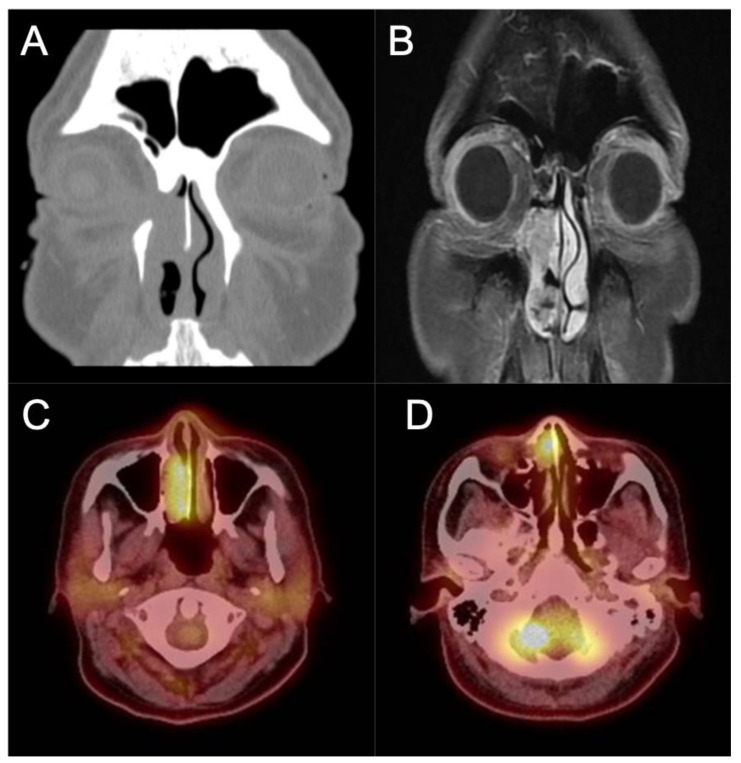
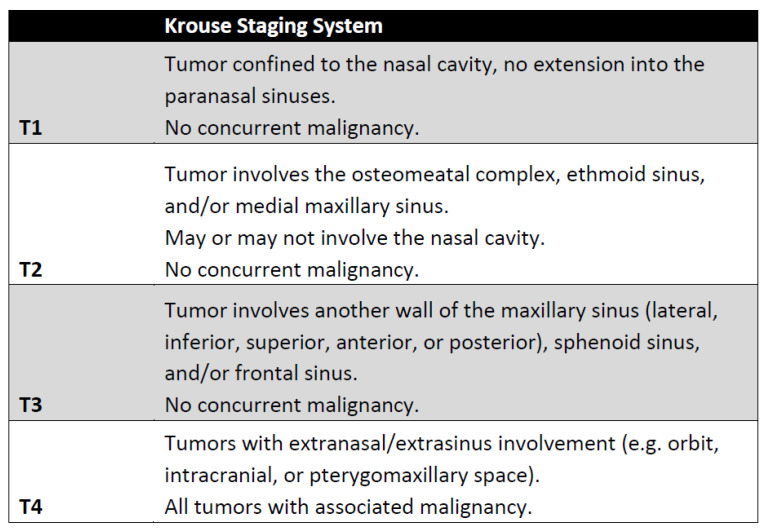



References
-
- Papagiannopoulos P., Tong C.L., Kuan E.C., Tajudeen B.A., Yver C.M., Kohanski M.A., Cohen N.A., Kennedy D.W., Palmer J.N., Adappa N.D. Inverted papilloma is associated with greater radiographic inflammatory disease than other sinonasal malignancy. Int. Forum Allergy Rhinol. 2020;10:278–281. doi: 10.1002/alr.22484. - DOI - PubMed
-
- Orlandi R.R., Rubin A., Terrell J.E., Anzai Y., Bugdaj M., Lanza D.C. Sinus inflammation associated with contralateral inverted papilloma. Am. J. Rhinol. 2002;16:91–95. - PubMed
Publication types
LinkOut - more resources
Full Text Sources
Research Materials
