


Automatic Cancer Cell Taxonomy Using an Ensemble of Deep Neural Networks
- PMID: 35565352
- PMCID: PMC9100154
- DOI: 10.3390/cancers14092224
Automatic Cancer Cell Taxonomy Using an Ensemble of Deep Neural Networks
Abstract
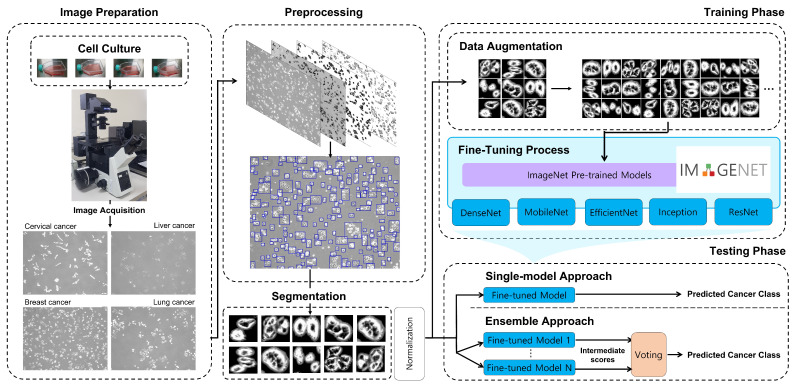
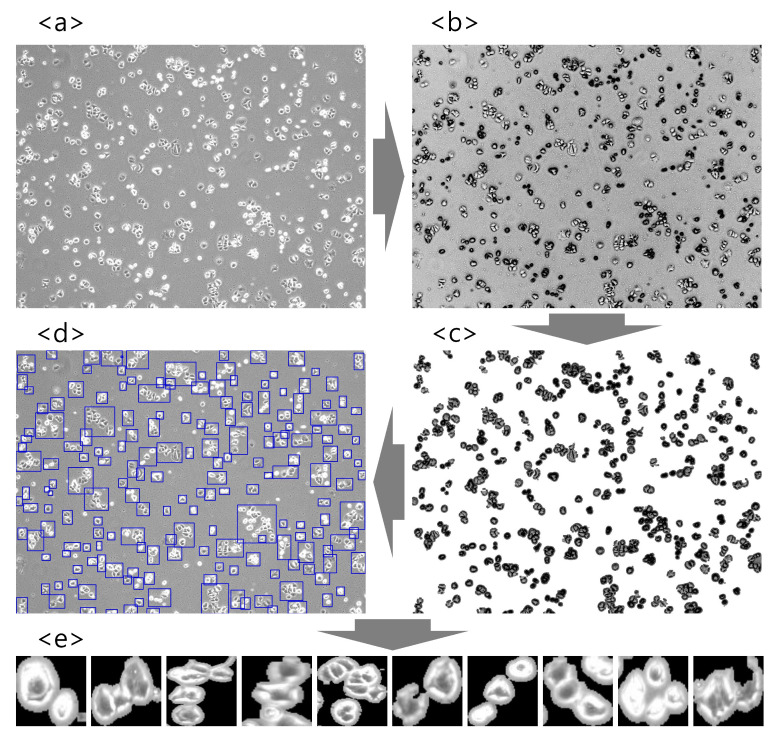
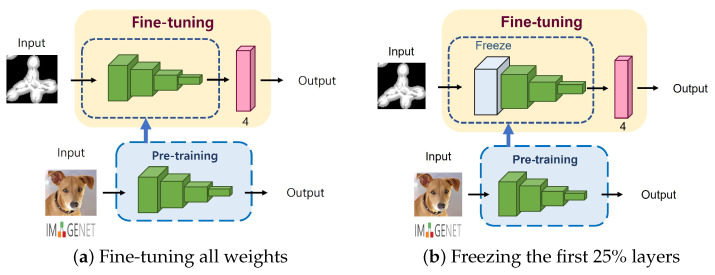
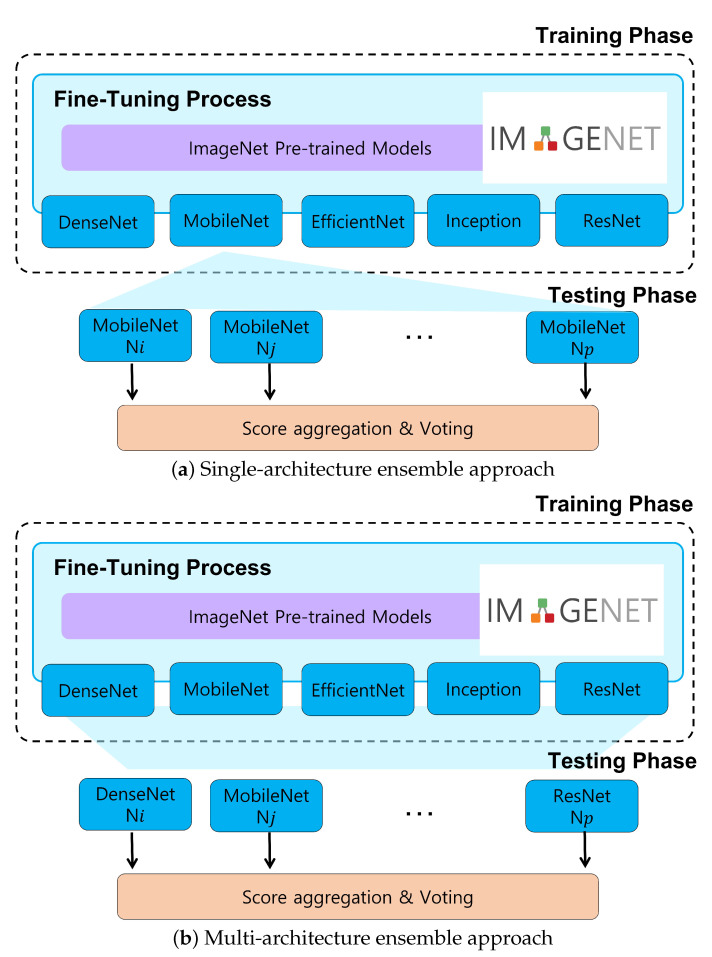
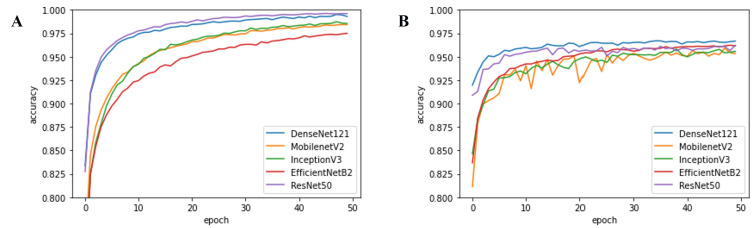
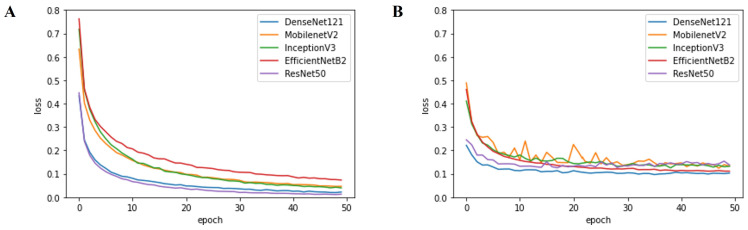
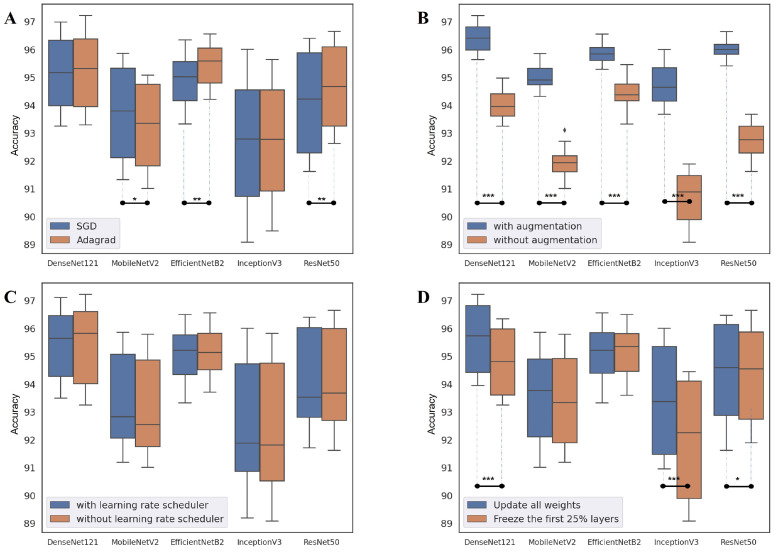
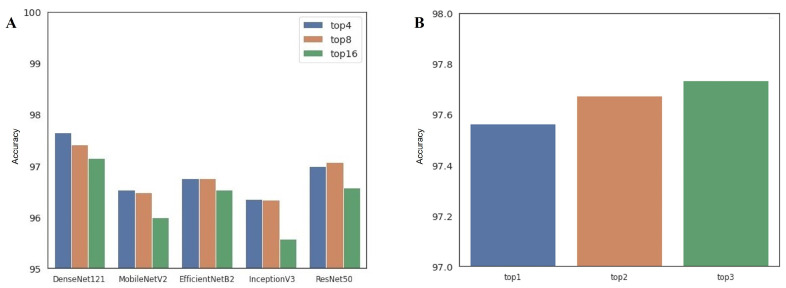
Microscopic image-based analysis has been intensively performed for pathological studies and diagnosis of diseases. However, mis-authentication of cell lines due to misjudgments by pathologists has been recognized as a serious problem. To address this problem, we propose a deep-learning-based approach for the automatic taxonomy of cancer cell types. A total of 889 bright-field microscopic images of four cancer cell lines were acquired using a benchtop microscope. Individual cells were further segmented and augmented to increase the image dataset. Afterward, deep transfer learning was adopted to accelerate the classification of cancer types. Experiments revealed that the deep-learning-based methods outperformed traditional machine-learning-based methods. Moreover, the Wilcoxon signed-rank test showed that deep ensemble approaches outperformed individual deep-learning-based models (p < 0.001) and were in effect to achieve the classification accuracy up to 97.735%. Additional investigation with the Wilcoxon signed-rank test was conducted to consider various network design choices, such as the type of optimizer, type of learning rate scheduler, degree of fine-tuning, and use of data augmentation. Finally, it was found that the using data augmentation and updating all the weights of a network during fine-tuning improve the overall performance of individual convolutional neural network models.
Keywords: cancer cell taxonomy; convolutional neural network; deep learning; ensemble approach.
Conflict of interest statement
The authors declare no conflict of interest.
Figures

References
-
- World Health Organization . WHO Position Paper on Mammography Screening. World Health Organization; Geneva, Switzerland: 2014. - PubMed
Grants and funding
- NRF-2019R1F1A1062397/National Research Foundation of Korea
- NRF-2021R1F1A1059665/National Research Foundation of Korea
- Dept. of IT Convergence Engineering, Kumoh National Institute of Technology/Brain Korea 21 FOUR Project
- Dept. of Data Science at Seoul National University of Science and Technology/Brain Korea 21 FOUR Project
LinkOut - more resources
Full Text Sources
