


A Data Science Approach for the Identification of Molecular Signatures of Aggressive Cancers
- PMID: 35565454
- PMCID: PMC9103663
- DOI: 10.3390/cancers14092325
A Data Science Approach for the Identification of Molecular Signatures of Aggressive Cancers
Abstract
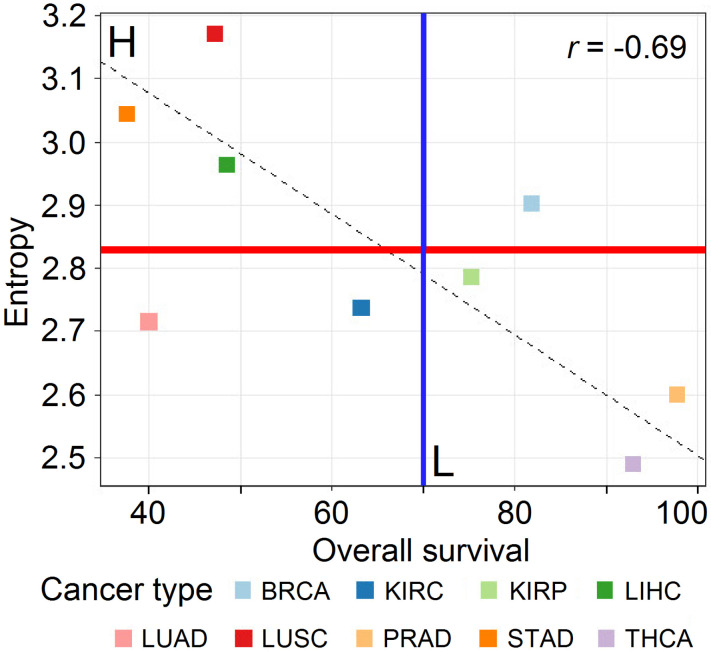
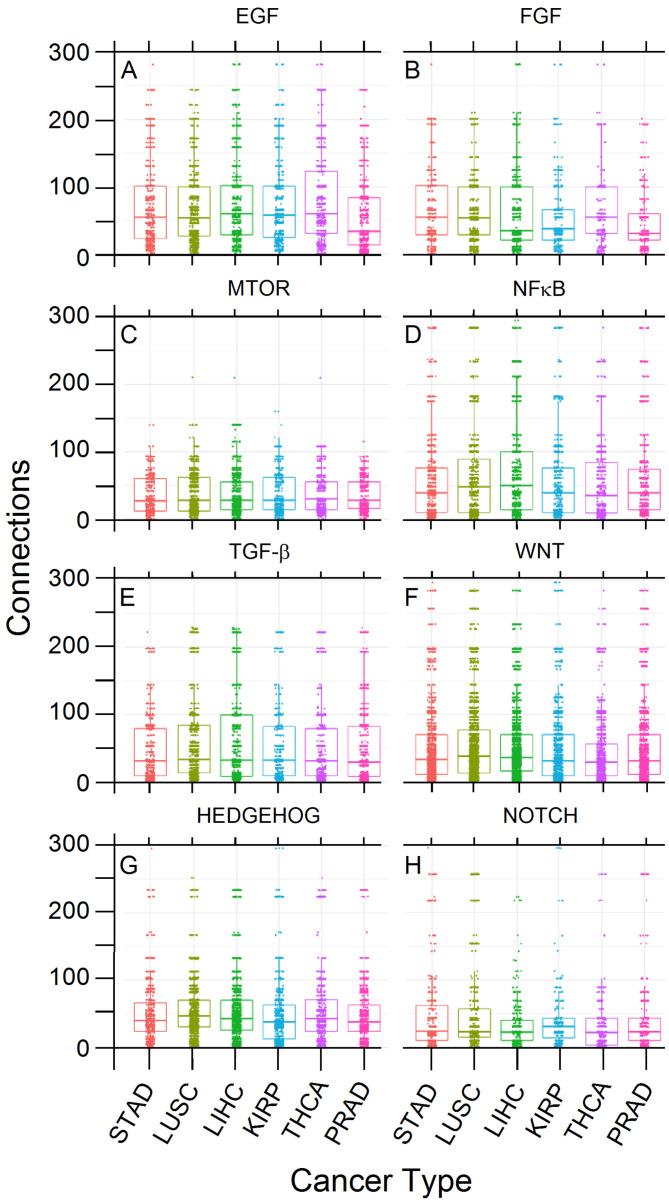
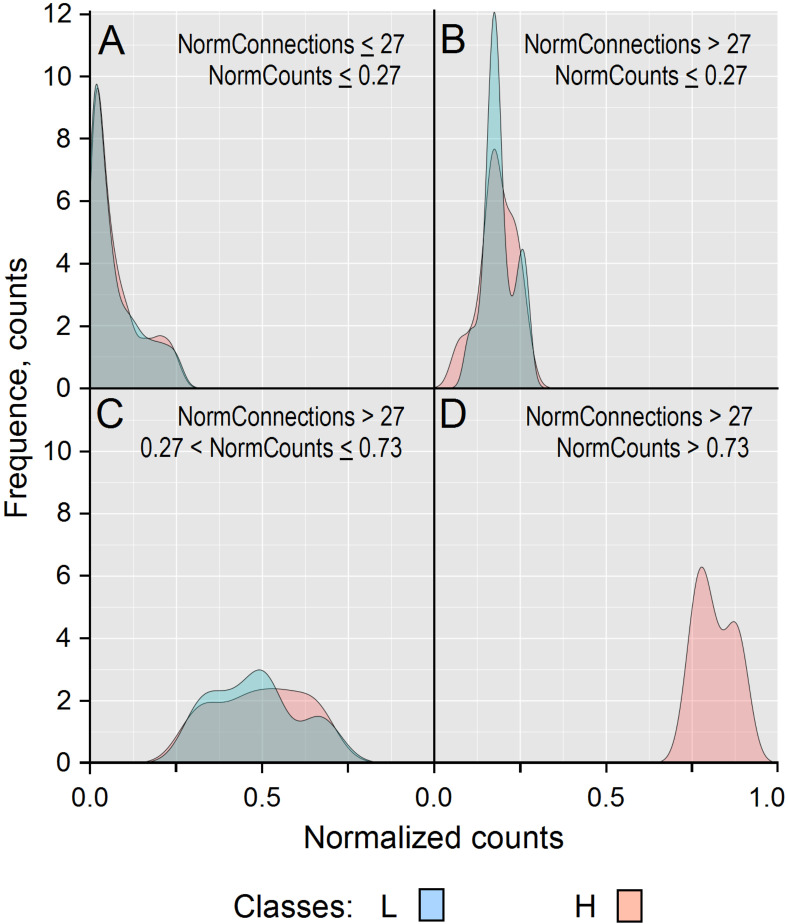
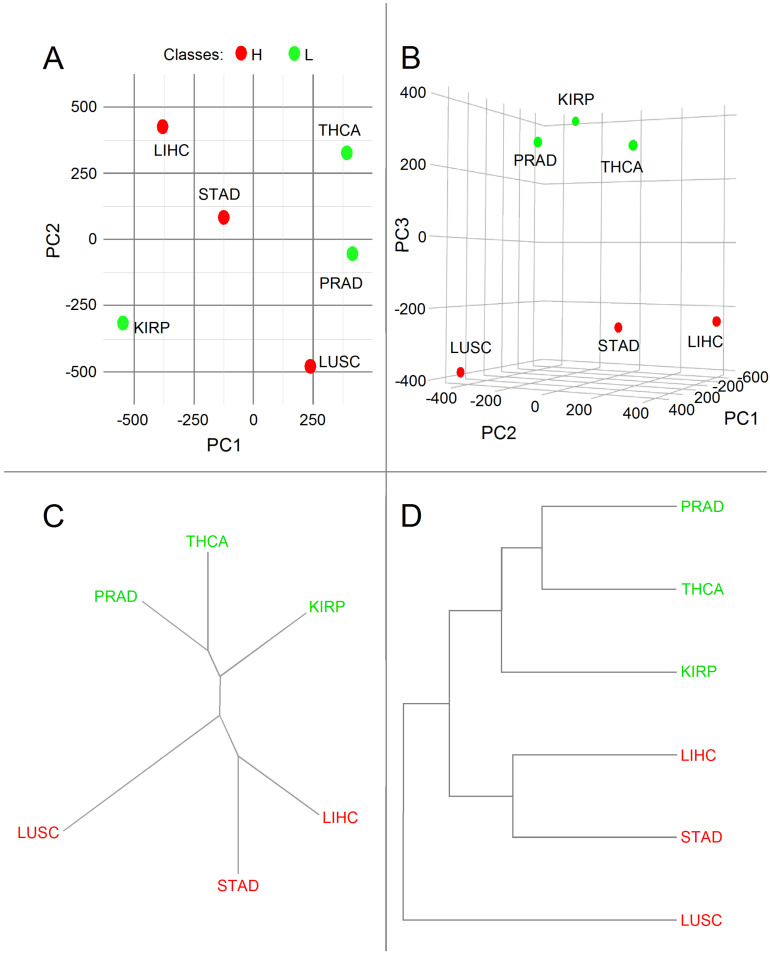
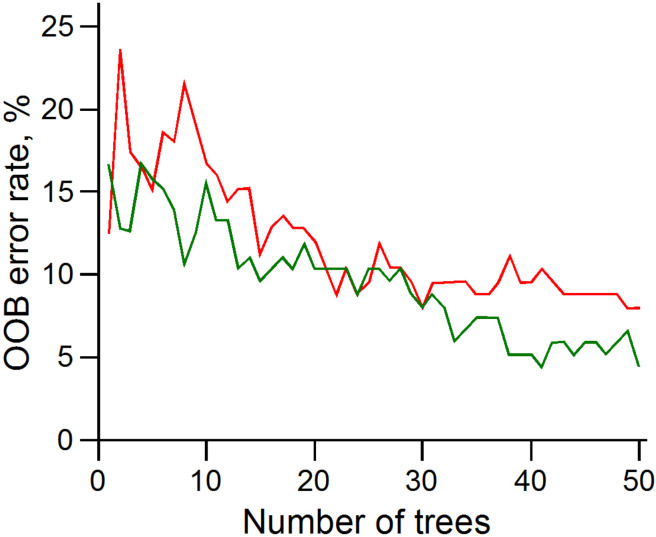
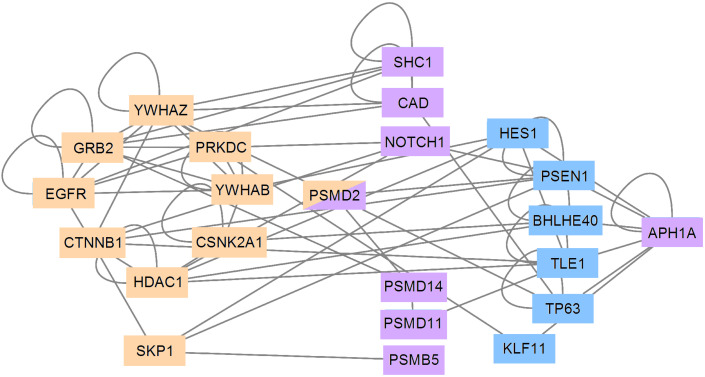
The main hallmarks of cancer include sustaining proliferative signaling and resisting cell death. We analyzed the genes of the WNT pathway and seven cross-linked pathways that may explain the differences in aggressiveness among cancer types. We divided six cancer types (liver, lung, stomach, kidney, prostate, and thyroid) into classes of high (H) and low (L) aggressiveness considering the TCGA data, and their correlations between Shannon entropy and 5-year overall survival (OS). Then, we used principal component analysis (PCA), a random forest classifier (RFC), and protein-protein interactions (PPI) to find the genes that correlated with aggressiveness. Using PCA, we found GRB2, CTNNB1, SKP1, CSNK2A1, PRKDC, HDAC1, YWHAZ, YWHAB, and PSMD2. Except for PSMD2, the RFC analysis showed a different list, which was CAD, PSMD14, APH1A, PSMD2, SHC1, TMEFF2, PSMD11, H2AFZ, PSMB5, and NOTCH1. Both methods use different algorithmic approaches and have different purposes, which explains the discrepancy between the two gene lists. The key genes of aggressiveness found by PCA were those that maximized the separation of H and L classes according to its third component, which represented 19% of the total variance. By contrast, RFC classified whether the RNA-seq of a tumor sample was of the H or L type. Interestingly, PPIs showed that the genes of PCA and RFC lists were connected neighbors in the PPI signaling network of WNT and cross-linked pathways.
Keywords: PCA; RFC; RNA-seq; WNT pathways; aggressiveness; cancer; interactome; machine learning; prognostic genes.
Conflict of interest statement
The authors declare no conflict of interest.
Figures
References
-
- Carels N., Conforte A.J., Lima C.R., da Silva F.A.B. Challenges for the optimization of drug therapy in the treatment of cancer. In: Da Silva F.A.B., Carels N., dos Santos T.M., Lopes F.J.P., editors. Computational Biology. Springer International Publishing; Cham, Switzerland: 2020. pp. 163–198.
-
- Lahiri C., Pawar S., Rohit Mishra R. Precision medicine and future of cancer treatment. Precis. Cancer Med. 2019;2:5167. doi: 10.21037/pcm.2019.09.01. - DOI
Grants and funding
LinkOut - more resources
Full Text Sources
Research Materials
Miscellaneous
