


Reconsidering the Tolerable Upper Levels of Zinc Intake among Infants and Young Children: A Systematic Review of the Available Evidence
- PMID: 35565906
- PMCID: PMC9102402
- DOI: 10.3390/nu14091938
Reconsidering the Tolerable Upper Levels of Zinc Intake among Infants and Young Children: A Systematic Review of the Available Evidence
Abstract
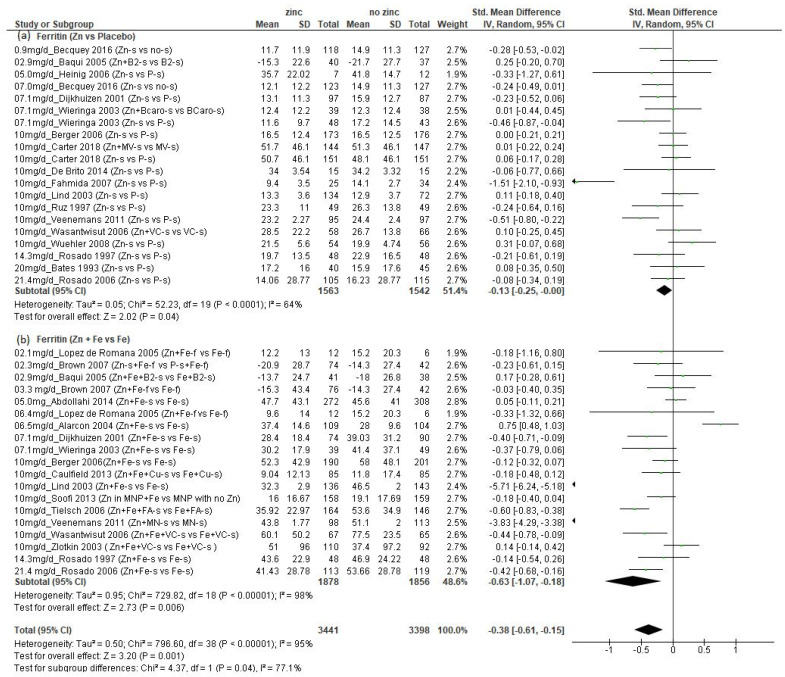
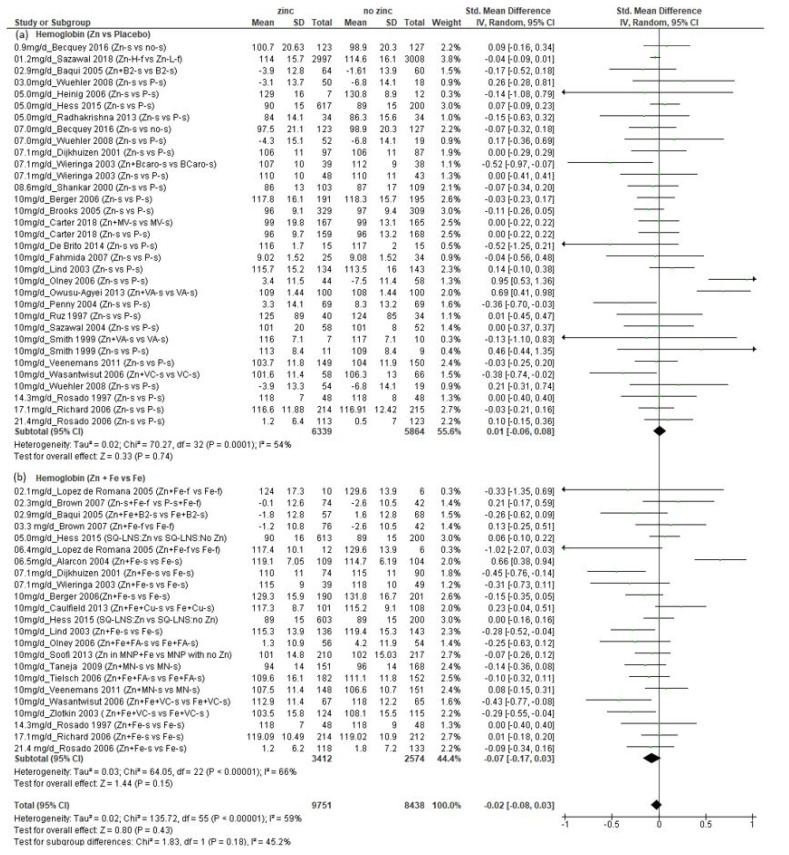
Safe upper levels (UL) of zinc intake for children were established based on either (1) limited data from just one study among children or (2) extrapolations from studies in adults. Resulting ULs are less than amounts of zinc consumed by children in many studies that reported benefits of zinc interventions, and usual dietary zinc intakes often exceed the UL, with no apparent adverse effects. Therefore, existing ULs may be too low. We conducted a systematic bibliographic review of studies among preadolescent children, in which (1) additional zinc was provided vs. no additional zinc provided, and (2) the effect of zinc on serum or plasma copper, ceruloplasmin, ferritin, transferrin receptor, lipids, or hemoglobin or erythrocyte super-oxide dismutase were assessed. We extracted data from 44 relevant studies with 141 comparisons. Meta-analyses found no significant overall effect of providing additional zinc, except for a significant negative effect on ferritin (p = 0.001), albeit not consistent in relation to the zinc dose. Interpretation is complicated by the significant heterogeneity of results and uncertainties regarding the physiological and clinical significance of outcomes. Current zinc ULs should be reassessed and potentially revised using data now available for preadolescent children and considering challenges regarding interpretation of results.
Keywords: review; upper-intake levels; zinc; zinc fortification; zinc nutrient reference values (NRVs); zinc supplementation.
Conflict of interest statement
The authors declare no conflict of interest.
Figures
References
-
- International Zinc Nutrition Consultative Group (IZiNCG) Brown K.H., Rivera J.A., Bhutta Z., Gibson R.S., King J.C., Lonnerdal B., Ruel M.T., Sandtrom B., Wasantwisut E., et al. International Zinc Nutrition Consultative Group (IZiNCG) technical document #1. Assessment of the risk of zinc deficiency in populations and options for its control. Food Nutr. Bull. 2004;25:S99–S203. - PubMed
-
- Institute of Medicine (USA) Panel on Micronutrients . Dietary Reference Intakes for Vitamin A, Vitamin K, Arsenic, Boron, Chromium, Copper, Iodine, Iron, Manganese, Molybdenum, Nickel, Silicon, Vanadium, and Zinc. Institute of Medicine; Washington, DC, USA: 2001. - PubMed
-
- World Health Organization (WHO) Food and Agricultural Organization of the United Nations (FAO) Vitamin and Mineral Requirements in Human Nutrition. 2nd ed. World Health Organization; Geneva, Switzerland: 2004. pp. 1–341.
-
- Scientific Committee on Food. Scientific Panel on Dietetic Products Nutrition and Allergies . Tolerable Upper Intake Levels for Vitamins and Minerals. European Food Safety Authority (EFSA); Parma, Italy: 2006.
-
- Institute of Medicine (USA) Food and Nutrition Board . Dietary Reference Intakes: A Risk Assessment Model for Establishing Upper Intake Levels for Nutrients. National Academies Press; Washington, DC, USA: 1998. - PubMed
