. 2022 May 9;14(9):1974.
doi: 10.3390/nu14091974.

RNA-Seq Analysis of Protection against Chronic Alcohol Liver Injury by Rosa roxburghii Fruit Juice (Cili) in Mice

Affiliations

RNA-Seq Analysis of Protection against Chronic Alcohol Liver Injury by Rosa roxburghii Fruit Juice (Cili) in Mice

Shan Yang et al. Nutrients. .

Abstract

Rosa roxburghii Tratt. fruit juice (Cili) is used as a medicinal and edible resource in China due to its antioxidant and hypolipidemic potentials. The efficacy of Cili in protecting alcohol-induced liver injury and its underlying mechanism was investigated. C57BL/6J mice received a Lieber-DeCarli liquid diet containing alcohol to produce liver injury. After the mice were adapted gradually to 5% alcohol, Cili (4 mL and 8 mL/kg/day for 4 weeks) were gavaged for treatment. The serum enzyme activities, triglyceride levels, histopathology and Oil-red O staining were examined. The RNA-Seq and qPCR analyses were performed to determine the protection mechanisms. Cili decreased serum and liver triglyceride levels in mice receiving alcohol. Hepatocyte degeneration and steatosis were improved by Cili. The RNA-Seq analyses showed Cili brought the alcohol-induced aberrant gene pattern towards normal. The qPCR analysis verified that over-activation of CAR and PXR (Cyp2a4, Cyp2b10 and Abcc4) was attenuated by Cili. Cili alleviated overexpression of oxidative stress responsive genes (Hmox1, Gsta1, Gstm3, Nqo1, Gclc, Vldlr, and Cdkn1a), and rescued alcohol-downregulated metabolism genes (Angptl8, Slc10a2, Ces3b, Serpina12, C6, and Selenbp2). Overall, Cili was effective against chronic alcohol liver injury, and the mechanisms were associated with decreased oxidative stress, improved lipid metabolism through modulating nuclear receptor CAR-, PXR-and Nrf2-mediated pathways.

Keywords: Oil-red O staining; RNA-Seq; Rosa roxburghii Tratt. fruit juice (Cili); chronic alcohol liver injury; qPCR; triglyceride.


Conflict of interest statement

The authors declare no conflict of interest.

Figures
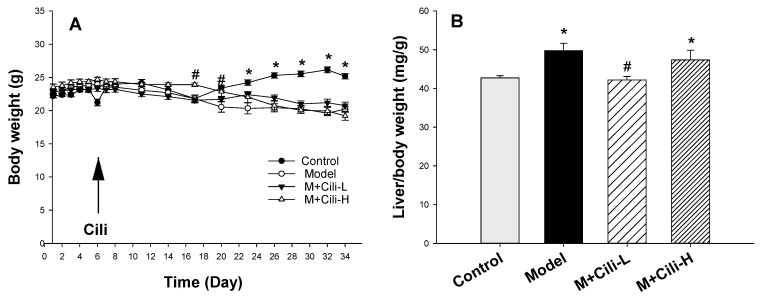
Figure 1
Figure 1
Animal body weight (A) and liver index (B). Mice were adapted to gradient alcohol increase from 1% to 5% in a Lieber-DeCarli liquid diet from Day 1 to Day 5, and Cili was gavaged at the 6th day (arrow) at 4 mL/kg (M+Cili-L) and 8 mL/kg (M+Cili-H) daily for 28 days (4 weeks). Livers were collected at the end of the experiment. Data are mean ± SEM (n = 9), * Significantly different from the Control group, p < 0.05; # Significantly different from the Model group, p < 0.05.
Figure 2
Figure 2
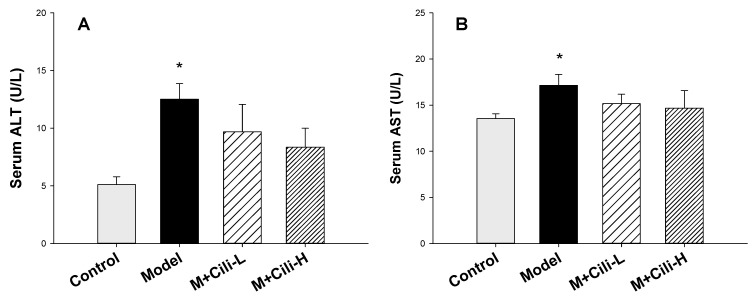
Serum alanine aminotransferase (ALT, (A)) and aspartate aminotransferase (AST, (B)) determination. Data are mean ± SEM (n = 9–11), * Significantly different from the Control group, p < 0.05.
Figure 3
Figure 3
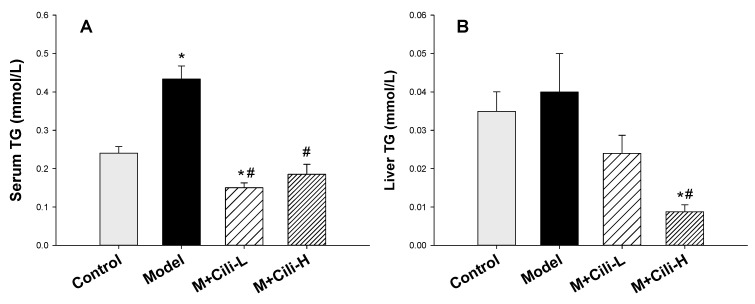
Serum triglyceride (Serum TG, (A)) and liver triglyceride (Liver TG, (B)) determination. Data are mean ± SEM (n = 9–11), * Significantly different from the Control group, p < 0.05; # Significantly different from the Model group, p < 0.05.
Figure 4
Figure 4
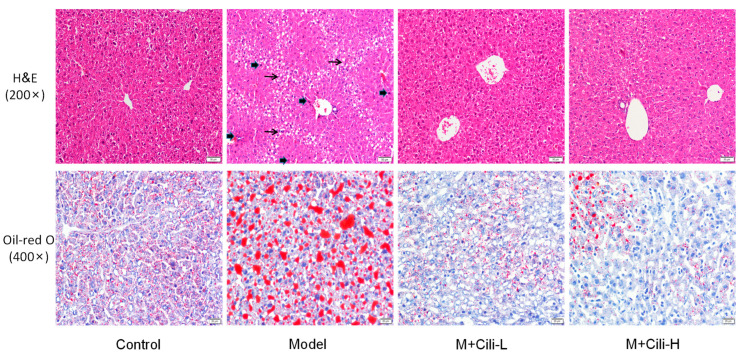
Representative photos of haematoxylin and eosin (H&E) staining (top) and Oil-red O staining (bottom). Model mice were fed Lieber-DeCarli liquid diet containing 5% alcohol with or without Cili (4 mL and 8 mL/kg for 28 days). Control mice received liquid diet without alcohol. Magnification for H&E (200×), for Oil-red O (400×). Thin arrows indicate hepatocyte vacuolation, slight swelling and degeneration, and thick arrows indicate foci of apoptosis/necrosis.
Figure 5
Figure 5
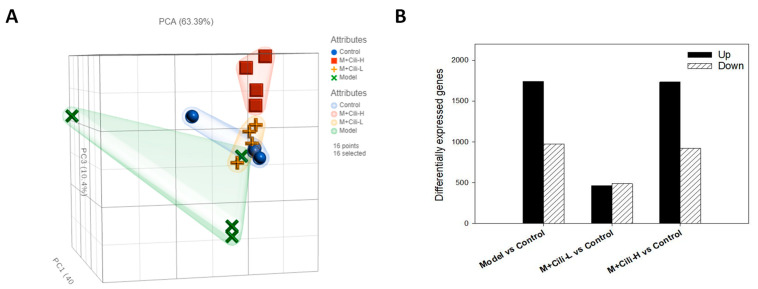
Differentially expressed gene (DEG) analysis. (A). Principle Component Analysis (PCA) of 16 samples (4/group); (B). Overview of DEGs as compared to the Control group under p value ≤ 0.05. Upregulated genes are in black bar, while downregulated genes are in shaded bar.
Figure 6
Figure 6
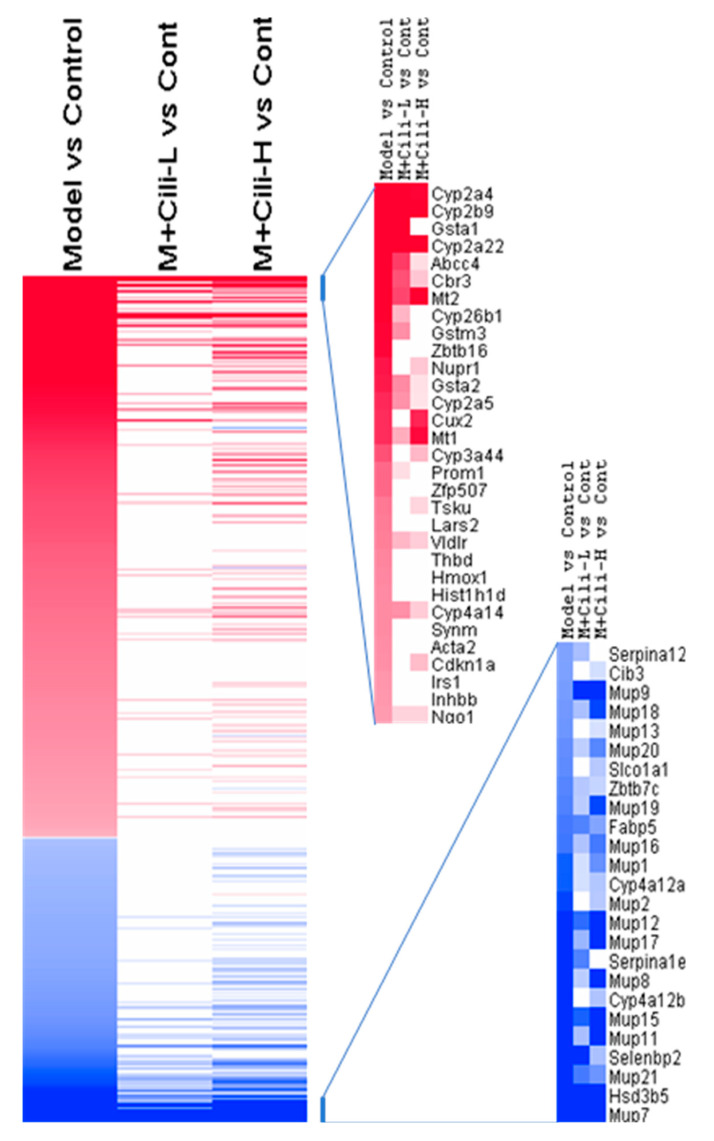
Heatmap comparison of DEGs based on Model vs Control groups. Red indicates increased expression and blue indicates decreased expression. The scale bar was +3/−3 Log2 Fold change. The entire DEGs are provided as Supplementary Table S2.
Figure 7
Figure 7
The qPCR analysis of the constitutive androstane receptor (CAR) and pregnane X receptor (PXR) biomarkers among groups. Data are mean ± SEM (n = 8), * Significantly different from the Control group, p < 0.05; # Significantly different from the Model group, p < 0.05.
Figure 8
Figure 8
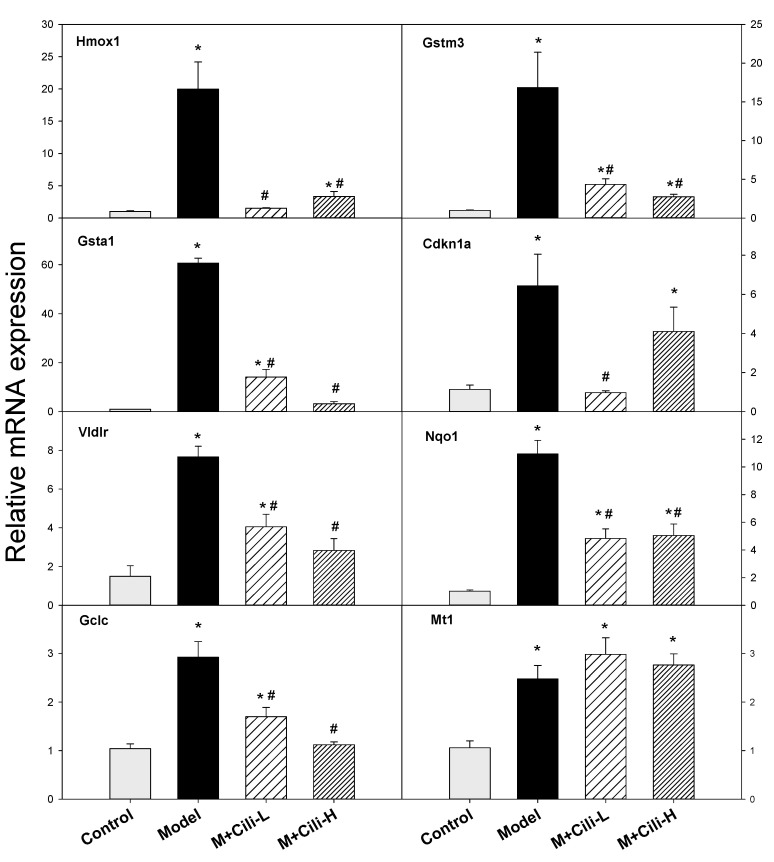
qPCR analysis gene expression related to oxidative damage among groups. Data are mean ± SEM (n = 8), * Significantly different from the Control group, p < 0.05; # Significantly different from the Model group, p < 0.05.
Figure 9
Figure 9
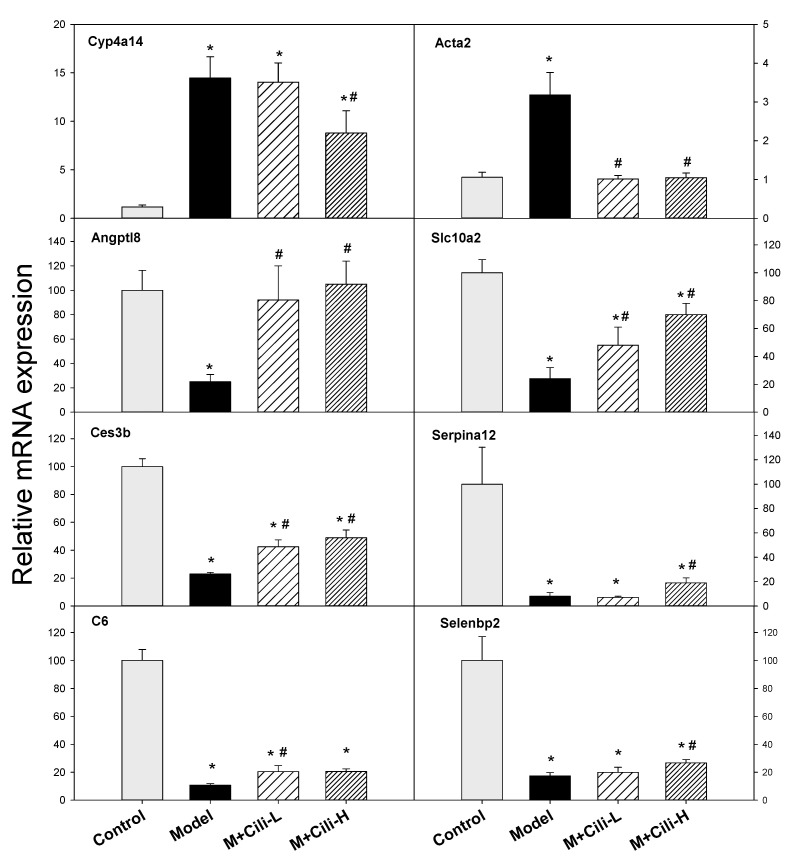
qPCR analysis gene expression related to lipid metabolism related genes among groups. Data are mean ± SEM (n = 8), * Significantly different from the Control group, p < 0.05; # Significantly different from the Model group, p < 0.05.
Figure 10
Figure 10
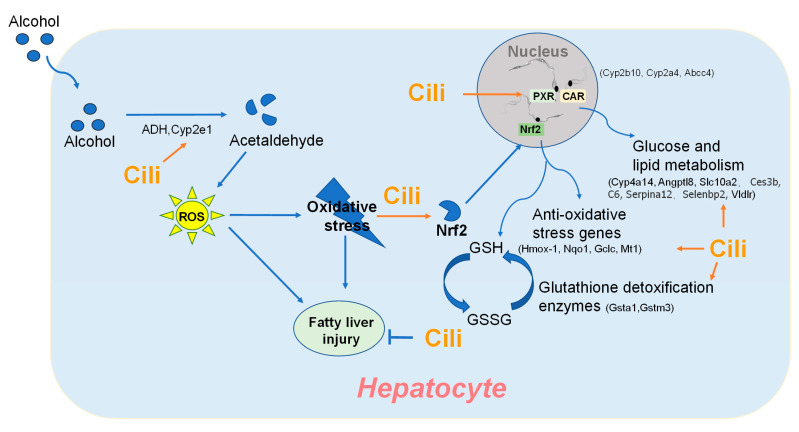
Proposed protective mechanism of Cili against alcoholic liver injury.

Similar articles

Cited by

References

    1. Committee Z.B.E. Zhonghua Bencao. Guizhou Science and Technology Press; Guiyang, China: 2005. pp. 334–335.
    1. Pharmacopoeia . Pharmacopoeia of the People’s Republic of China. Volume 1 Chinese Medical Press; Beijing, China: 2020.
    1. Li H., Fang W., Wang Z., Chen Y. Physicochemical, biological properties, and flavour profile of Rosa roxburghii Tratt, Pyracantha fortuneana, and Rosa laevigata Michx fruits: A comprehensive review. Food Chem. 2022;366:130509. doi: 10.1016/j.foodchem.2021.130509. - DOI - PubMed
    1. Wang L.T., Lv M.J., An J.Y., Fan X.H., Dong M.Z., Zhang S.D., Wang J.D., Wang Y.Q., Cai Z.H., Fu Y.J. Botanical characteristics, phytochemistry and related biological activities of Rosa roxburghii Tratt fruit, and its potential use in functional foods: A review. Food Funct. 2021;12:1432–1451. doi: 10.1039/D0FO02603D. - DOI - PubMed
    1. Liu M.H., Zhang Q., Zhang Y.H., Lu X.Y., Fu W.M., He J.Y. Chemical Analysis of Dietary Constituents in Rosa roxburghii and Rosa sterilis Fruits. Molecules. 2016;21:1204. doi: 10.3390/molecules21091204. - DOI - PMC - PubMed