


Coconut Oil Alleviates the Oxidative Stress-Mediated Inflammatory Response via Regulating the MAPK Pathway in Particulate Matter-Stimulated Alveolar Macrophages
- PMID: 35566249
- PMCID: PMC9105152
- DOI: 10.3390/molecules27092898
Coconut Oil Alleviates the Oxidative Stress-Mediated Inflammatory Response via Regulating the MAPK Pathway in Particulate Matter-Stimulated Alveolar Macrophages
Abstract
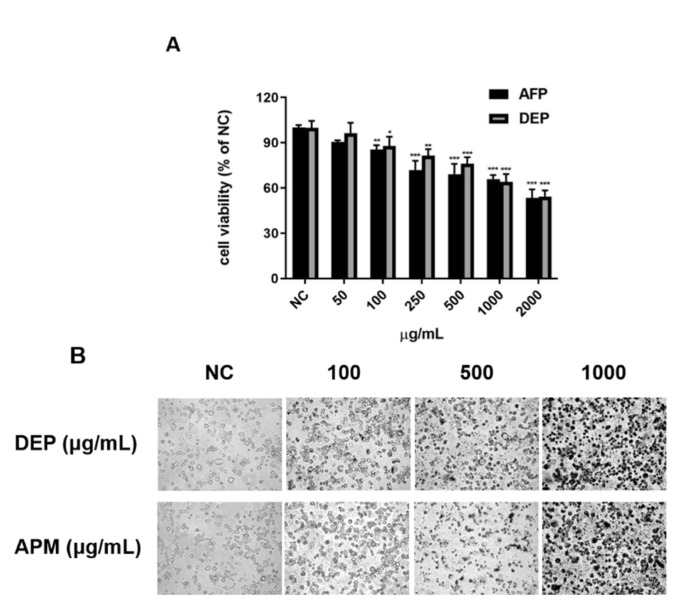
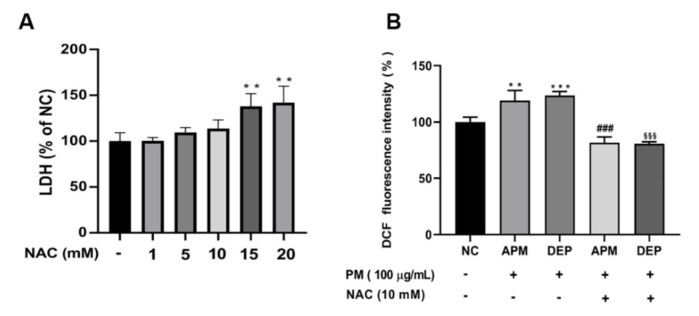
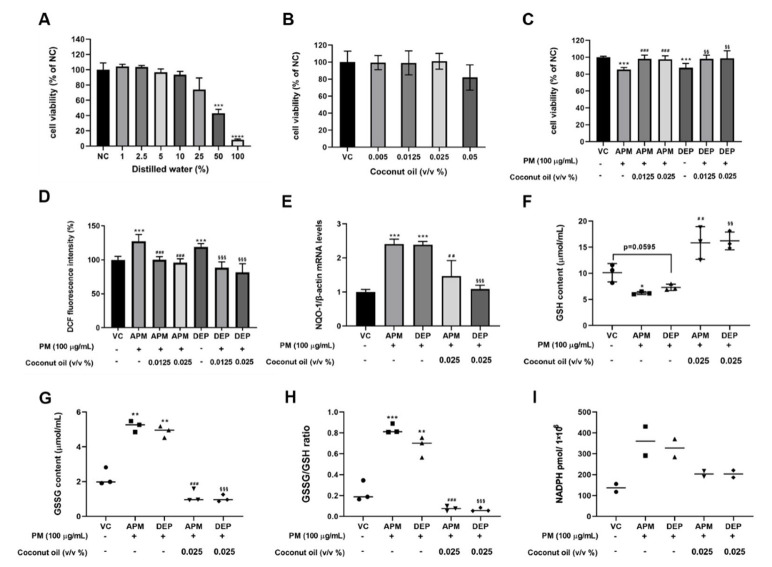
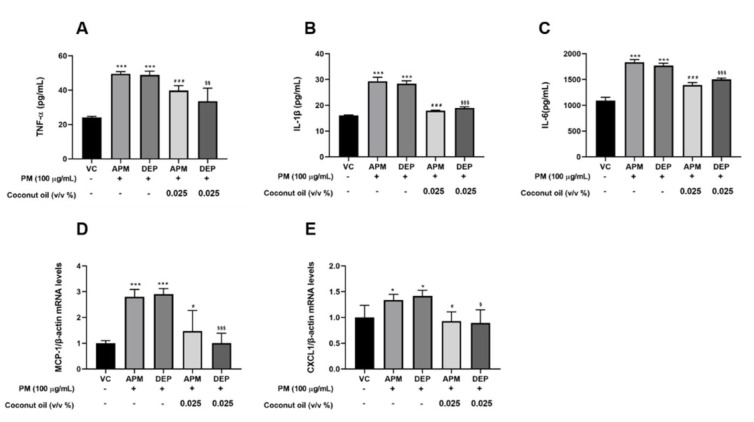
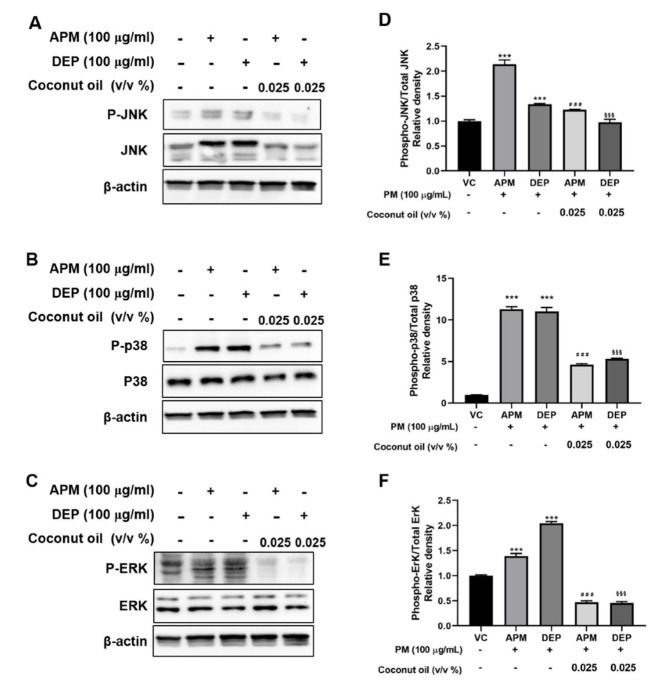
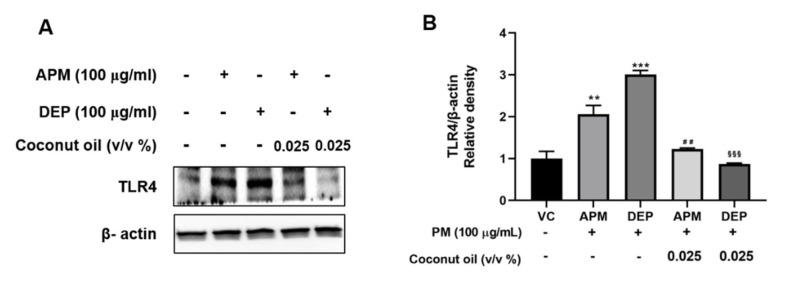
Exposure to particulate matter (PM) is related to various respiratory diseases, and this affects the respiratory immune system. Alveolar macrophages (AMs), which are defenders against pathogens, play a key role in respiratory inflammation through cytokine production and cellular interactions. Coconut oil demonstrates antioxidant and anti-inflammatory properties, and it is consumed worldwide for improved health. However, reports on the protective effects of coconut oil on the PM-induced respiratory immune system, especially in AMs, are limited. In this study, we generated artificial PM (APM) with a diameter approximately of 30 nm by controlling the temperature, and compared its cytotoxicity with diesel exhaust particles (DEP). We also investigated the antioxidant and anti-inflammatory effects of coconut oil in APM− and DEP−stimulated AMs, and the underlying molecular mechanisms. Our results showed that APM and DEP had high cytotoxicity in a dose-dependent manner in AMs. In particular, APM or DEP at 100 μg/mL significantly decreased cell viability (p < 0.05) and significantly increased oxidative stress markers such as reactive oxygen species (p < 0.01); the GSSH/GSH ratio (p < 0.01); and cytokine production, such as tumor necrosis factor-α (p < 0.001), interleukin (IL)-1β (p < 0.001), and IL-6 (p < 0.001). The expression of the genes for chemokine (C-X-C motif) ligand-1 (p < 0.05) and monocyte chemoattractant protein-1 (p < 0.001); and the proteins toll-like receptor (TLR) 4 (p < 0.01), mitogen-activated protein kinase (MAPK), and c-Jun N-terminal kinase (p < 0.001), p38 (p < 0.001); and extracellular receptor-activated kinase (p < 0.001), were also upregulated by PM. These parameters were reversed upon treatment with coconut oil in APM− or DEP−stimulated AMs. In conclusion, coconut oil can reduce APM− or DEP−induced inflammation by regulating the TLR4/MAPK pathway in AMs, and it may protect against adverse respiratory effects caused by PM exposure.
Keywords: alveolar macrophage; artificial particulate matter; coconut oil; diesel exhaust particulates; inflammation; mitogen-activated protein kinase; oxidative stress.
Conflict of interest statement
The authors declare no conflict of interest.
Figures
References
-
- Gilmour J.M.M.I., Duvall R.M., Dailey L., Daniels M., Boykin E., Cho S.-H., Doerfler D., Gordon T., Devlin R.B. Comparative toxicity of size-fractionated airborne particulate matter obtained from different cities in the United States. Inhal. Toxicol. 2007;19((Suppl. 1)):7–16. doi: 10.1080/08958370701490379. - DOI - PubMed
-
- Coccini T., Barni S., Mustarelli P., Locatelli C., Roda E. One-month persistence of inflammation and alteration of fibrotic marker and cytoskeletal proteins in rat kidney after Cd-doped silica nanoparticle instillation. Toxicol. Lett. 2015;232:449–457. doi: 10.1016/j.toxlet.2014.11.021. - DOI - PubMed
-
- Dong G.-H. Perspective for Future Research Direction about Health Impact of Ambient Air Pollution in China. Adv. Exp. Med. Biol. 2017;1017:263–268. - PubMed
MeSH terms
Substances
Grants and funding
LinkOut - more resources
Full Text Sources
Research Materials
Miscellaneous
