


No Gender Differences in Pain Perception and Medication after Lumbar Spine Sequestrectomy-A Reanalysis of a Randomized Controlled Clinical Trial
- PMID: 35566458
- PMCID: PMC9105259
- DOI: 10.3390/jcm11092333
No Gender Differences in Pain Perception and Medication after Lumbar Spine Sequestrectomy-A Reanalysis of a Randomized Controlled Clinical Trial
Abstract
Background: Gender issues have received increasing attention in clinical research of the past years, and biological sex has been introduced as a moderating variable in experimental pain perception. However, in clinical studies of acute pain and gender, there are conflicting results. In particular, there are limited data on the impact of gender differences after spinal sequestrectomy. The aim of this work is to examine gender differences in postoperative pain and pain medication consumption in an inpatient clinical setting.
Methods: Data of a completed double-blind RCT was subdivided by gender and reanalyzed by means of an analysis of variance in repeated measures. Outcomes included pain severity measured on a VAS, affective (SES-A) and sensory pain perception (SES-S) and morphine equivalent doses (MED) of analgesics after spinal sequestrectomy.
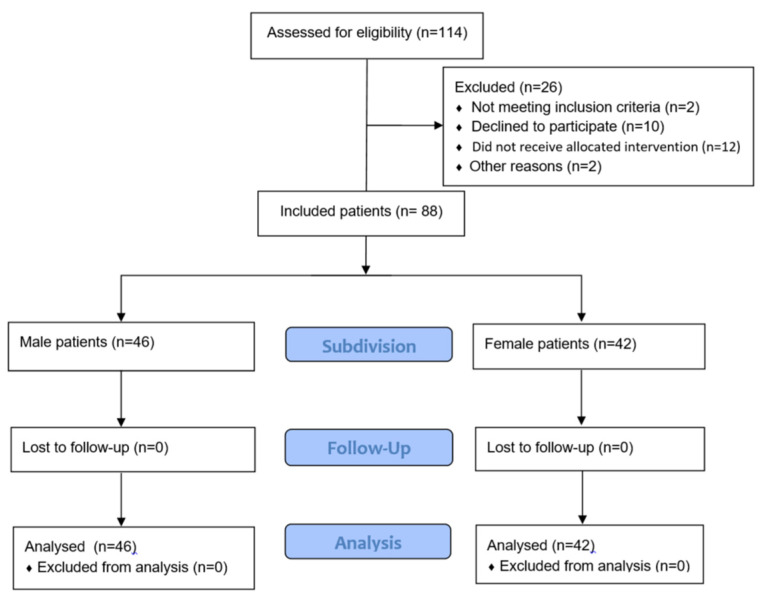
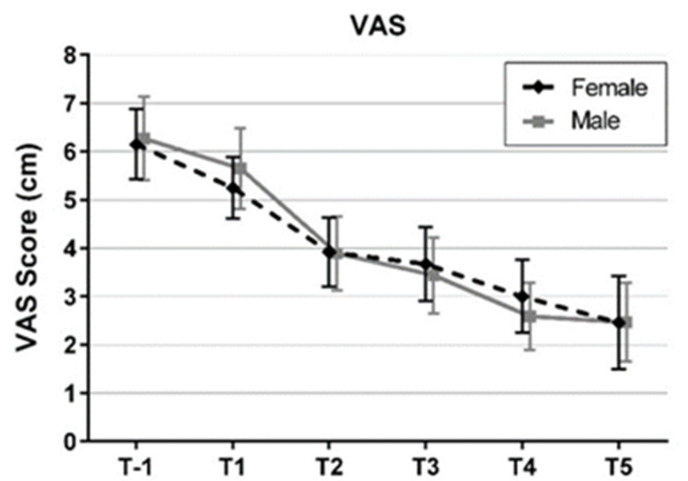
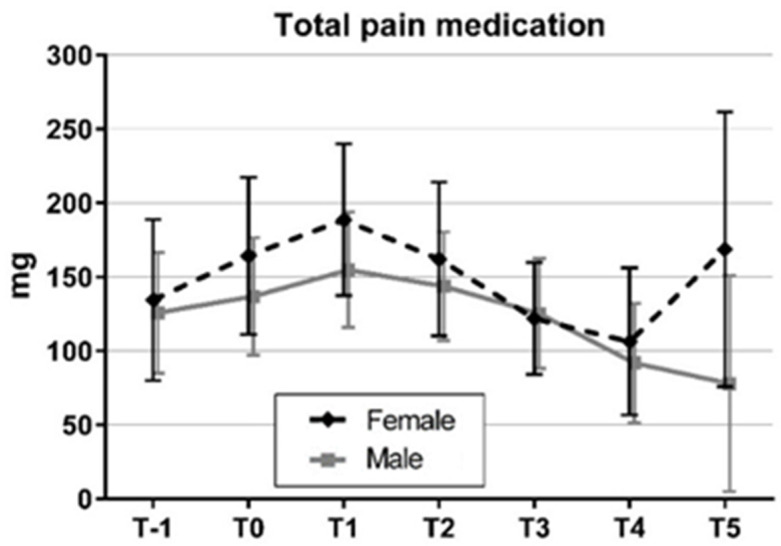
Results: In total, 42 female (47.73%) and 46 male (52.27%) patients were analyzed. No differences in pain severity (VAS: Gender × Time F = 0.35; (df = 2, 86); p = 0.708), affective and sensory pain perception (SES-A: Gender × Time F = 0.08; (df = 2, 86); p = 0.919; SES-S: Gender × Time F = 0.06; (df = 2, 86); p = 0.939) or post-operative opioid use between men and women (MEDs: Gender × Time F = 1.44; (df = 2, 86); p = 0.227) could be observed.
Conclusions: This reanalysis of an RCT with respect to gender differences is to our knowledge the first attempt to investigate the role of gender in pain perception and medication after lumbar spine sequestrectomy. In contrast to other studies, we were not able to show significant differences between male and female patients in all pain-related outcomes. Apart from well-established pain management, psychological reasons such as gender-specific response biases or the observer effect might explain our results.
Trial registration: The study was registered as a regulatory phase IV study at the German Clinical Trials Register (DRKS), an open-access online register for clinical trials conducted in Germany (Reg-No: DRKS00007913).
Keywords: clinical trial; gender differences; lumbar sequestrectomy; postoperative pain.
Conflict of interest statement
The authors declare no conflict of interest.
Figures
References
-
- Dydyk A.M., Ngnitewe Massa R., Mesfin F.B. StatPearls: Disc Herniation. StatPearls Publishing; Treasure Island, FL, USA: 2022.
-
- Fjeld O.R., Grøvle L., Helgeland J., Småstuen M.C., Solberg T.K., Zwart J.-A., Grotle M. Complications, reoperations, readmissions, and length of hospital stay in 34 639 surgical cases of lumbar disc herniation. Bone Jt. J. 2019;101-B:470–477. doi: 10.1302/0301-620X.101B4.BJJ-2018-1184.R1. - DOI - PubMed
-
- Volbracht E., Fürchtenicht A., Grote-Westrick M. Back Surgery: Place of residence determines if patients are admitted to hospital, receive conservative treatment, or undergo an operation. Spotlight Healthc. 2017;7:1–8.
LinkOut - more resources
Full Text Sources
Miscellaneous
