


The effect of ergosterol on the allogrooming behavior of termites in response to the entomopathogenic fungus Metarhizium anisopliae
- PMID: 35567495
- PMCID: PMC10084151
- DOI: 10.1111/1744-7917.13055
The effect of ergosterol on the allogrooming behavior of termites in response to the entomopathogenic fungus Metarhizium anisopliae
Abstract
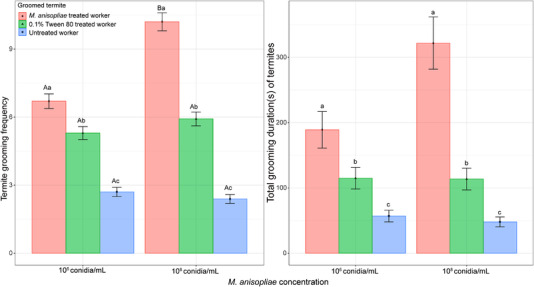
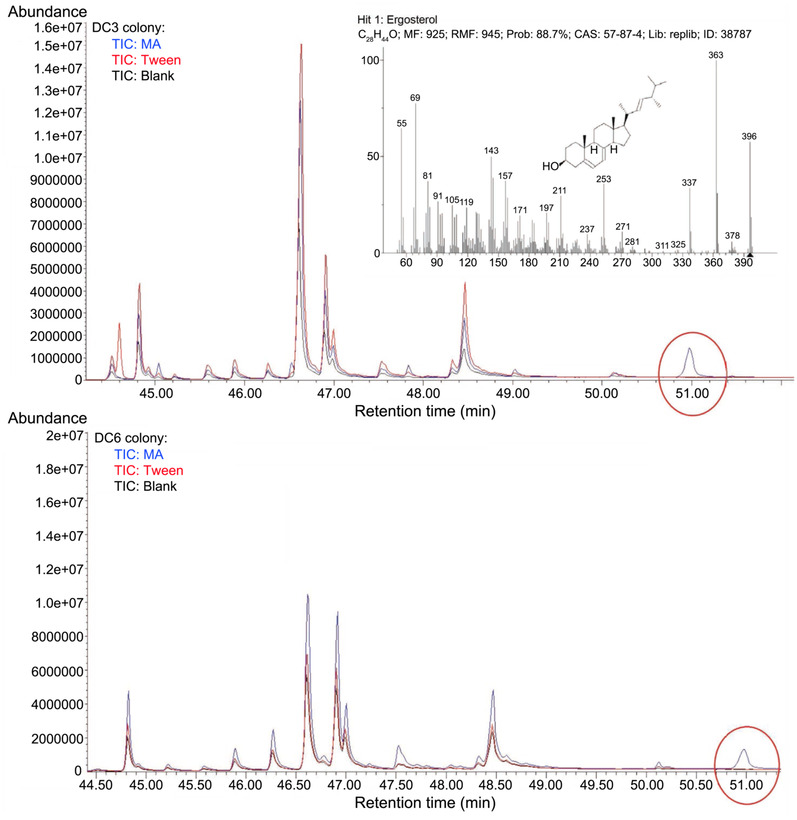
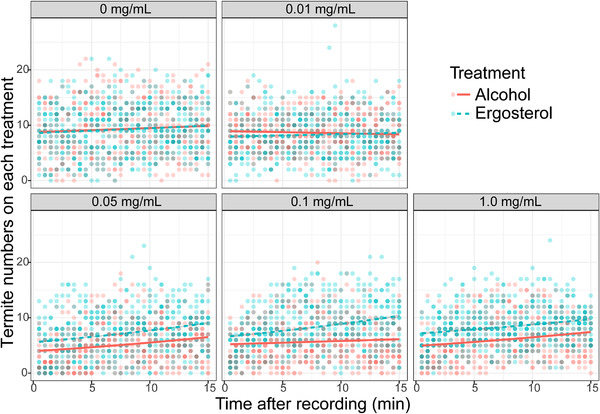
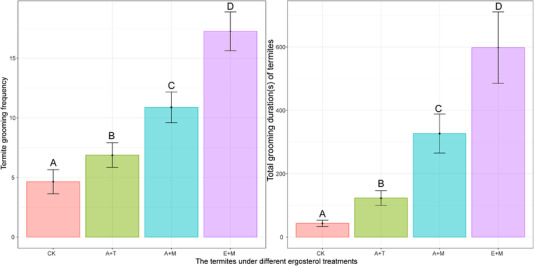
Termites have physiological and behavioral immunities that make them highly resistant to pathogen infections, which complicates biocontrol efforts. However, the stimuli that trigger the pathogen-avoidance behaviors of termites are still unclear. Our study shows that workers of Coptotermes formosanus exposed to the conidia of Metarhizium anisopliae exhibited a significantly higher frequency and longer duration of allogrooming behaviors compared with untreated termites. Volatile compounds in the cuticle of control termites and termites previously exposed to a suspension of M. anisopliae conidia were analyzed and compared using a gas chromatography-mass spectrometer (GC-MS). Our results showed that the amount of ergosterol differed between the fungus-exposed and control termites. Choice tests showed that termites significantly preferred to stay on filter paper treated with ergosterol (0.05, 0.1, or 1.0 mg/mL) compared with control filter paper. In addition, termites exposed to ergosterol followed by M. anisopliae conidia were allogroomed at a significantly higher frequency and for a longer duration than termites exposed to alcohol (the solvent used with the ergosterol in the ergosterol trials) alone followed by M. anisopliae conidia. These results showed that ergosterol may enhance the allogrooming behavior of termites in the presence of entomopathogenic fungi.
Keywords: allogrooming behavior; entomopathogenic fungus; ergosterol; recognition; social immunity; termite.
© 2022 The Authors. Insect Science published by John Wiley & Sons Australia, Ltd on behalf of Institute of Zoology, Chinese Academy of Sciences.
Figures
References
-
- Bates, D. , Maechler, M. , Bolker, B. and Walker, S. (2015) Fitting linear mixed‐effects models using lme4. Journal of Statistical Software, 67, 1‒48.
-
- Chouvenc, T. and Su, N.Y. (2010) Apparent synergy among defense mechanisms in subterranean termites (Rhinotermitidae) against epizootic events: limits and potential for biological control. Journal of Economic Entomology, 103, 1327‒1337. - PubMed
MeSH terms
LinkOut - more resources
Full Text Sources
Miscellaneous
