


Molecular basis for coordinating secondary metabolite production by bacterial and plant signaling molecules
- PMID: 35568198
- PMCID: PMC9163588
- DOI: 10.1016/j.jbc.2022.102027
Molecular basis for coordinating secondary metabolite production by bacterial and plant signaling molecules
Abstract
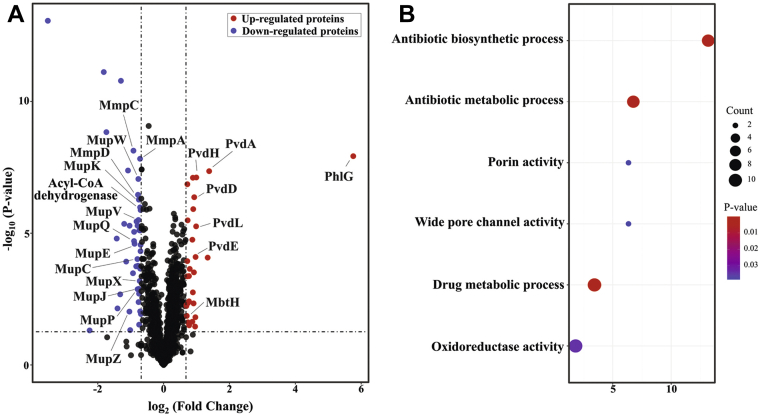
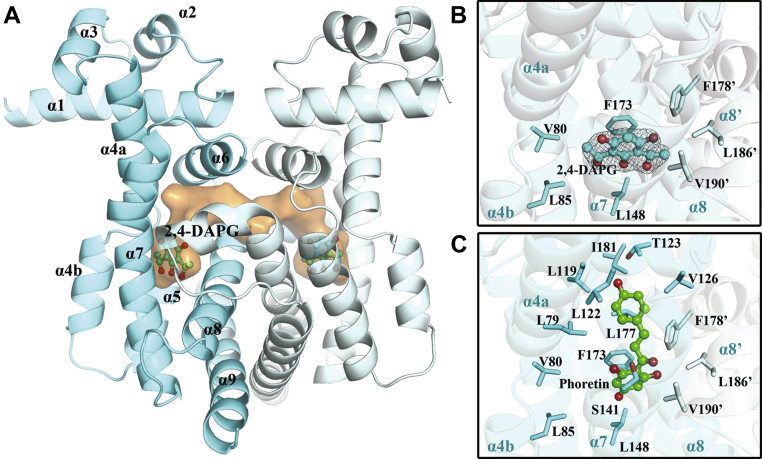
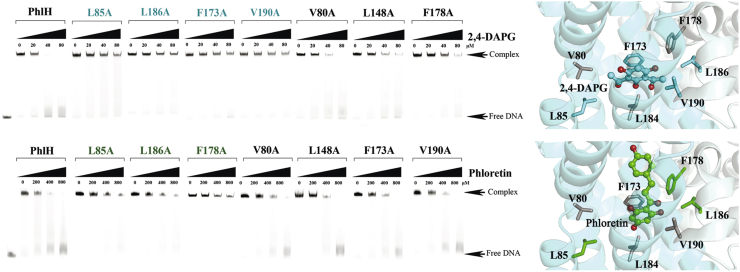
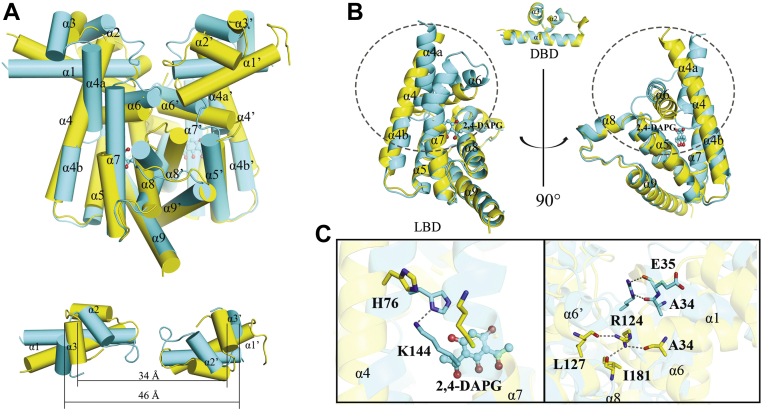
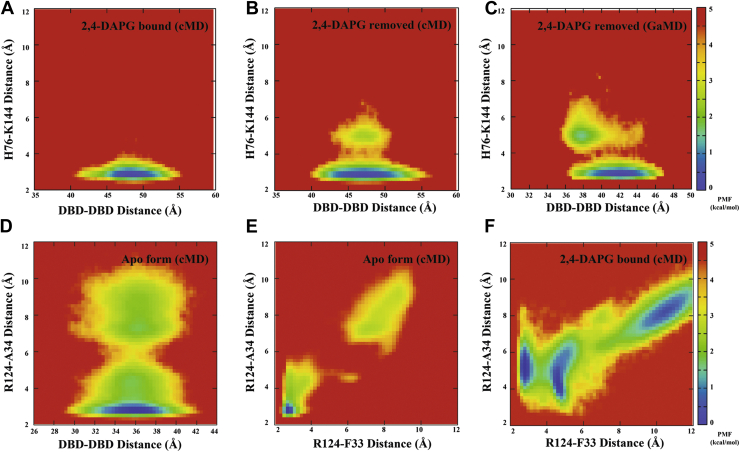
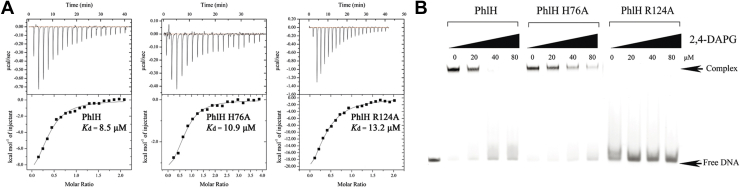
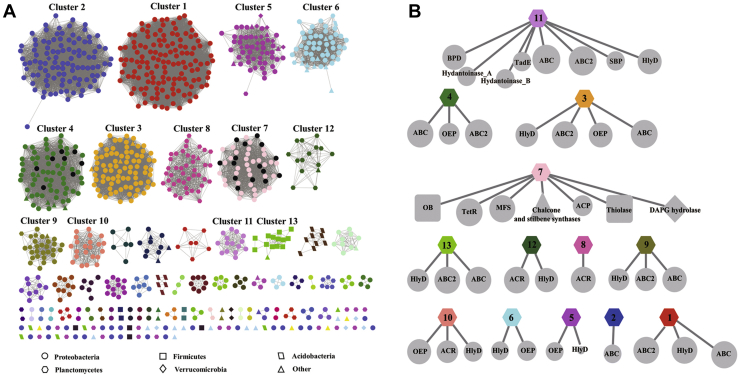
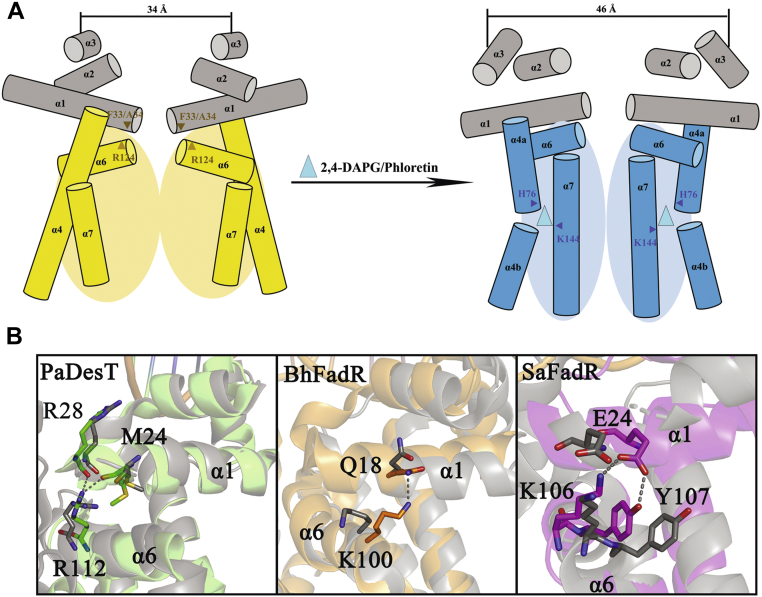
The production of secondary metabolites is a major mechanism used by beneficial rhizobacteria to antagonize plant pathogens. These bacteria have evolved to coordinate the production of different secondary metabolites due to the heavy metabolic burden imposed by secondary metabolism. However, for most secondary metabolites produced by bacteria, it is not known how their biosynthesis is coordinated. Here, we showed that PhlH from the rhizobacterium Pseudomonas fluorescens is a TetR-family regulator coordinating the expression of enzymes related to the biosynthesis of several secondary metabolites, including 2,4-diacetylphloroglucinol (2,4-DAPG), mupirocin, and pyoverdine. We present structures of PhlH in both its apo form and 2,4-DAPG-bound form and elucidate its ligand-recognizing and allosteric switching mechanisms. Moreover, we found that dissociation of 2,4-DAPG from the ligand-binding domain of PhlH was sufficient to allosterically trigger a pendulum-like movement of the DNA-binding domains within the PhlH dimer, leading to a closed-to-open conformational transition. Finally, molecular dynamics simulations confirmed that two distinct conformational states were stabilized by specific hydrogen bonding interactions and that disruption of these hydrogen bonds had profound effects on the conformational transition. Our findings not only reveal a well-conserved route of allosteric signal transduction in TetR-family regulators but also provide novel mechanistic insights into bacterial metabolic coregulation.
Keywords: 2,4-diacetylphloroglucinol; TetR-family transcriptional regulator; allosteric switching mechanism; bacterial metabolic coregulation; secondary metabolite.
Copyright © 2022 The Authors. Published by Elsevier Inc. All rights reserved.
Conflict of interest statement
Conflict of interest The authors declare that they have no conflicts of interest with the contents of this article.
Figures
References
-
- Tengerdy R.P., Szakács G. Perspectives in agrobiotechnology. J. Biotechnol. 1998;66:91–99. - PubMed
-
- Haas D., Défago G. Biological control of soil-borne pathogens by fluorescent pseudomonads. Nat. Rev. Microbiol. 2005;3:307–319. - PubMed
-
- Siddiqui Z.A. Springer; Dordrecht: 2006. PGPR: Biocontrol and Biofertilization.
-
- Haas D., Keel C. Regulation of antibiotic production in root-colonizing Peudomonas spp. And relevance for biological control of plant disease. Annu. Rev. Phytopathol. 2003;41:117–153. - PubMed
Publication types
MeSH terms
Substances
LinkOut - more resources
Full Text Sources
