


A TetR family transcriptional regulator, SP_2854 can affect the butenyl-spinosyn biosynthesis by regulating glucose metabolism in Saccharopolyspora pogona
- PMID: 35568948
- PMCID: PMC9107242
- DOI: 10.1186/s12934-022-01808-2
A TetR family transcriptional regulator, SP_2854 can affect the butenyl-spinosyn biosynthesis by regulating glucose metabolism in Saccharopolyspora pogona
Abstract
Background: Butenyl-spinosyn produced by Saccharopolyspora pogona exhibits strong insecticidal activity and a broad pesticidal spectrum. Currently, important functional genes involve in butenyl-spinosyn biosynthesis remain unknown, which leads to difficulty in efficiently understanding its regulatory mechanism, and improving its production by metabolic engineering.
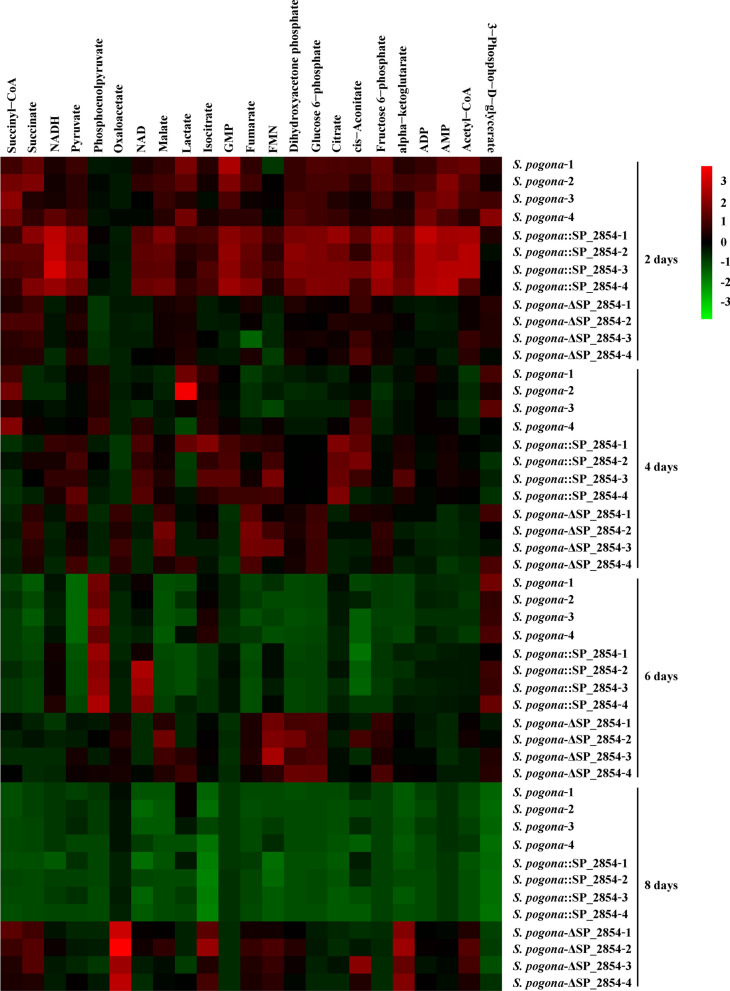
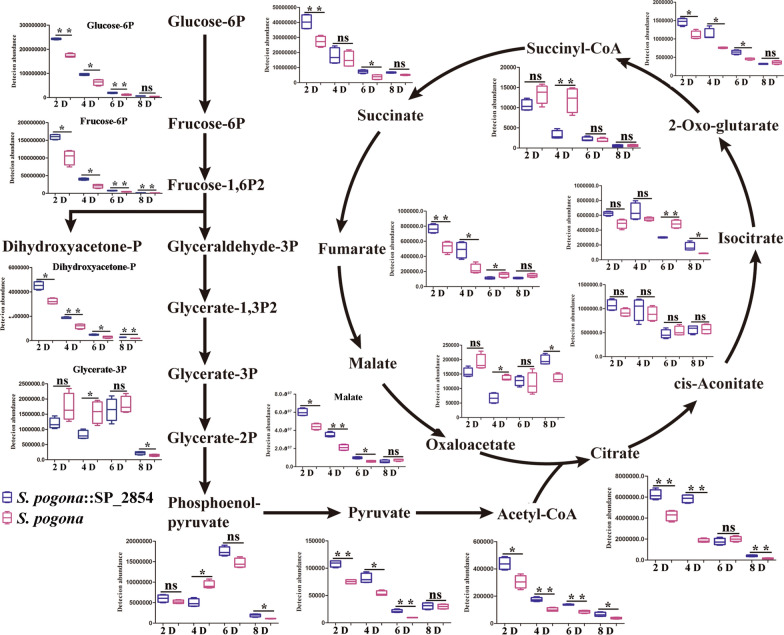
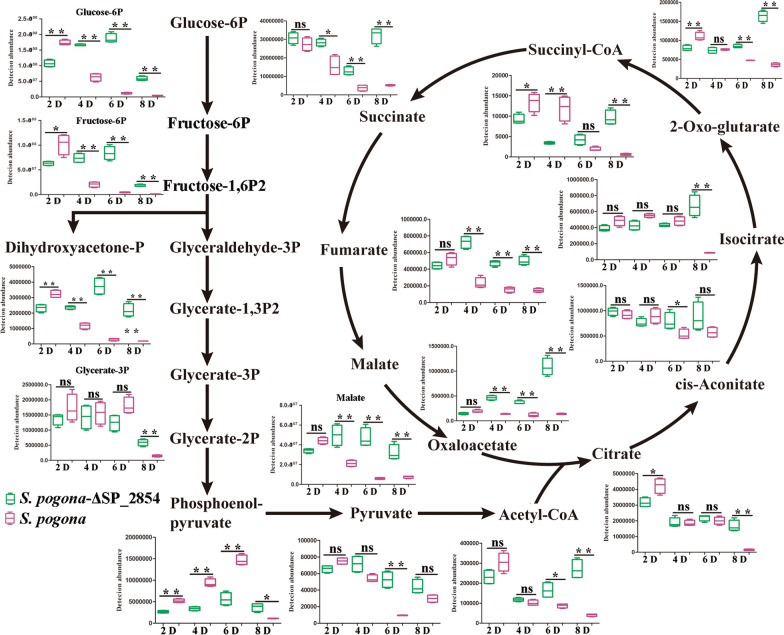
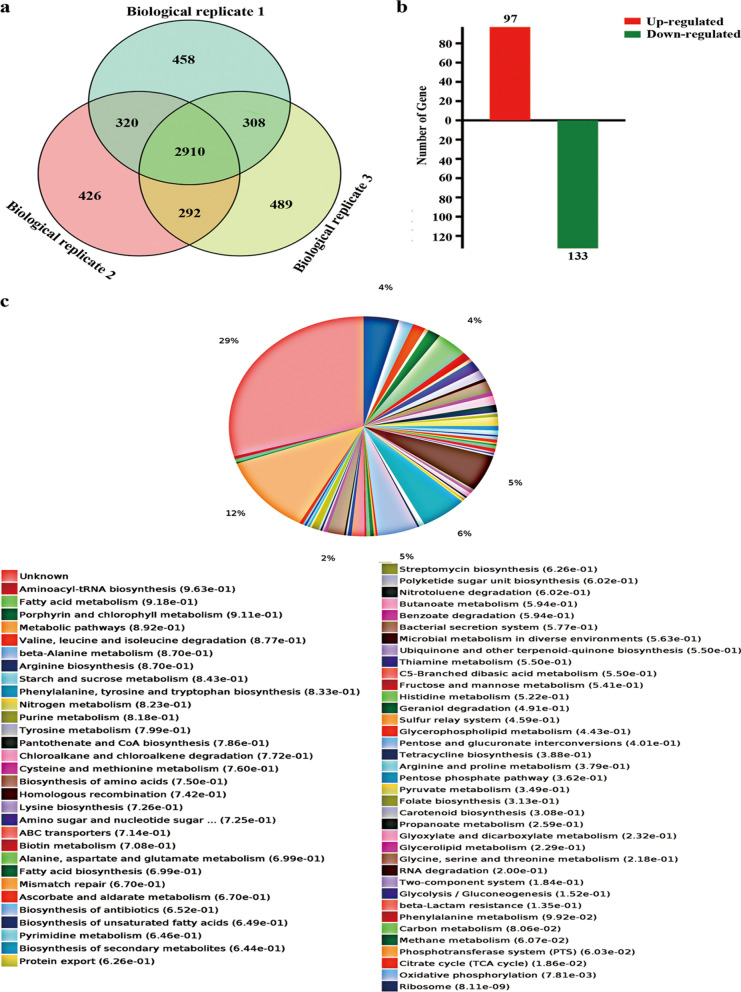
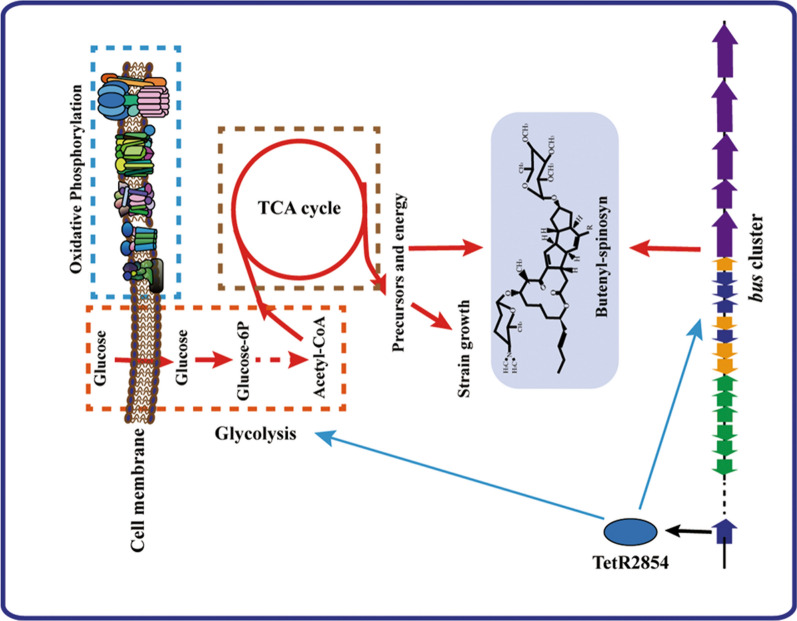
Results: Here, we identified a TetR family transcriptional regulator, SP_2854, that can positively regulate butenyl-spinosyn biosynthesis and affect strain growth, glucose consumption, and mycelial morphology in S. pogona. Using targeted metabolomic analyses, we found that SP_2854 overexpression enhanced glucose metabolism, while SP_2854 deletion had the opposite effect. To decipher the overproduction mechanism in detail, comparative proteomic analysis was carried out in the SP-2854 overexpressing mutant and the original strain, and we found that SP_2854 overexpression promoted the expression of proteins involved in glucose metabolism.
Conclusion: Our findings suggest that SP_2854 can affect strain growth and development and butenyl-spinosyn biosynthesis in S. pogona by controlling glucose metabolism. The strategy reported here will be valuable in paving the way for genetic engineering of regulatory elements in actinomycetes to improve important natural products production.
Keywords: Butenyl-spinosyn; Metabolic engineering; Omics analysis; SP_2854; Saccharopolyspora pogona.
© 2022. The Author(s).
Conflict of interest statement
The authors declare that they have no competing interests.
Figures


References
-
- Paul L, Donald RH, Laura LK, Dennis OD, Jeffrey RG, Gary DC, Thomas W, Thomas CS, Pat MRE, Paul RG. Discovery of the butenyl-spinosyn insecticides: novel macrolides from the new bacterial strain Saccharopolyspora pogona. Bioorg. Med Chem. 2009;17:4185–4196.
-
- Huang KX, Xia LQ, Zhang YM, Ding XZ, Zahn AJ. Recent advances in the biochemistry of spinosyns. Appl Microbiol Biotechnol. 2009;82:12–23. doi: 10.1007/s00253-008-1784-8. - DOI
-
- Sheng Z, Chen K, Li X. Advances in the biosynthesis of spinosad—a review. Wei Sheng Wu Xue Bao. 2016;56:397–405. - PubMed
-
- Araujo RDS, Lopes MP, Barbosa WF, Gonçalves WG, Fernandes KM, Martins GF, Tavares MG. Spinosad-mediated effects on survival, overall group activity and the midgut of workers of Partamona helleri (Hymenoptera: Apidae) Ecotoxicol Environ Saf. 2019;175:148–154. doi: 10.1016/j.ecoenv.2019.03.050. - DOI - PubMed
-
- Mendonça TP, Davi de Aquino J, Junio da Silva W, Mendes DR, Campos CF, Vieira JS, Barbosa NP, Carvalho Naves MP, Olegário de E, Alves de Rezende AA, Spanó MA, Bonetti AM, Vieira Santos VS, Pereira BB, Resende de Morais C. Genotoxic and mutagenic assessment of spinosad using bioassays with Tradescantia pallida and Drosophila melanogaster. Chemosphere. 2019;222:503–510. doi: 10.1016/j.chemosphere.2019.01.182. - DOI - PubMed
MeSH terms
Substances
Supplementary concepts
Grants and funding
LinkOut - more resources
Full Text Sources
