


Interpreting past trophic ecology of a threatened alpine parrot, kea Nestor notabilis, from museum specimens
- PMID: 35569094
- PMCID: PMC10083992
- DOI: 10.1111/1365-2656.13742
Interpreting past trophic ecology of a threatened alpine parrot, kea Nestor notabilis, from museum specimens
Abstract
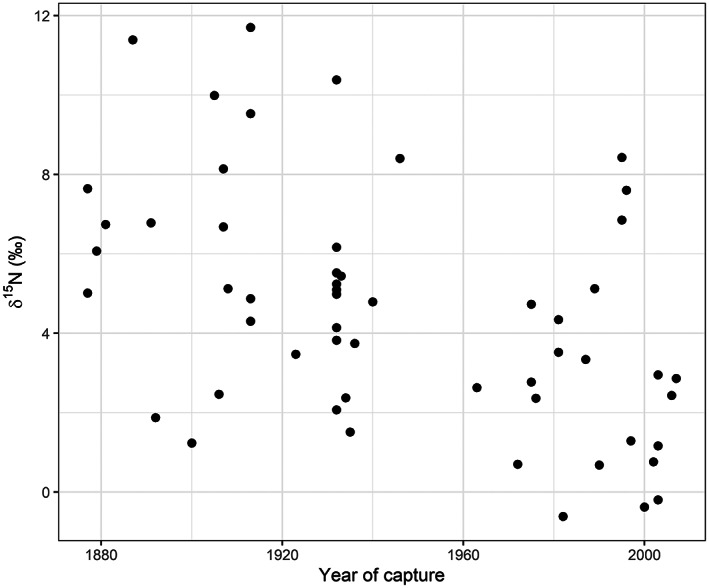
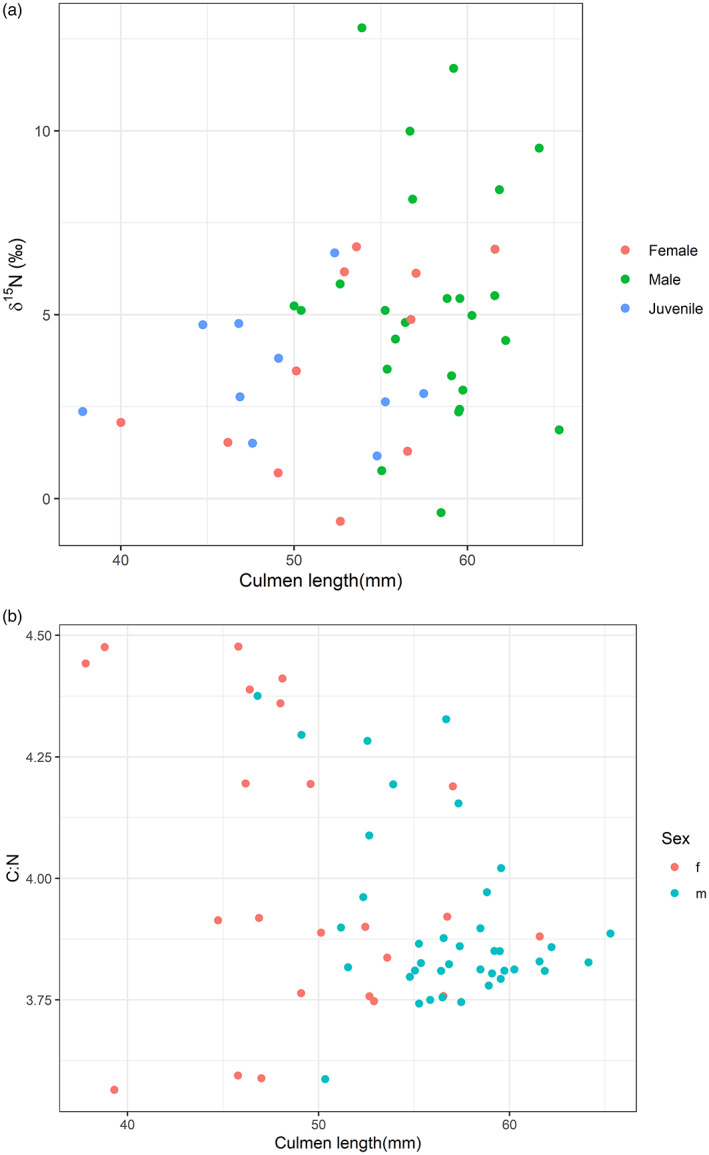
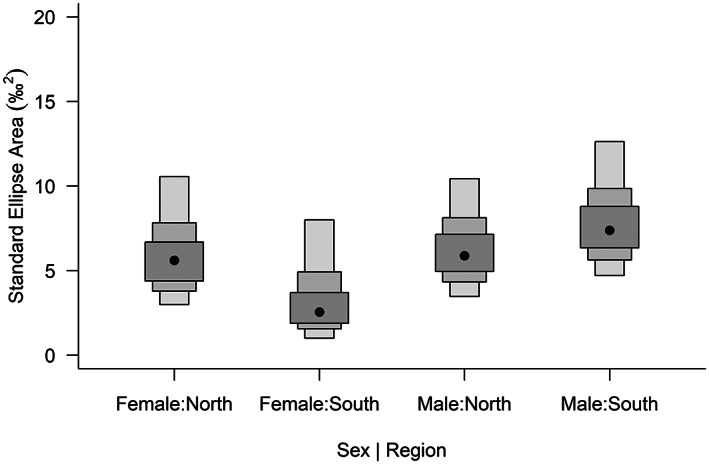
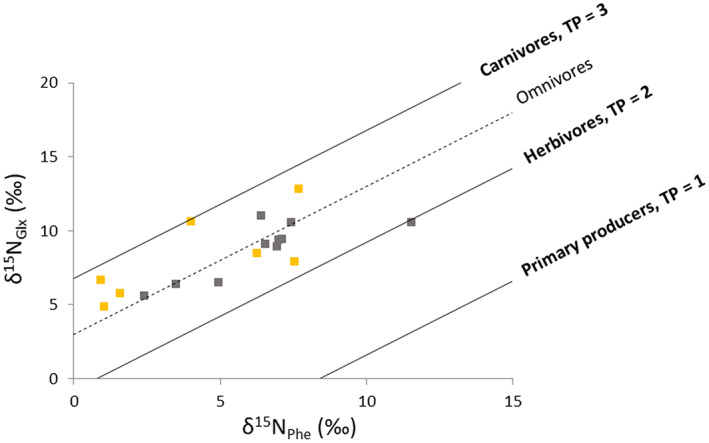
When ecosystems are under severe pressure or environments change, trophic position and intraspecific niche width may decrease or narrow, signalling that conservation action is required. In New Zealand, alpine and subalpine ecosystems have been extensively modified through farming since 19th-century European settlement, with consequences for indigenous species such as the kea Nestor notabilis. We investigated feather stable isotope values in the kea and predicted a lower trophic position in modern kea populations, to reflect reduced lowland habitat and a mixed diet with more plant material. We predicted that size and sex would influence trophic values in this sexually dimorphic species, with larger birds more likely to have a high protein diet. We examined potential dietary changes in 68 museum collected kea from 1880s to 2000s, first recording accession details including provenance and sex and measuring culmen length. We used bulk carbon and nitrogen stable isotope analyses (BSIAs) of feathers and a further feather subset using compound-specific stable isotope analyses of amino acids (CSIA-AA) to obtain isotopic values and estimate trophic position. BSIA showed δ15 N values in kea feathers declined through time and could indicate that early century kea were highly omnivorous, with δ15 N values on average higher than in modern kea. Variance in δ15 N values was greater after 1950, driven by a few individuals. Few differences between males and females were evident, although females in the south region had lower δ15 N values. There was a tendency for large male birds to have higher trophic values, perhaps reflecting dominant male bird behaviour noted in historical records. Nonetheless, CSIA-AA performed on a subset of the data suggested that variation in BSIA is likely due to baseline changes rather than relative trophic position which may be more homogenous than these data indicate. Although there was more variability in modern kea, we suggest caution in interpretation. Stable isotope data, particularly CSIA-AA, from museum specimens can reveal potential change in ecological networks as well as sexually dimorphic feeding patterns within species. The data can reveal temporal and regional variation in species trophic position and changes in ecosystem integrity to inform conservation decision-making.
Keywords: CSIA-AA; amino acids; museum collections; niche width; omnivory; parrot; stable isotopes; trophic position.
© 2022 The Authors. Journal of Animal Ecology published by John Wiley & Sons Ltd on behalf of British Ecological Society.
Conflict of interest statement
The authors have no conflict of interest to declare.
Figures
References
-
- Allentoft, M. , Heller, R. , Oskam, C. L. , Lorenzen, E. D. , Hale, M. L. , Gilbert, M. T. , C. Jacomb, R. N. Holdaway , & Bunce M. (2014). Extinct New Zealand megafauna were not in decline before human colonization. Proceedings of the National Academy of Sciences of the United States of America, 11, 4922–4927. - PMC - PubMed
-
- Bates, D. , Mächler, M. , Bolker, B. , & Walker, S. (2015). Fitting linear mixed‐effects models using lme4. Journal of Statistical Software, 67(1), 1–48.
-
- Benham, W. B. (1906). Carnivorous habits of the New Zealand kea parrot. Nature, 1902(73), 559.
-
- Blackburn, T. M. , Cassey, P. , Duncan, R. P. , Evans, K. L. , & Gaston, K. J. (2004). Avian extinction and mammalian introductions on oceanic islands. Science, 305(5692), 1955–1958. - PubMed
Publication types
MeSH terms
Substances
LinkOut - more resources
Full Text Sources
Other Literature Sources
Miscellaneous
