


Recommendations for standardized definitions, clinical assessment, and future research in pediatric clinically unsuspected venous thromboembolism: Communication from the ISTH SSC subcommittee on pediatric and neonatal thrombosis and hemostasis
- PMID: 35570328
- PMCID: PMC9324216
- DOI: 10.1111/jth.15731
Recommendations for standardized definitions, clinical assessment, and future research in pediatric clinically unsuspected venous thromboembolism: Communication from the ISTH SSC subcommittee on pediatric and neonatal thrombosis and hemostasis
Abstract
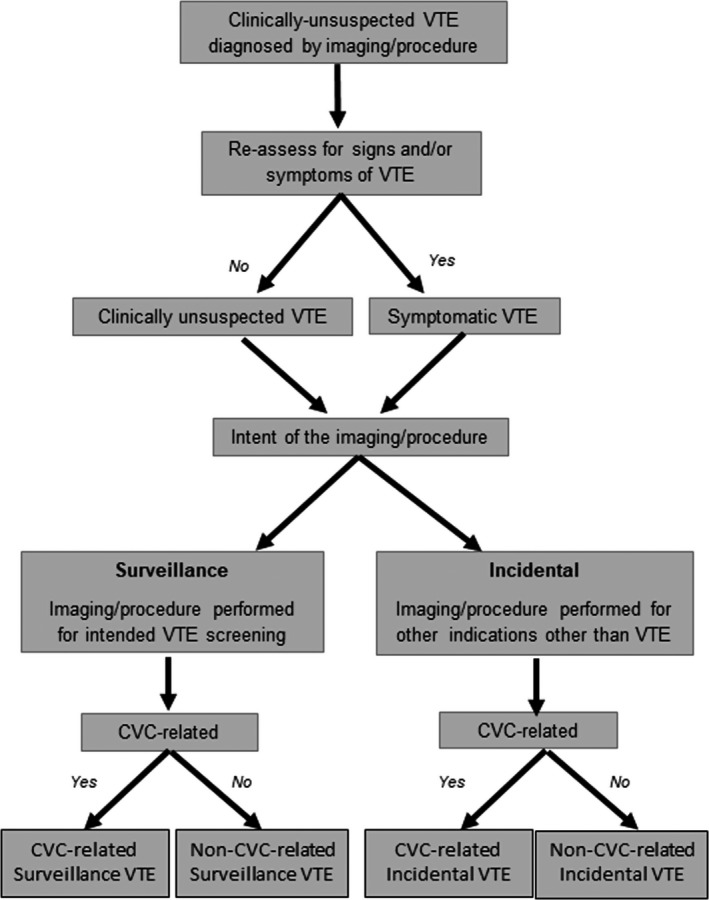
Clinically unsuspected venous thromboembolism (VTE) in children is defined as a VTE diagnosed via imaging test performed for surveillance (i.e., with an intent to identify clinically silent VTEs) or incidentally found (most often via imaging performed for evaluation of regional pathology unrelated to VTE) in the absence of any VTE-associated signs or symptoms. Our understanding of the clinical significance of these events in children is limited by a paucity of data on the epidemiology and outcomes of this complication. There is an urgent need for further research in this area to inform optimal management. Recognizing this knowledge gap, this Task Force has previously published a systematic review of the literature in this topic. We now provide guidance recommendations for standardization of definitions and identify future research needs on clinically unsuspected VTE in children. These recommendations will serve to enhance the quantity and quality of evidence on the topic and facilitate the design and execution of cooperative observational studies, and interventional trials of risk-stratified management approaches aimed at preventing and optimizing long-term outcomes of clinically unsuspected VTE in children.
Keywords: asymptomatic venous thromboembolism; pediatric; unsuspected venous thromboembolism.
© 2022 The Authors. Journal of Thrombosis and Haemostasis published by Wiley Periodicals LLC on behalf of International Society on Thrombosis and Haemostasis.
Conflict of interest statement
M.B. receives consulting fees from Janssen Pharmaceuticals; N. A. G. receives consulting fees from Bayer, Boerhinger Ingelheim, and Anthos for advisory board activities, from Novartis for data and safety monitoring board activities, from Daiichi Sankyo for steering committee activities, from the university‐affiliated Academic Research Organization CPC Clinical Research for data and safety monitoring board activities for clinical trials sponsored by Bristol Myers Squibb and Pfizer, and he also receives research and salary support from the U.S. National Institutes of Health (NIH), via a U01 award; E. V. S. F. receives funding from the American Heart Association, NIH and Grifols for research support, and consulting fees from Boehringer Ingelheim for advisory board activities; A. S., M. R., L. R. B., K. K., and S. J. declare no potential conflicts of interest related to this work.
Figures
References
-
- Jones S, Monagle P, Newall F. Do asymptomatic clots in children matter? Thromb Res. 2020;189:24‐34. - PubMed
-
- Beck C, Dubois J, Grignon A, Lacroix J, David M. Incidence and risk factors of catheter‐related deep vein thrombosis in a pediatric intensive care unit: a prospective study. J Pediatr. 1998;133:237‐241. - PubMed
-
- Kim JH, Lee YS, Kim SH, Lee SK, Lim MK, Kim HS. Does umbilical vein catheterization lead to portal venous thrombosis? Prospective US evaluation in 100 neonates. Radiology. 2001;219:645‐650. - PubMed
Publication types
MeSH terms
Substances
Grants and funding
LinkOut - more resources
Full Text Sources
Medical
Miscellaneous
