


Prolyl hydroxylase inhibitor desidustat improves anemia in erythropoietin hyporesponsive state
- PMID: 35570856
- PMCID: PMC9096675
- DOI: 10.1016/j.crphar.2022.100102
Prolyl hydroxylase inhibitor desidustat improves anemia in erythropoietin hyporesponsive state
Abstract
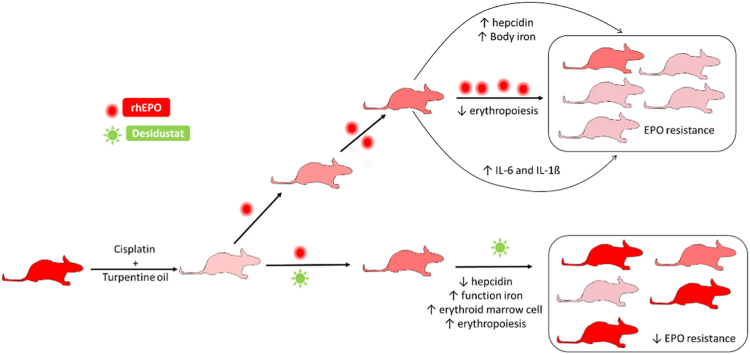
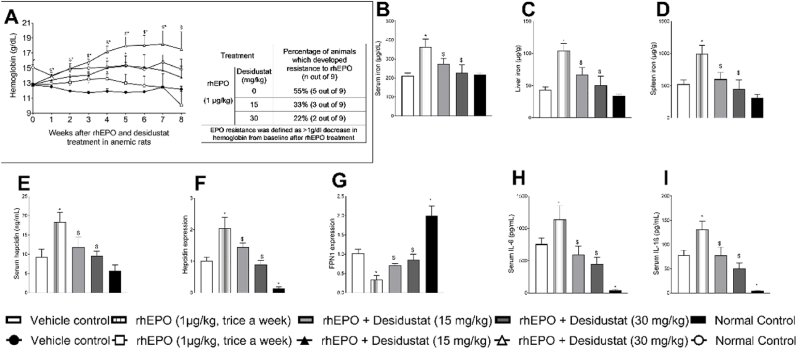
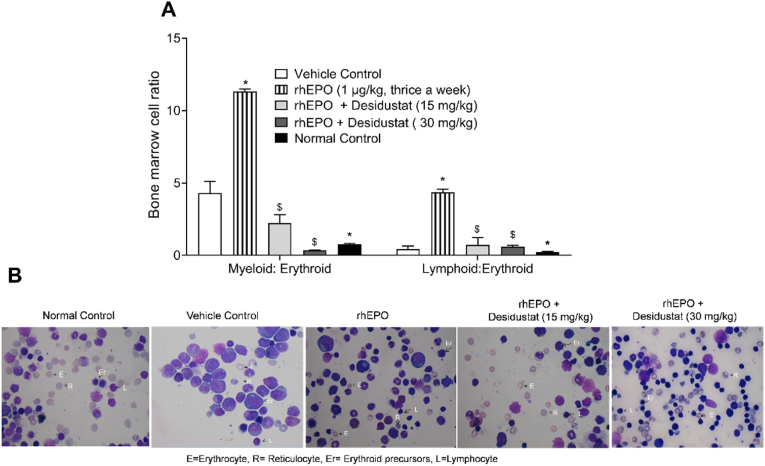
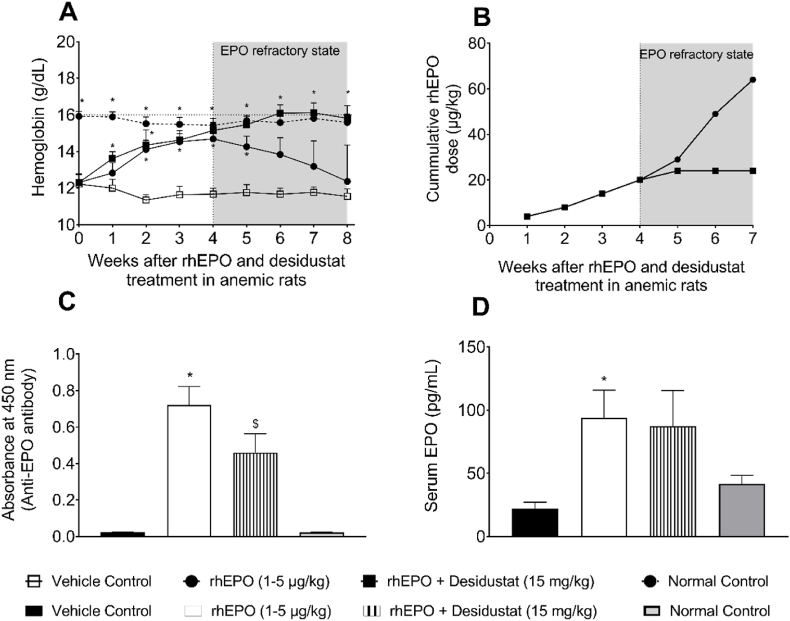
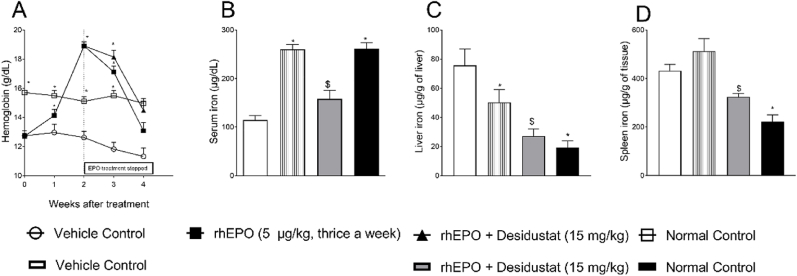
Many anemic chronic kidney disease (CKD) patients are refractory to erythropoietin (EPO) effects due to inflammation, deranged iron utilization, and generation of EPO antibodies. This work assessed the effect of desidustat, an inhibitor of hypoxia inducible factor (HIF) prolyl hydroxylase (PHD), on EPO-refractory renal anemia. Sprague Dawley rats were made anemic by cisplatin (5 mg/kg, IP, single dose) and turpentine oil (5 mL/kg, SC, once a week). These rats were given recombinant human EPO (rhEPO, 1 μg/kg) and desidustat (15 or 30 mg/kg) for eight weeks. Separately, rhEPO (1-5 μg/kg) was given to anemic rats to sustain the normal hemoglobin levels and desidustat (15 mg/kg) for eight weeks. In another experiment, the anemic rats were treated rhEPO (5 μg/kg) for two weeks and then desidustat (15 mg/kg) for the next two weeks. Dosing of rhEPO was thrice a week, and for desidustat, it was on alternate days. Desidustat inhibited EPO-resistance caused by rhEPO treatment, decreased hepcidin, IL-6, IL-1β, and increased iron and liver ferroportin. Desidustat reduced EPO requirement and anti-EPO antibodies. Desidustat also maintained normal hemoglobin levels after cessation of rhEPO treatment. Thus, novel prolyl hydroxylase inhibitor desidustat can treat EPO resistance via improved iron utilization and decreased inflammation.
Keywords: Antibody; Desidustat; EPO resistance; Inflammation.
© 2022 The Authors.
Conflict of interest statement
The authors declare that they have no known competing financial interests or personal relationships that could have appeared to influence the work reported in this paper.
Figures
References
-
- Beck J., Henschel C., Chou J., Lin A., Del Balzo U. Evaluation of the carcinogenic potential of roxadustat (FG-4592), a small molecule inhibitor of hypoxia-inducible factor prolyl hydroxylase in CD-1 mice and Sprague Dawley rats. Int. J. Toxicol. 2017;36(6):427–439. - PubMed
LinkOut - more resources
Full Text Sources
Research Materials
