


mHealth Solutions for Mental Health Screening and Diagnosis: A Review of App User Perspectives Using Sentiment and Thematic Analysis
- PMID: 35573342
- PMCID: PMC9091910
- DOI: 10.3389/fpsyt.2022.857304
mHealth Solutions for Mental Health Screening and Diagnosis: A Review of App User Perspectives Using Sentiment and Thematic Analysis
Abstract
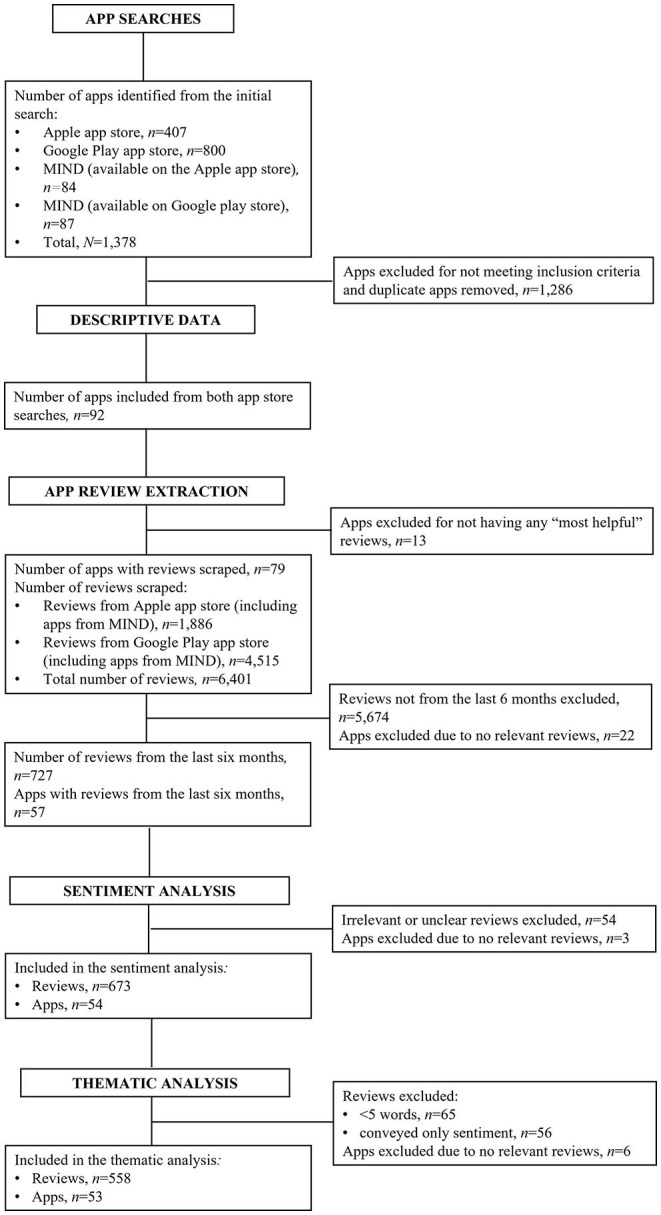
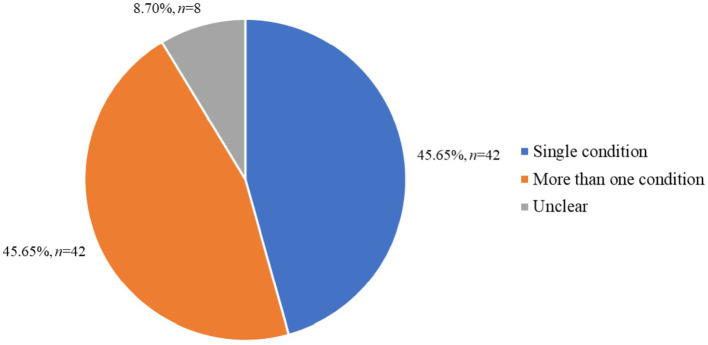
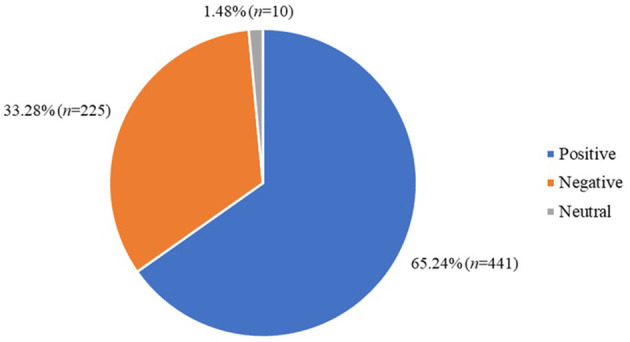
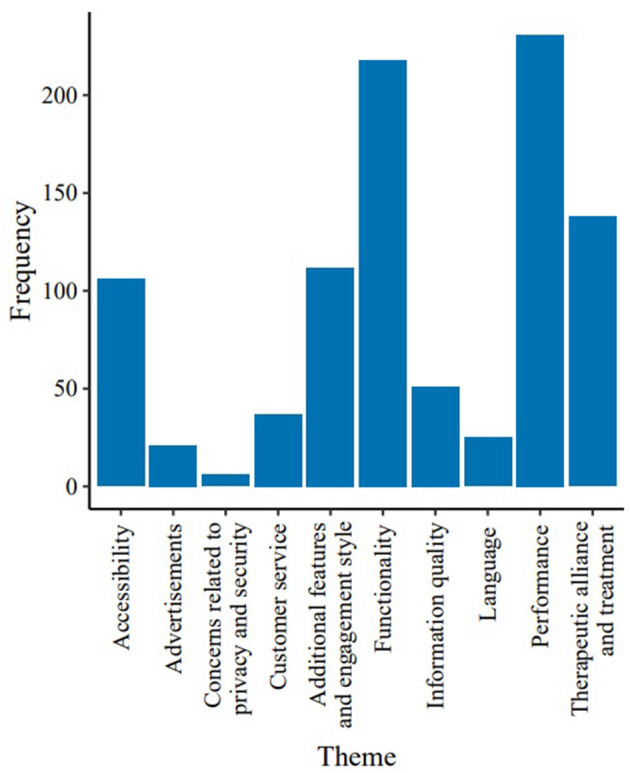
Mental health screening and diagnostic apps can provide an opportunity to reduce strain on mental health services, improve patient well-being, and increase access for underrepresented groups. Despite promise of their acceptability, many mental health apps on the market suffer from high dropout due to a multitude of issues. Understanding user opinions of currently available mental health apps beyond star ratings can provide knowledge which can inform the development of future mental health apps. This study aimed to conduct a review of current apps which offer screening and/or aid diagnosis of mental health conditions on the Apple app store (iOS), Google Play app store (Android), and using the m-health Index and Navigation Database (MIND). In addition, the study aimed to evaluate user experiences of the apps, identify common app features and determine which features are associated with app use discontinuation. The Apple app store, Google Play app store, and MIND were searched. User reviews and associated metadata were then extracted to perform a sentiment and thematic analysis. The final sample included 92 apps. 45.65% (n = 42) of these apps only screened for or diagnosed a single mental health condition and the most commonly assessed mental health condition was depression (38.04%, n = 35). 73.91% (n = 68) of the apps offered additional in-app features to the mental health assessment (e.g., mood tracking). The average user rating for the included apps was 3.70 (SD = 1.63) and just under two-thirds had a rating of four stars or above (65.09%, n = 442). Sentiment analysis revealed that 65.24%, n = 441 of the reviews had a positive sentiment. Ten themes were identified in the thematic analysis, with the most frequently occurring being performance (41.32%, n = 231) and functionality (39.18%, n = 219). In reviews which commented on app use discontinuation, functionality and accessibility in combination were the most frequent barriers to sustained app use (25.33%, n = 19). Despite the majority of user reviews demonstrating a positive sentiment, there are several areas of improvement to be addressed. User reviews can reveal ways to increase performance and functionality. App user reviews are a valuable resource for the development and future improvements of apps designed for mental health diagnosis and screening.
Keywords: app reviews; app users; digital health; mHealth; mental health; sentiment analysis; thematic analysis.
Copyright © 2022 Funnell, Spadaro, Martin-Key, Metcalfe and Bahn.
Conflict of interest statement
SB is a director of Psynova Neurotech Ltd and Psyomics Ltd. SB has financial interests in Psyomics Ltd. The remaining authors declare that the research was conducted in the absence of any commercial or financial relationships that could be construed as a potential conflict of interest.
Figures
References
-
- Office for National Statistics . Coronavirus and depression in adults, Great Britain: July to August 2021 (2021). Available online at: https://www.ons.gov.uk/peoplepopulationandcommunity/wellbeing/articles/c... (accessed December 1, 2021).
-
- Office for National Statistics . Are we facing a mental health pandemic? (2021). Available online at: https://blog.ons.gov.uk/2021/05/05/are-we-facing-a-mental-health-pandemic/ (accessed December 3, 2021).
LinkOut - more resources
Full Text Sources
