


Mechanisms by Which Traditional Chinese Medicines Influence the Intestinal Flora and Intestinal Barrier
- PMID: 35573786
- PMCID: PMC9097517
- DOI: 10.3389/fcimb.2022.863779
Mechanisms by Which Traditional Chinese Medicines Influence the Intestinal Flora and Intestinal Barrier
Abstract
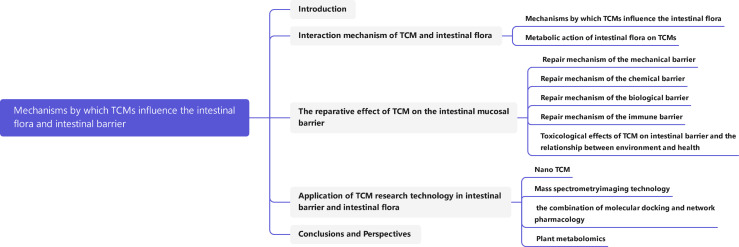
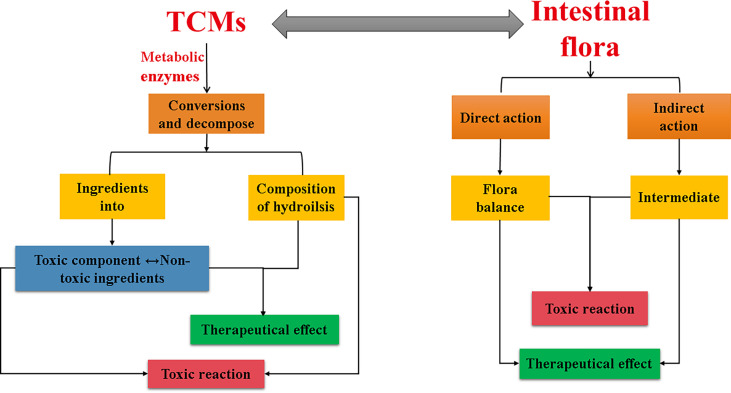
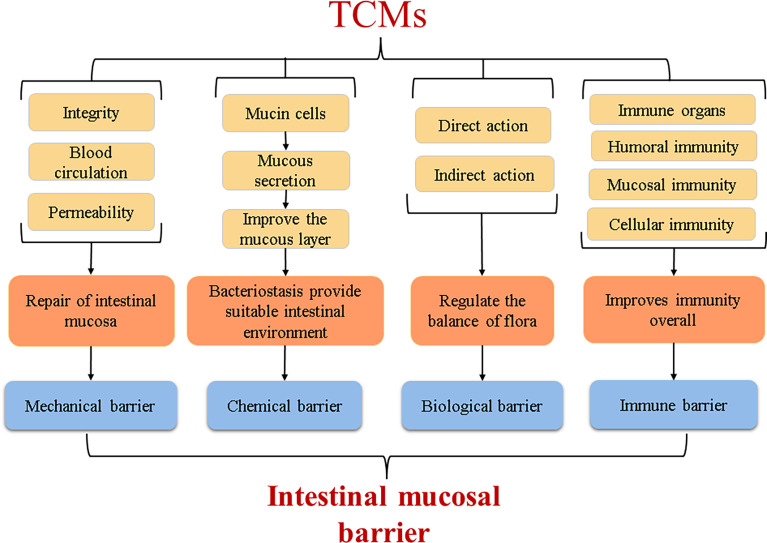
The effect of a drug on the intestinal flora and the intestinal barrier is an important evaluation index for drug safety and efficacy. Chemical synthetic drugs are widely used due to their advantages of fast efficacy and low doses, but they are prone to cause drug resistance and inhibit proton pumps, which may harm intestinal health. Traditional Chinese medicine (TCM) has been applied clinically for thousands of years, and how TCMs regulate intestinal health to achieve their effects of disease treatment has become a hot research topic that needs to be resolved. This paper reviews the recent research on the effects of TCMs on intestinal microorganisms and the intestinal mucosal barrier after entering the intestine, discusses the interaction mechanisms between TCMs and intestinal flora, and details the repair effect of TCMs on the intestinal mucosal barrier to provide a reference for the development, utilization, and modernization of TCM.
Keywords: effect mechanism; intestinal flora; intestinal mucosal barrier; review; traditional Chinese medicine.
Copyright © 2022 Che, Luo, Shi, He and Xu.
Conflict of interest statement
The authors declare that the research was conducted in the absence of any commercial or financial relationships that could be construed as a potential conflict of interest.
Figures
References
-
- Chen Y., Duan J. A., Guo J., Shang E., Tang Y., Qian Y., et al. (2016). Yuanhuapine-Induced Intestinal and Hepatotoxicity Were Correlated With Disturbance of Amino Acids, Lipids, Carbohydrate Metabolism and Gut Microflora Function: A Rat Urine Metabonomic Study. J. Chromatogr. B. Analyt. Technol. BioMed. Life Sci. 1026, 183–192. doi: 10.1016/j.jchromb.2015.08.024 - DOI - PubMed
Publication types
MeSH terms
Substances
LinkOut - more resources
Full Text Sources
