


Feasibility and Acceptability of a Multi-Modality Self-Management Intervention for Head and Neck Cancer Caregivers: A Pilot Randomized Trial
- PMID: 35575280
- PMCID: PMC9121462
- DOI: 10.1177/15347354221098984
Feasibility and Acceptability of a Multi-Modality Self-Management Intervention for Head and Neck Cancer Caregivers: A Pilot Randomized Trial
Abstract
Background: Head and neck cancer (HNC) patients undergoing radiation therapy (RT) experience significant side effects, presenting challenging care tasks for their informal (unpaid) caregivers. HNC caregivers report low caregiving self-efficacy, high distress, and interest in supportive care interventions.
Objective: This randomized pilot trial assessed the feasibility and acceptability of a 6 to 7 week supported self-management intervention (Prepare to Care) offering psychoeducation and stress management skills building for caregivers of patients receiving RT for HNC.
Methods: Caregivers were randomized to Prepare to Care or standard of care. Primary feasibility measures included participation and retention percentages. Assessments were completed before the intervention, at intervention completion, and 6-weeks later after intervention completion.
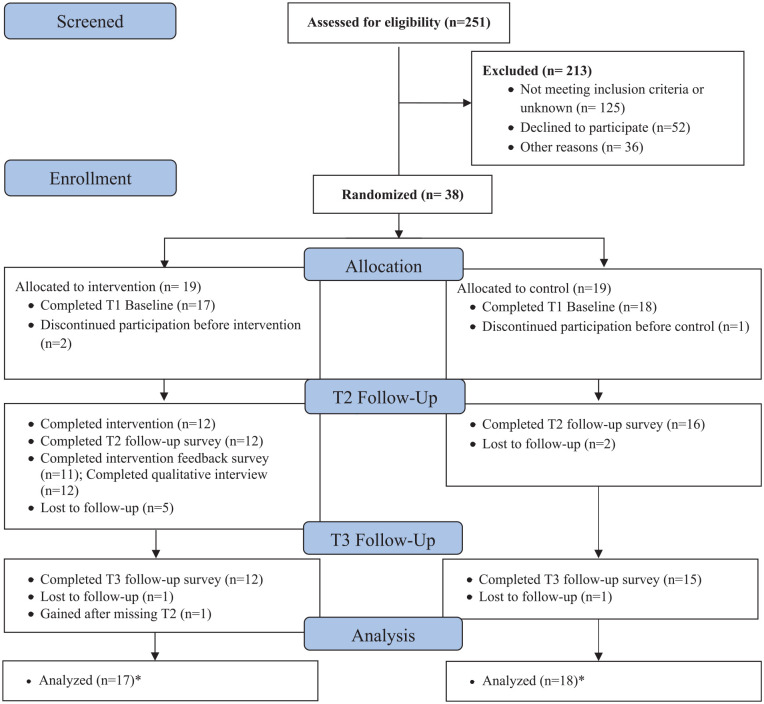
Results: Caregivers (N = 38) were predominantly female (88.6%), an average age of 56 years old, and a spouse/partner to the patient (71.4%). Participation percent was 42.2%; retention at intervention conclusion was 80% and 77% at the 6-week follow-up. Quantitative and qualitative results support acceptability, with 64% to 88% reporting each intervention module was helpful (quite a bit or very). Intervention caregivers reported a significantly greater improvement in self-efficacy for progressive muscle relaxation (PMR).
Conclusions: Prepare to Care and the randomized pilot trial methods are feasible and acceptable for HNC caregivers of patients receiving RT. A significant treatment effect was observed for self-efficacy for PMR, and findings were in the expected direction regarding improved caregiving self-efficacy. Further research is necessary to determine the efficacy of this intervention with a focus on increased engagement strategies and longer-term outcomes.
Trial registration: NCT03032250.
Keywords: caregiving; head and neck cancer; intervention; oncology; progressive muscle relaxation; self-efficacy.
Conflict of interest statement
Figures
References
-
- American Cancer Society. Cancer Facts & Figures; 2021. https://www.cancer.org/content/dam/cancer-org/research/cancer-facts-and-...
-
- National Comprehensive Cancer Network. NCCN Clinical Practice Guidelines in Oncology (NCCN Guidelines): Head and Neck Cancers; 2019. https://www.nccn.org/professionals/physician_gls/pdf/head-and-neck.pdf
-
- Bond SM, Schumacher K, Sherrod A, et al. Development of the head and neck cancer caregiving task inventory. Eur J Oncol Nurs. 2016;24:29-38. - PubMed
-
- Baghi M, Wagenblast J, Hambek M, et al. Demands on caring relatives of head and neck cancer patients. Laryngoscope. 2007;117:712-716. - PubMed
-
- Chen SC, Tsai MC, Liu CL, Yu WP, Liao CT, Chang JT. Support needs of patients with oral cancer and burden to their family caregivers. Cancer Nurs. 2009;32:473-481. - PubMed
Publication types
MeSH terms
Associated data
Grants and funding
LinkOut - more resources
Full Text Sources
Medical
