Marginal Adaptation of Flowable vs Sonically Activated or Preheated Resin Composites in Cervical Lesions
- PMID: 35575657
- PMCID: PMC11734263
- DOI: 10.3290/j.jad.b3032461
Marginal Adaptation of Flowable vs Sonically Activated or Preheated Resin Composites in Cervical Lesions
Abstract
Purpose: To investigate marginal integrity of restorations applied with preheated and non-preheated composite, flowable composite, sonically activated composite, and a new thermo-viscous bulk-fill composite using near-infrared technology for preheating, in class V cavities of human molars.
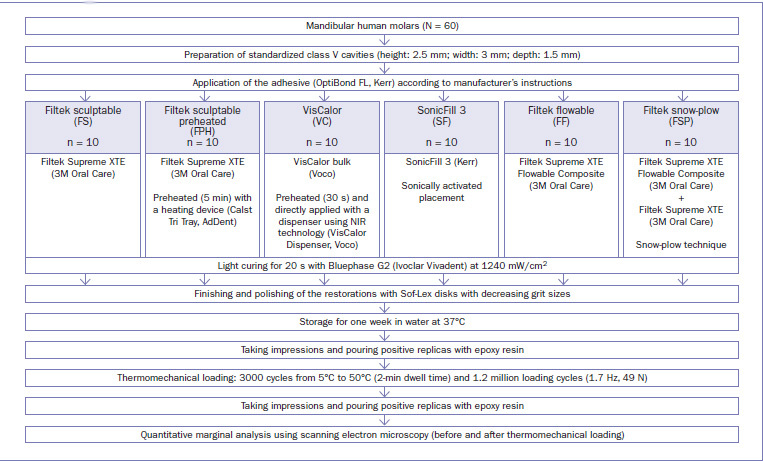
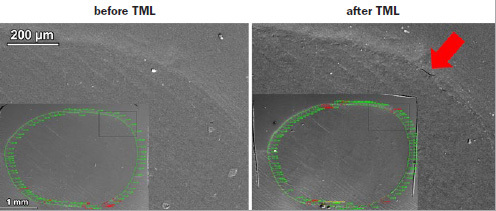
Materials and methods: Standardized cavities were prepared on the buccal surfaces of 60 human mandibular molars and restored with one of the following resin composite materials after application of an etch-and-rinse adhesive (OptiBond FL, Kerr): non-preheated or preheated conventional composite (Filtek Supreme XTE, 3M Oral Care), preheated thermo-viscous composite (VisCalor bulk, Voco), soncially activated composite (SonicFill 3, Kerr), or flowable composite (Filtek Supreme XTE Flowable, 3M Oral Care) applied in bulk or as a lining material using the snow-plow technique. After light curing and polishing, the percentage of continuous margins (PCM) of the restorations in enamel and dentin was assessed using SEM both before and after thermomechanical loading (TML). TML was carried out with 3000 thermal cycles (5°C-50°C) and a simultaneous mechanical stress application with 1.2 million load-cycles (1.7 Hz, 49 N) in a computer-controlled masticator. Non-parametric statistical analysis was performed using Wilcoxon, Kruskal-Wallis, and Mann-Whitney U-tests (α = 0.05).
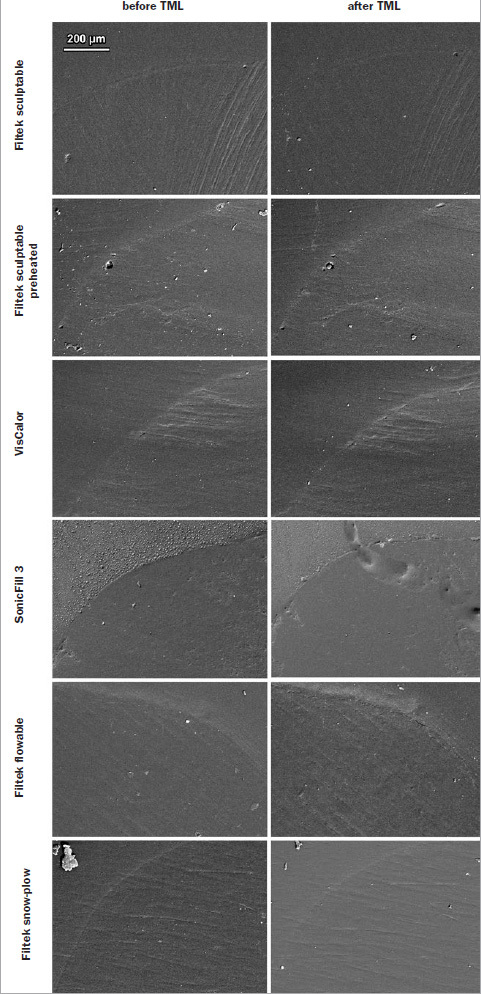
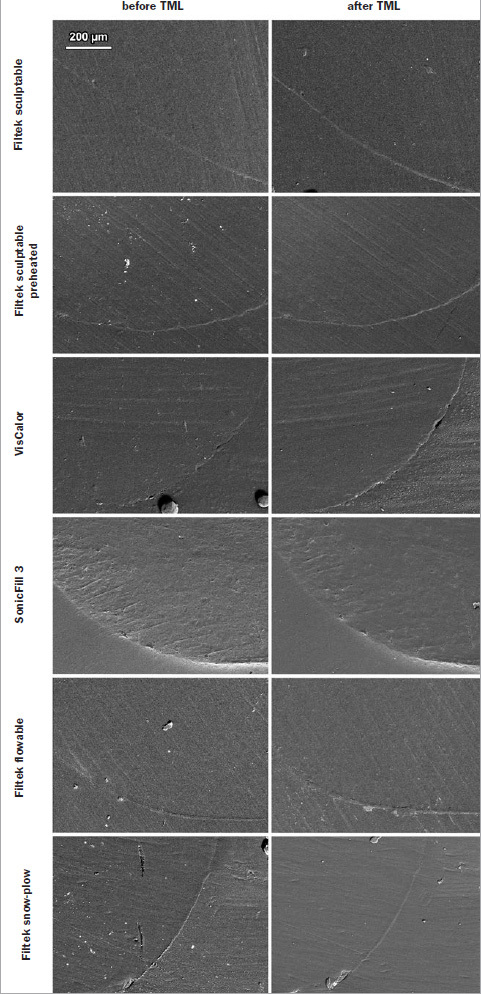
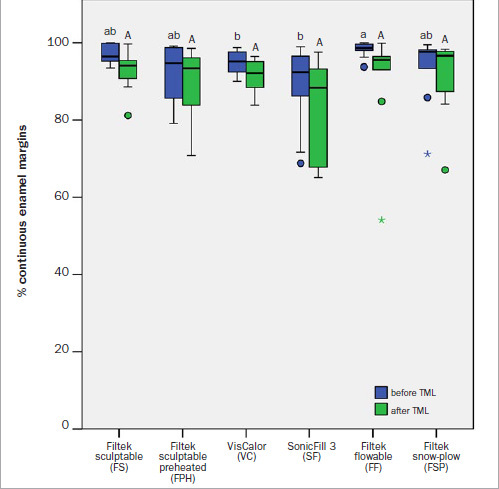
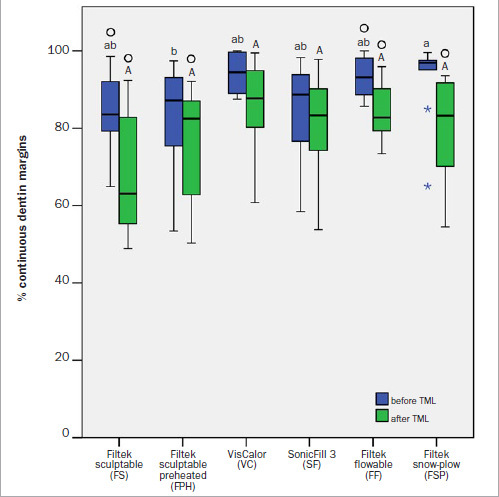
Results: All groups revealed a significant decline in marginal integrity after TML in both enamel and dentin. Although the flowable group in enamel and the snow-plow group in dentin showed the highest PCM before TML, the differences between the groups were compensated after TML.
Conclusion: All of the tested composites and application methods showed similar marginal integrities after thermomechanical loading and can be recommended for clinical implementation.
Keywords: flowable composite; marginal adaptation; preheating; resin composite; sonic activation.
Figures
References
-
- Aggarwal V, Logani A, Jain V, Shah N. Effect of cyclic loading on marginal adaptation and bond strength in direct vs indirect class II MO composite restorations. Oper Dent. 2008;33:587− 592. - PubMed
-
- Atabek D, Aktaş N, Sakaryali D, Bani M. Two-year clinical performance of sonic-resin placement system in posterior restorations. Quintessence Int. 2017;48:743–751. - PubMed
-
- Ayub KV, Santos GC, Rizkalla AS, Bohay R, Pegoraro LF, Rubo JH, Santos MJ. Effect of preheating on microhardness and viscosity of 4 resin composites. J Can Dent Assoc. 2014;80:e12. - PubMed
-
- Bayne SC, Ferracane JL, Marshall GW, Marshall SJ, van Noort R. The evolution of dental materials over the past century: silver and gold to tooth color and beyond. J Dent Res. 2019;98:257–265. - PubMed
MeSH terms
Substances
LinkOut - more resources
Full Text Sources
Medical