


In vitro and in vivo models: What have we learnt about inner ear regeneration and treatment for hearing loss?
- PMID: 35577314
- PMCID: PMC9551661
- DOI: 10.1016/j.mcn.2022.103736
In vitro and in vivo models: What have we learnt about inner ear regeneration and treatment for hearing loss?
Abstract
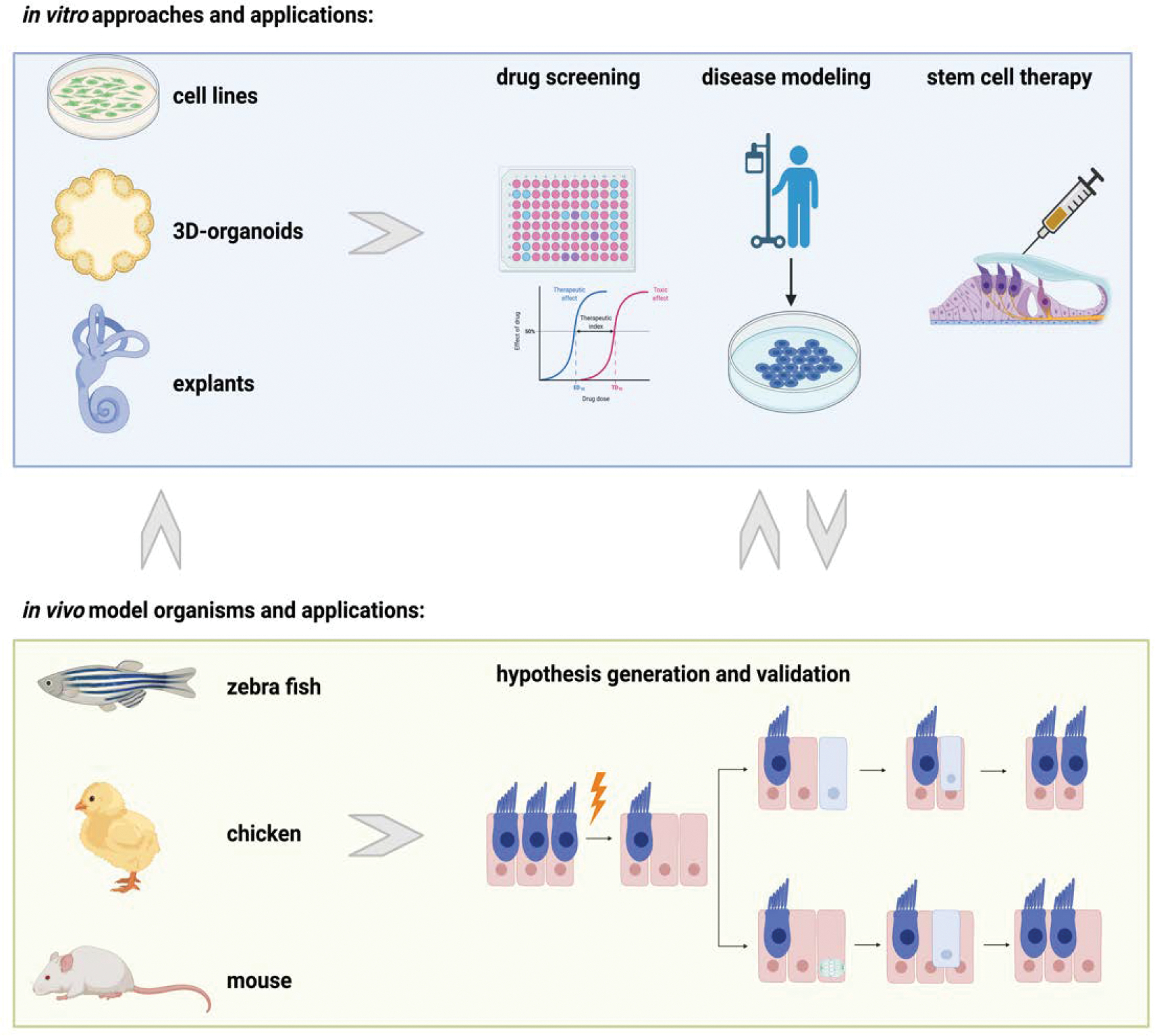
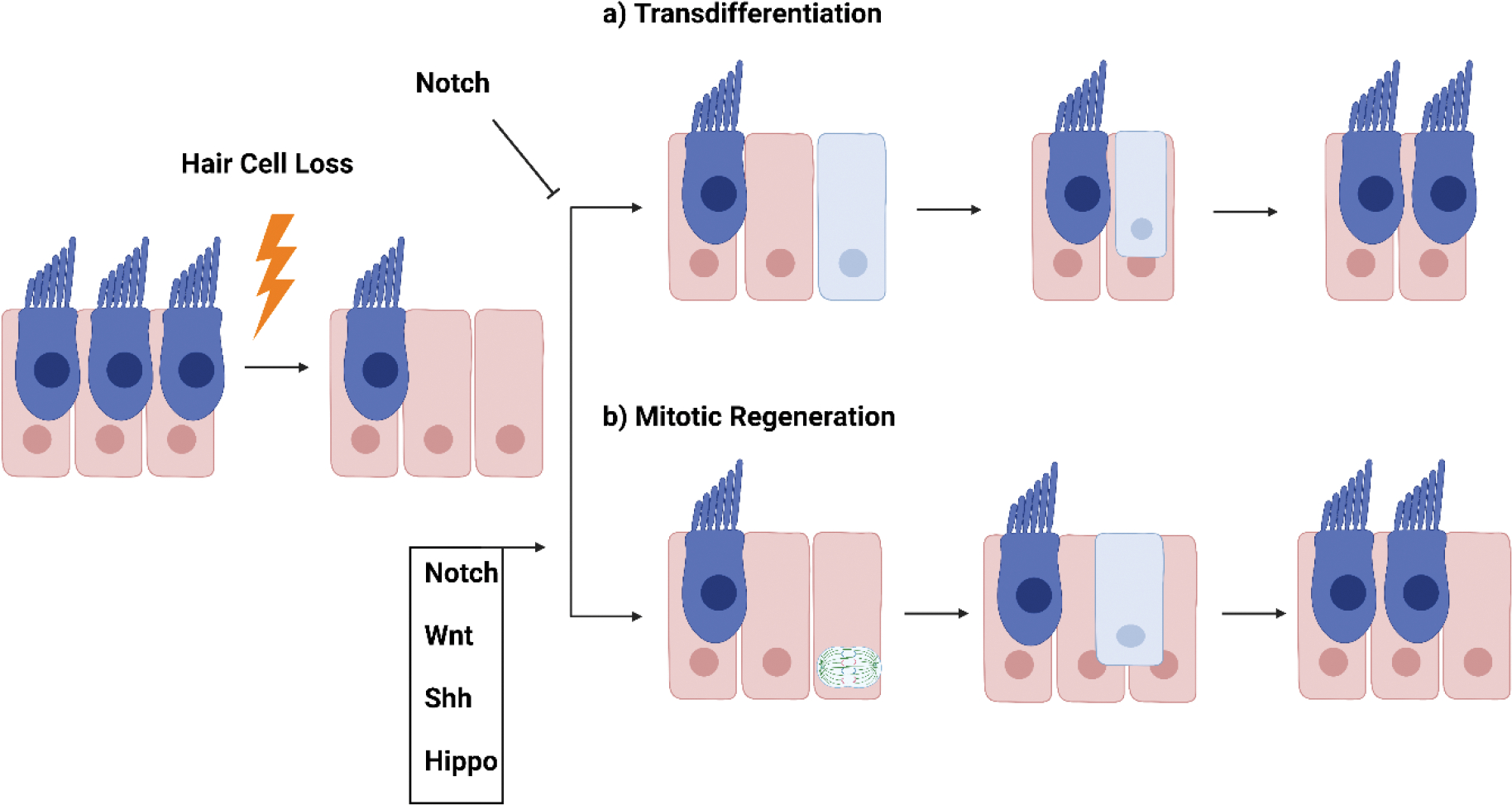
The sensory cells of the inner ear, called hair cells, do not regenerate spontaneously and therefore, hair cell loss and subsequent hearing loss are permanent in humans. Conversely, functional hair cell regeneration can be observed in non-mammalian vertebrate species like birds and fish. Also, during postnatal development in mice, limited regenerative capacity and the potential to isolate stem cells were reported. Together, these findings spurred the interest of current research aiming to investigate the endogenous regenerative potential in mammals. In this review, we summarize current in vitro based approaches and briefly introduce different in vivo model organisms utilized to study hair cell regeneration. Furthermore, we present an overview of the findings that were made synergistically using both, the in vitro and in vivo based tools.
Keywords: Cell lines; Hair cell regeneration; Model organisms; Organoids; Stem cells.
Copyright © 2022 Elsevier Inc. All rights reserved.
Conflict of interest statement
Declaration of Interest
The authors declare no conflict of interest.
Figures
References
-
- Abboud N, Fontbonne A, Watabe I, Tonetto A, Brezun JM, Feron F, Zine A, 2017. Culture conditions have an impact on the maturation of traceable, transplantable mouse embryonic stem cell-derived otic progenitor cells. J Tissue Eng Regen Med 11, 2629–2642. - PubMed
-
- Amprino R, Camosso M, 1959. On the role of the “apical ridge” in the development of the chick embryo limb bud. Acta Anat (Basel) 38, 280–288. - PubMed
-
- Arnold HJ, Müller M, Waldhaus J, Hahn H, Löwenheim H, 2010. A novel buoyancy technique optimizes simulated microgravity conditions for whole sensory organ culture in rotating bioreactors. Tissue Eng Part C Methods 16, 51–61. - PubMed
Publication types
MeSH terms
Grants and funding
LinkOut - more resources
Full Text Sources
