Dapagliflozin protects neural and vascular dysfunction of the retina in diabetes
- PMID: 35577387
- PMCID: PMC9114950
- DOI: 10.1136/bmjdrc-2022-002801
Dapagliflozin protects neural and vascular dysfunction of the retina in diabetes
Abstract
Introduction: Dapagliflozin, a sodium-glucose transporter inhibitor, effectively reduces blood glucose and is indicated for individuals with kidney diseases and cardiovascular disorders. In this study, we further expand the therapeutic benefit of dapagliflozin in the neural and vascular retina, with the potential to effectively manage diabetic retinopathy (DR), the most common complication of diabetes.
Research design and methods: Db/db mice, an animal model of type 2 diabetes, were treated with dapagliflozin orally, and the electroretinogram (ERG) response and acellular capillary numbers were assessed. Messenger RNA levels of inflammatory cytokines were studied using real-time quantitative (q)PCR. We assessed endothelial cell migration in a scratch wound assay and retinal glucose uptake using human retinal endothelial cells.
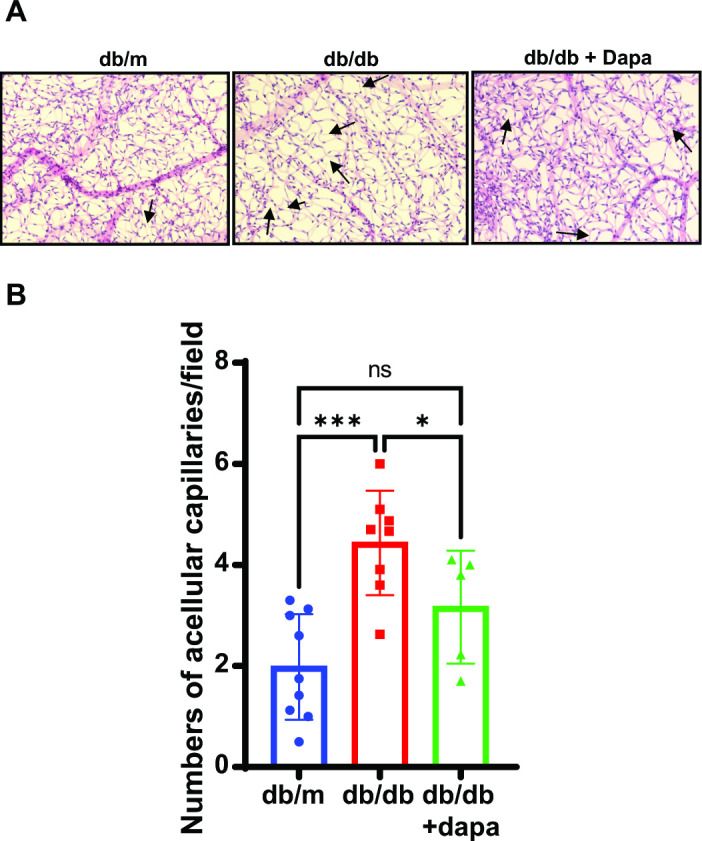
Results: The dapagliflozin treatment improved the ERG b-wave amplitude and decreased acellular capillary numbers. The scratch wound assay demonstrated a reduction in wound closure after dapagliflozin treatment. Retinal glucose uptake reduced after dapagliflozin treatment compared with the respective controls.
Conclusions: Our studies suggest that dapagliflozin treatment effectively corrects neural and vascular dysfunction of the retina in diabetes. This effect is mediated by a decrease in inflammation and improved glycemic control. In addition, dapagliflozin exhibits decreased wound healing and glucose uptake, which could benefit the retina. Thus, dapagliflozin could be helpful in the management of DR, with multimodal therapeutic effects.
Keywords: Diabetes Complications; Diabetes Mellitus, Type 2; Diabetic Retinopathy; Retina.
© Author(s) (or their employer(s)) 2022. Re-use permitted under CC BY-NC. No commercial re-use. See rights and permissions. Published by BMJ.
Conflict of interest statement
Competing interests: ADB is an ad hoc staff pharmacist at CVS Health/Aetna. The content of this study does not reflect those of CVS Health/Aetna. QL, SPL, EB, HD, and DM do not have any conflicts of interest with the study.
Figures



References
Publication types
MeSH terms
Substances
Grants and funding
LinkOut - more resources
Full Text Sources
Medical
Miscellaneous