


Follow-up regimes for sick-listed employees: A comparison of nine north-western European countries
- PMID: 35577620
- PMCID: PMC9085445
- DOI: 10.1016/j.healthpol.2022.05.002
Follow-up regimes for sick-listed employees: A comparison of nine north-western European countries
Abstract
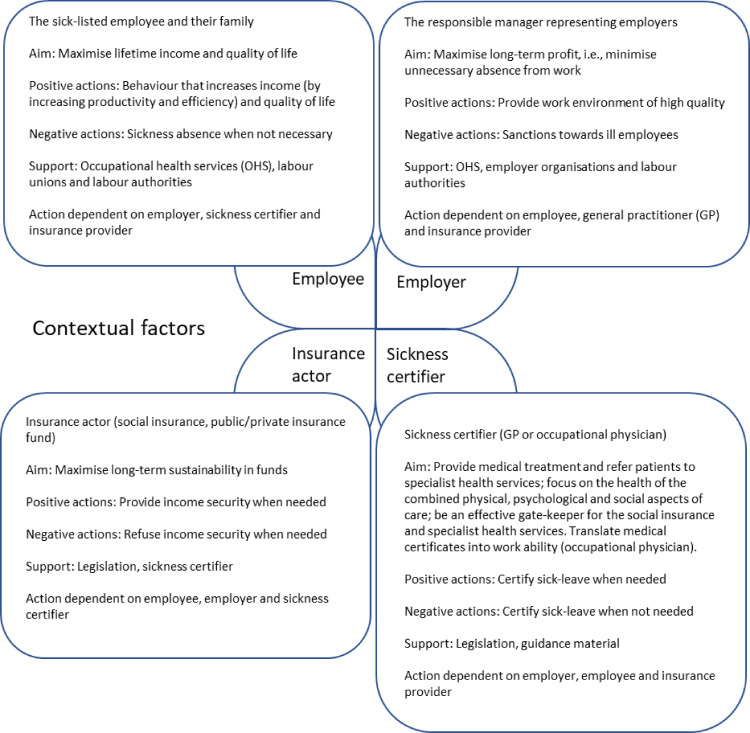
The Covid-19 pandemic has revealed the importance of social protection systems, including income security, when health problems arise. The aims of this study are to compare the follow-up regimes for sick-listed employees across nine European countries, and to conduct a qualitative assessment of the differences with respect to burden and responsibility sharing between the social protection system, employers and employees. The tendency highlighted is that countries with shorter employer periods of sick-pay typically have stricter follow-up responsibility for employers because, in practice, they become gatekeepers of the public sickness benefit scheme. In Germany and the UK, employers have few requirements for follow-up compared with the Nordic countries because they bear most of the costs of sickness absence themselves. The same applies in Iceland, where employers carry most of the costs and have no obligation to follow up sick-listed employees. The situation in the Netherlands is paradoxical: employers have strict obligations in the follow-up regime even though they cover all the costs of the sick-leave themselves. During the pandemic, the majority of countries have adjusted their sick-pay system and increased coverage to reduce the risk of spreading Covid-19 because employees are going to work sick or when they should self-quarantine, except for the Netherlands and Belgium, which considered that the current schemes were already sufficient to reduce that risk.
Keywords: European countries; comparative study; sick-pay; sickness absenteeism; sickness benefit.
Copyright © 2022. Published by Elsevier B.V.
Conflict of interest statement
The authors declare that they have no known competing financial interests or personal relationships that could have appeared to influence the work reported in this paper.
Figures
References
-
- Anema J.R., Prinz C., Prins R. Handbook of work disability. Springer; 2013. Sickness and disability policy interventions; pp. 357–371.
-
- Anema J.R., Schellart A.J., Cassidy J., Loisel P., Veerman T., Van der Beek A. Can cross country differences in return-to-work after chronic occupational back pain be explained? An exploratory analysis on disability policies in a six country cohort study. J Occup Rehabil. 2009;19(4):419. - PMC - PubMed
-
- Barmby T.A., Ercolani M.G., Treble J.G. Sickness absence: an international comparison. Econ J. 2002;112(480):F315–F331. doi: 10.1111/1468-0297.00046. - DOI
-
- Barnay T. Health, work and working conditions: a review of the European economic literature. Eur J Health Econ. 2016;17(6):693–709. - PubMed
-
- Bliksvær, T., & Helliesen, A. (1997). Sickness absence: a comparative study of 11 countries in the Luxembourg employment study (LES): Norsk institutt for forskning om oppvekst, velferd og aldring.
Publication types
MeSH terms
LinkOut - more resources
Full Text Sources
Medical
