. 2022 May 16;12(1):8040.
doi: 10.1038/s41598-022-10874-w.

Urinary biomarkers indicate pediatric renal injury among rural farming communities in Sri Lanka

Affiliations

Urinary biomarkers indicate pediatric renal injury among rural farming communities in Sri Lanka

T D K S C Gunasekara et al. Sci Rep. .

Abstract

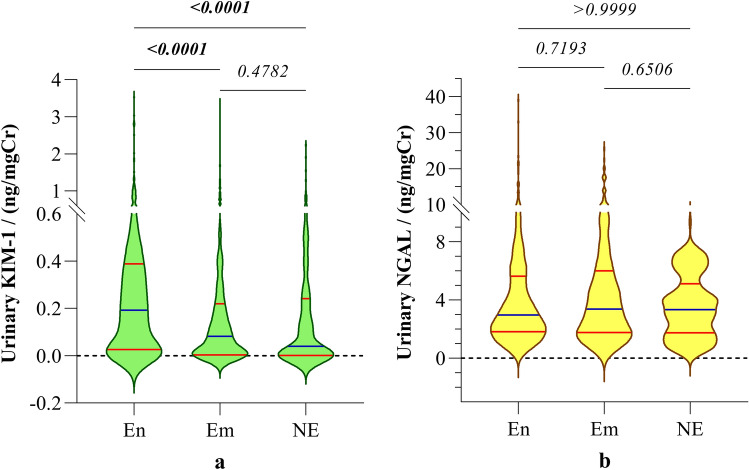
Pediatric renal injury is an emerging health concern in communities affected by chronic kidney disease of uncertain etiology (CKDu). Early detection of susceptibilities through highly sensitive and specific biomarkers can lead to effective therapeutic and preventive interventions against renal diseases. Here, we aimed to investigate the utility of kidney injury molecule (KIM-1) and neutrophil gelatinase-associated lipocalin (NGAL) in early detection of renal abnormalities in selected pediatric communities in Sri Lanka. The study areas were stratified as CKDu endemic, emerging, and non-endemic based on the prevalence of CKDu, and a total of 804 school students (10-18 years of age) participated in the study. The median (IQR) urinary KIM-1 levels of the participants were 0.193 (0.026-0.338), 0.082 (0.001-0.220) and 0.040 (0.003-0.242) ng/mgCr for CKDu endemic, emerging and non-endemic regions respectively. Participants from CKDu endemic regions reported elevated (p < 0.0001) urinary KIM-1 expression compared to those from the other regions. The median (IQR) NGAL levels in participants from CKDu endemic (2.969; 1.833-5.641), emerging (3.374; 1.766-6.103), and non-endemic (3.345; 1.742-5.128 ng/mgCr) regions showed no significant difference. Also, urinary albumin-creatinine ratio (UACR) showed no significant differences across gender or residency. The prevalence of albuminuria was 1-2% in the locations irrespective of CKDu burden. Albuminuric participants reported higher (p < 0.05) urinary KIM-1 levels in comparison to normoalbuminuric participants. Significantly elevated urinary KIM-1 expression in a pediatric population from CKDu affected regions, especially in the presence of albuminuria, may indicate low-grade early renal damage supporting the utility of KIM-1 as a quantifiable biomarker.


Conflict of interest statement

The authors declare no competing interests.

Figures
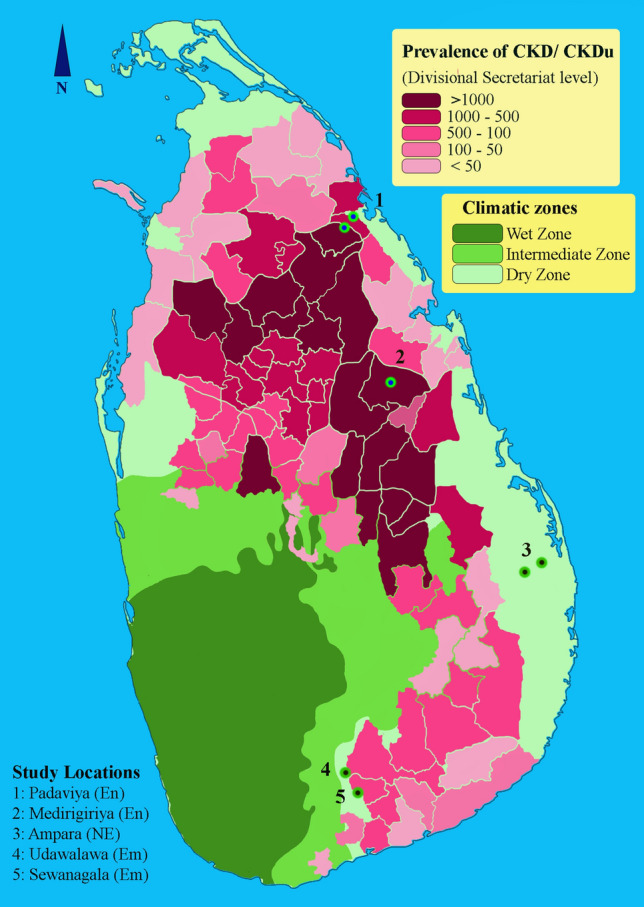
Figure 1
Figure 1
The selected study locations representing CKDu endemic (En), emerging (Em) and non-endemic (NE) regions, with respect to Burden of CKDu and climatic zones in Sri Lanka. The prevalence of CKDu is expressed as the number of CKD/CKDu cases at Divisional Secretariat levels, based on hospital records as per the analysis of Ranasinghe et al.. The map was created using QGIS 3.22.4 (https://www.qgis.org/en/site/) and Adobe Photoshop (https://www.adobe.com/sg/products/photoshop.html).
Figure 2
Figure 2
Distribution of urinary biomarkers (a) KIM-1 and (b) NGAL in children from CKDu endemic, emerging and non-endemic regions irrespective of gender. Graphs illustrate the median and interquartile range. Inter-group comparison is expressed in terms of Kruskal–Wallis one-way analysis followed by Dunn’s multiple comparison test. The study groups: En: endemic, Em: emerging and NE: non-endemic regions. KIM-1: Kidney injury molecule-1; NGAL: Neutrophil gelatinase-associated lipocalin.
Figure 3
Figure 3
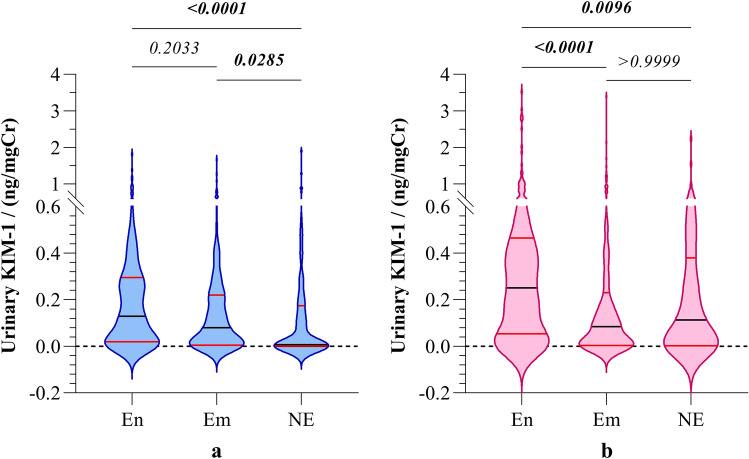
Gender-stratified distribution of urinary KIM-1 in (a) boys and (b) girls from CKDu endemic, emerging, and non-endemic regions. Graphs illustrate the median and interquartile range. Inter-group comparison is expressed in terms of Kruskal–Wallis one-way analysis followed by Dunn’s multiple comparison test. The study groups: En: endemic, Em: emerging, and NE: non-endemic regions. KIM-1: Kidney injury molecule-1.
Figure 4
Figure 4
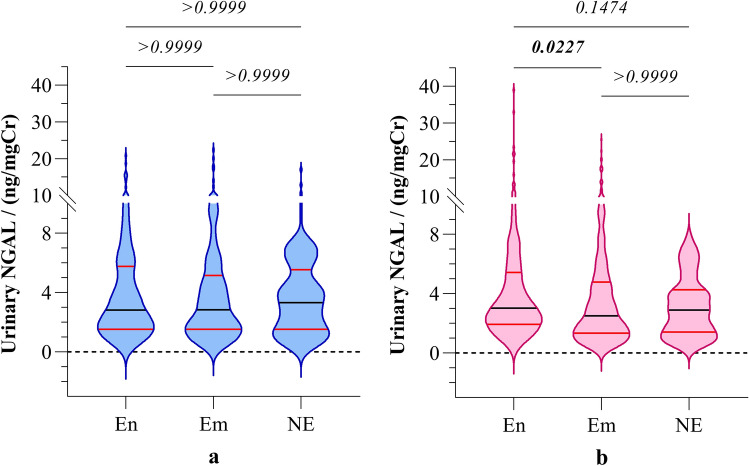
Gender-stratified distribution of urinary NGAL (a) boys and (b) girls from CKDu endemic, emerging, and non-endemic regions. Graphs illustrate the median and interquartile range. Inter-group comparison is expressed in terms of Kruskal–Wallis one-way analysis followed by Dunn’s multiple comparison test. The study groups: En: endemic, Em: emerging, and NE: non-endemic regions. NGAL: neutrophil gelatinase associated lipocalin.
Figure 5
Figure 5
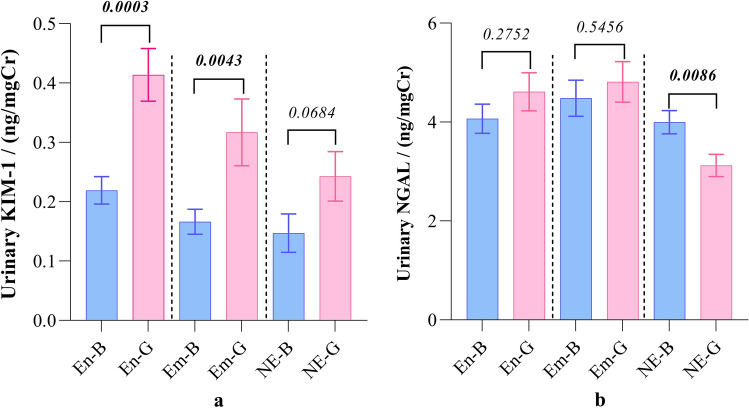
Expression of biomarkers in urine. (a) KIM-1 and (b) NGAL across gender in the three study groups. Graphs represent mean with standard error of mean (SEM). Comparison between the boys and girls within the same group is expressed in terms of Mann–Whitney U test. The study groups: En: endemic, Em: emerging, and NE: non-endemic regions. B: boys and G: girls. KIM-1: kidney injury molecule and NGAL: neutrophil gelatinase associated lipocalin.
Figure 6
Figure 6
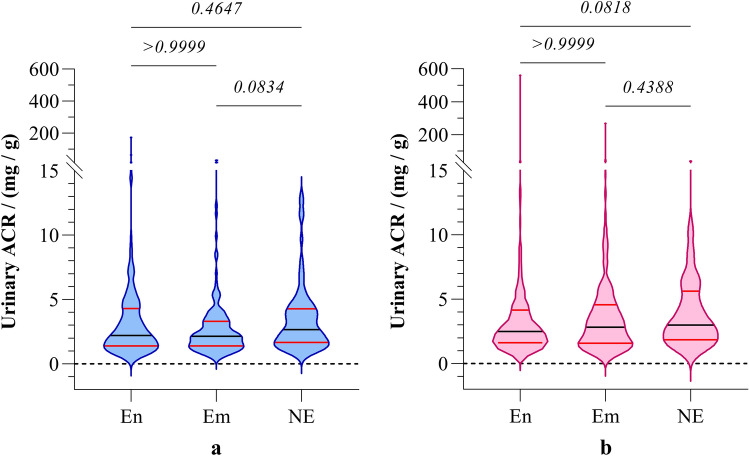
Gender stratified distribution of urinary ACR in (a) boys and (b) girls from CKDu endemic, emerging, and non-endemic regions. Graphs illustrate the median and interquartile range. Inter-group comparison is expressed in terms of Kruskal–Wallis one-way analysis followed by Dunn’s multiple comparison test. The study groups: En: endemic, Em: emerging, and NE: non-endemic regions. ACR: albumin to creatinine ratio.

References

    1. Jager KJ, et al. A single number for advocacy and communication-worldwide more than 850 million individuals have kidney diseases. Nephrol. Dial Transplant. 2019;34:1803–1805. doi: 10.1093/ndt/gfz174. - DOI - PubMed
    1. Luyckx VA, et al. Sustainable development goals relevant to kidney health: An update on progress. Nat. Rev. Nephrol. 2021;17:15–32. doi: 10.1038/s41581-020-00363-6. - DOI - PMC - PubMed
    1. Gunasekara TDKSC, et al. The utility of novel renal biomarkers in assessment of chronic kidney disease of unknown etiology (CKDu): A review. Int. J. Environ. Res. Public Health. 2020;17:9522. doi: 10.3390/ijerph17249522. - DOI - PMC - PubMed
    1. Babich R, et al. Kidney developmental effects of metal-herbicide mixtures: Implications for chronic kidney disease of unknown etiology. Environ. Int. 2020;144:106019. doi: 10.1016/j.envint.2020.106019. - DOI - PubMed
    1. Jayasumana C, et al. Chronic interstitial nephritis in agricultural communities: A worldwide epidemic with social, occupational and environmental determinants. Nephrol. Dial Transplant. 2017;32:234–241. - PubMed

Publication types