


Island biogeography and human practices drive ecological connectivity in mosquito species richness in the Lakshadweep Archipelago
- PMID: 35577864
- PMCID: PMC9110355
- DOI: 10.1038/s41598-022-11898-y
Island biogeography and human practices drive ecological connectivity in mosquito species richness in the Lakshadweep Archipelago
Abstract
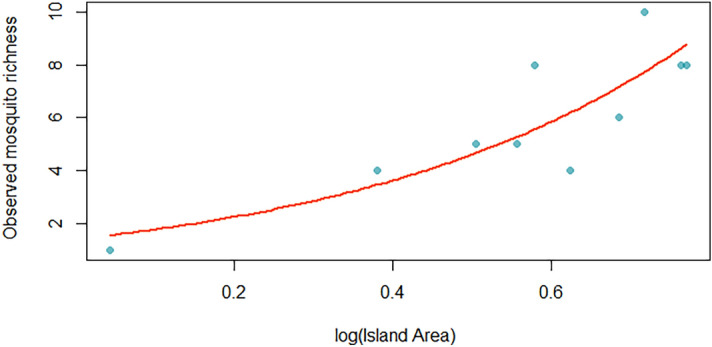
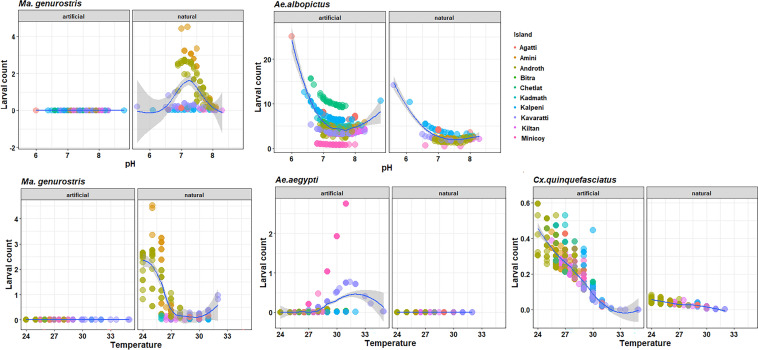
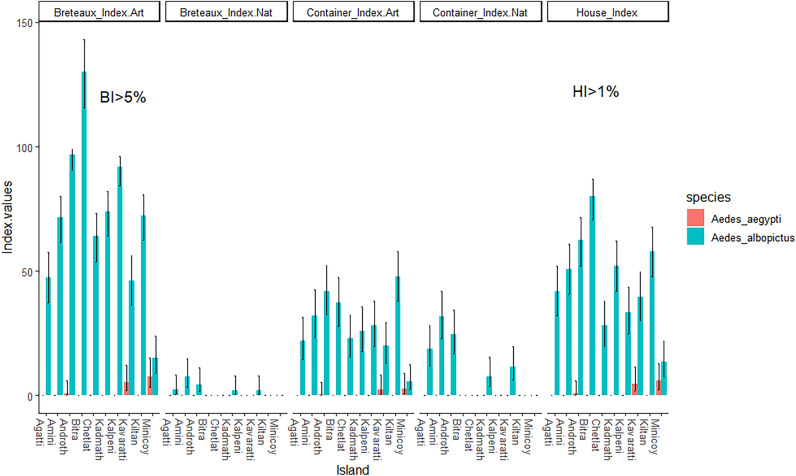
Mosquitoes are globally distributed and adapted to a broad range of environmental conditions. As obligatory hosts of many infectious pathogens, mosquito abundance and distribution are primarily determined by the presence and quality of larval habitats. To understand the dynamics and productivity of larval habitats in changing island environments, we conducted a four-month mosquito survey across ten inhabited islands in the Lakshadweep archipelago. Using fine-resolution larval habitat mapping, we recorded 7890 mosquitoes representing 13 species and 7 genera. Of these, four species comprised 95% of the total collections-Aedes albopictus (Stegomyia) was the dominant species followed by Armigeres subalbatus, Culex quinquefasciatus and Malaya genurostris. We found larval species richness was positively associated with the island area and mosquito larval richness (Chao1 estimator) was higher in artificial habitats than in natural habitats. Furthermore, mosquito species composition did not deteriorate with distance between islands. Mosquito abundance by species was associated with microclimatic variables-pH and temperature. We detected co-existence of multiple species at a micro-habitat level with no evidence of interactions like competition or predation. Our study analyzed and identified the most productive larval habitats -discarded plastic container and plastic drums contributing to high larval indices predicting dengue epidemic across the Lakshadweep islands. Our data highlight the need to devise vector control strategies by removal of human-induced plastic pollution (household waste) which is a critical driver of disease risk.
© 2022. The Author(s).
Conflict of interest statement
The authors declare no competing interests.
Figures



References
-
- MacArthur RH, Wilson EO. The theory of island biogeography. Princeton University Press; 1967.
-
- MacArthur RH, Wilson EO. An equilibrium theory of insular zoogeography. Evolution. 1968;17:373–387. doi: 10.1111/j.1558-5646.1963.tb03295.x. - DOI
-
- Caraballo H. Emergency department management of mosquito-borne illness: malaria, dengue, and west nile virus. Emerg. Med. Pract. 2014;16(5):1–2. - PubMed
-
- Rejmánková, E., Grieco, J., Achee, N., Roberts, DR. Ecology of larval habitats. In: Manguin S, editor. Anopheles mosquitoes: new insights into malaria vectors 9th. InTech; Rijeka: pp. 397–446. (2013).
Publication types
MeSH terms
Substances
LinkOut - more resources
Full Text Sources
Research Materials
