


Delirium risk factors in hospitalized patient: a comprehensive evaluation of underlying diseases and medications in different wards of a large Urban Hospital Center in Iran
- PMID: 35578181
- PMCID: PMC9109388
- DOI: 10.1186/s12871-022-01690-w
Delirium risk factors in hospitalized patient: a comprehensive evaluation of underlying diseases and medications in different wards of a large Urban Hospital Center in Iran
Abstract
Background: Delirium is a neurobehavioral syndrome, which is characterized by a fluctuation of mental status, disorientation, confusion and inappropriate behavior, and it is prevalent among hospitalized patients. Recognizing modifiable risk factors of delirium is the key point for improving our preventive strategies and restraining its devastating consequences. This study aimed to identify and investigate various factors predisposing hospitalized patients to develop delirium, focusing mostly on underlying diseases and medications.
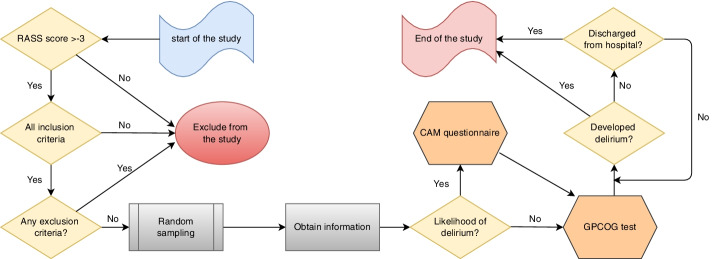
Method: In a prospective, observational trial, we investigated 220 patients who had been admitted to the internal, emergency, surgery and hematology-oncology departments. We employed the Confusion Assessment Method (CAM) questionnaire, The Richmond Agitation Sedation Scale (RASS), the General Practitioner Assessment of Cognition (GPCOG), demographic questionnaire, patient interviews and medical records. Multivariate logistic regression models were used to analyze the predictive value of medications and underlying diseases for daily transition to delirium.; demographics were analyzed using univariate analysis to identify those independently associated with delirium.
Results: Two hundred twenty patients were enrolled; the emergency department had the most incident delirium (31.3%), and the surgery section had the least (2.4%); delirium was significantly correlated with older ages and sleep disturbance. Among multiple underlying diseases and the medications evaluated in this study, we found that a history of dementia, neurological diseases and malignancies increases the odds of transition to delirium and the use of anticoagulants decreases the incident delirium.
Conclusion: Approximately 1 out of 10 overall patients developed delirium; It is important to evaluate underlying diseases and medications more thoroughly in hospitalized patients to assess the risk of delirium.
Keywords: Confusion; Delirium; Dementia; Hospitalization; Neoplasms; Neurological diseases.
© 2022. The Author(s).
Conflict of interest statement
The authors of this article declare no competing interest regarding current research.
Figures
References
-
- Scott J, et al. A short report on point prevalence of delirium in hospitalised older adult patients in Auckland, New Zealand. J Geriatr Care Res. 2019;6(1):9–14.
Publication types
MeSH terms
LinkOut - more resources
Full Text Sources
Medical
