


Chromosomal synapsis defects can trigger oocyte apoptosis without elevating numbers of persistent DNA breaks above wild-type levels
- PMID: 35580048
- PMCID: PMC9177993
- DOI: 10.1093/nar/gkac355
Chromosomal synapsis defects can trigger oocyte apoptosis without elevating numbers of persistent DNA breaks above wild-type levels
Abstract
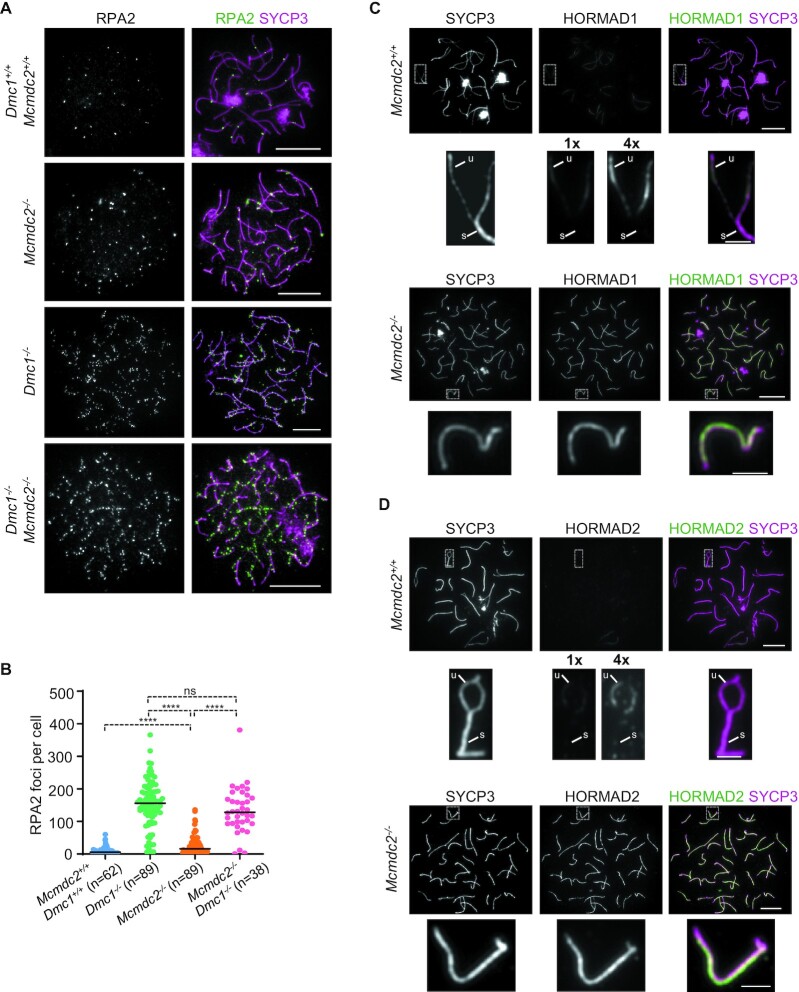
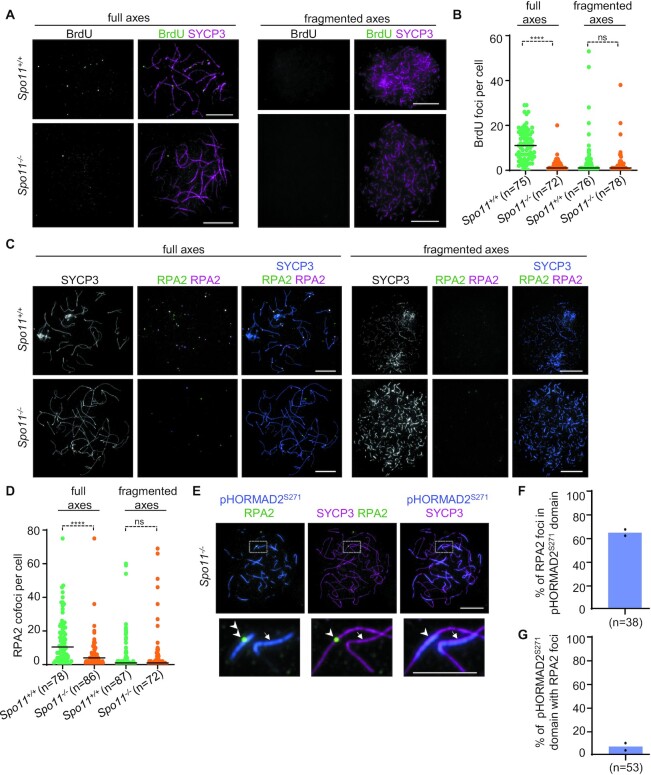
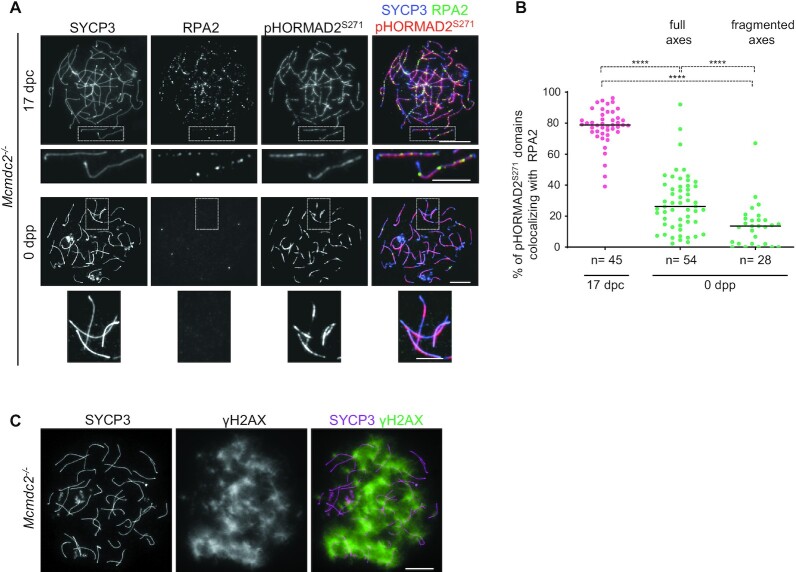
Generation of haploid gametes depends on a modified version of homologous recombination in meiosis. Meiotic recombination is initiated by single-stranded DNA (ssDNA) ends originating from programmed DNA double-stranded breaks (DSBs) that are generated by the topoisomerase-related SPO11 enzyme. Meiotic recombination involves chromosomal synapsis, which enhances recombination-mediated DSB repair, and thus, crucially contributes to genome maintenance in meiocytes. Synapsis defects induce oocyte apoptosis ostensibly due to unrepaired DSBs that persist in asynaptic chromosomes. In mice, SPO11-deficient oocytes feature asynapsis, apoptosis and, surprisingly, numerous foci of the ssDNA-binding recombinase RAD51, indicative of DSBs of unknown origin. Hence, asynapsis is suggested to trigger apoptosis due to inefficient DSB repair even in mutants that lack programmed DSBs. By directly detecting ssDNAs, we discovered that RAD51 is an unreliable marker for DSBs in oocytes. Further, SPO11-deficient oocytes have fewer persistent ssDNAs than wild-type oocytes. These observations suggest that oocyte quality is safeguarded in mammals by a synapsis surveillance mechanism that can operate without persistent ssDNAs.
© The Author(s) 2022. Published by Oxford University Press on behalf of Nucleic Acids Research.
Figures
References
-
- Baudat F., Manova K., Yuen J.P., Jasin M., Keeney S.. Chromosome synapsis defects and sexually dimorphic meiotic progression in mice lacking spo11. Mol. Cell. 2000; 6:989–998. - PubMed
-
- Bergerat A., de Massy B., Gadelle D., Varoutas P.C., Nicolas A., Forterre P.. An atypical topoisomerase II from archaea with implications for meiotic recombination. Nature. 1997; 386:414–417. - PubMed
-
- Keeney S., Giroux C.N., Kleckner N.. Meiosis-specific DNA double-strand breaks are catalyzed by spo11, a member of a widely conserved protein family. Cell. 1997; 88:375–384. - PubMed
-
- Robert T., Nore A., Brun C., Maffre C., Crimi B., Bourbon H.M., de Massy B.. The topovib-like protein family is required for meiotic DNA double-strand break formation. Science. 2016; 351:943–949. - PubMed
-
- Romanienko P.J., Camerini-Otero R.D.. The mouse spo11 gene is required for meiotic chromosome synapsis. Mol. Cell. 2000; 6:975–987. - PubMed
Publication types
MeSH terms
Substances
LinkOut - more resources
Full Text Sources
Research Materials
