


Sex and limb comparisons of neuromuscular function in the morning versus the evening
- PMID: 35581749
- PMCID: PMC9114651
- DOI: 10.14814/phy2.15260
Sex and limb comparisons of neuromuscular function in the morning versus the evening
Abstract
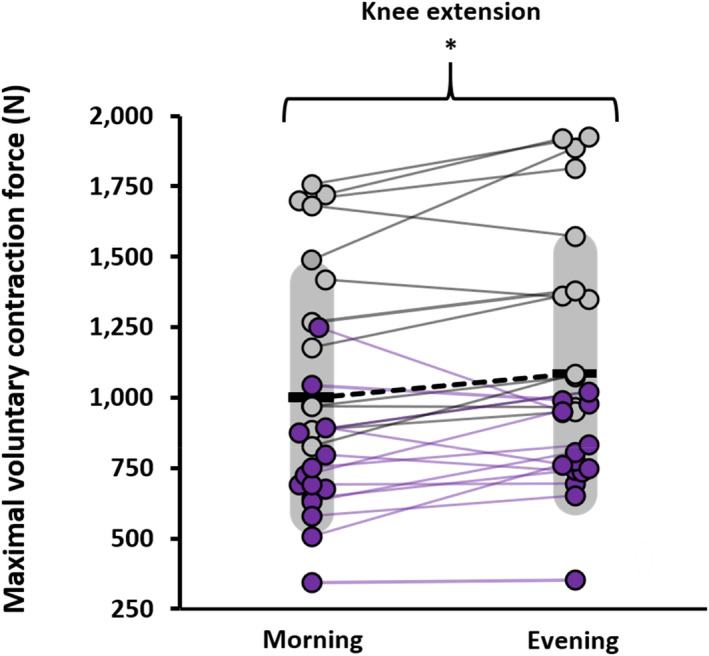
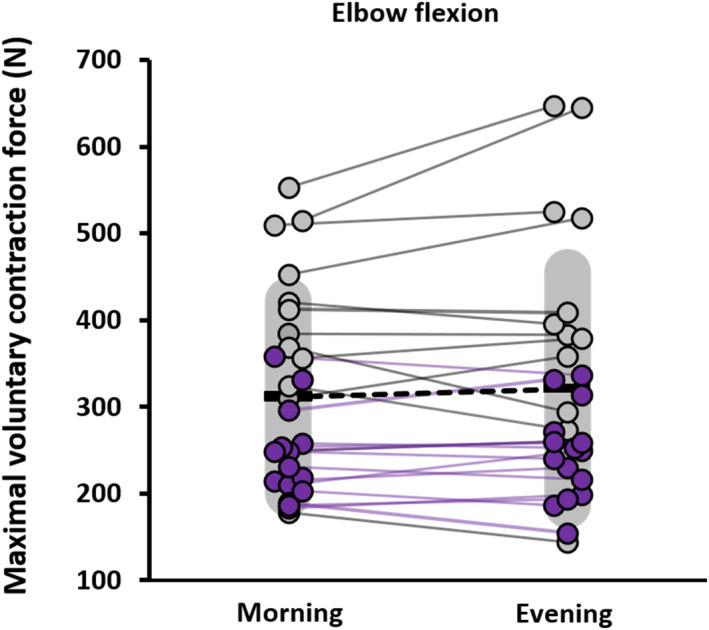
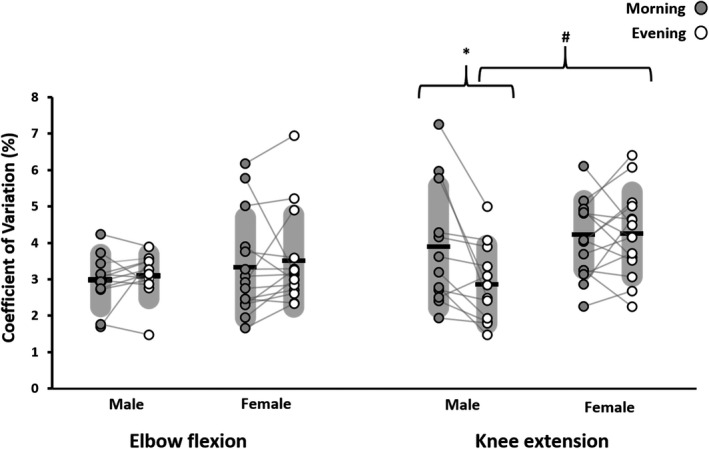
The time-of-day influence on neuromuscular function is well-documented, but important details remain elusive. It is currently unknown whether males and females differ in their diurnal variation for optimal neuromuscular performance. The purpose of this study is to identify the time-of-day influence on neuromuscular function between sexes and determine whether these responses differ for the upper versus lower limbs. A group of males (n = 12) and females (n = 15) completed neuromuscular performance testing in the morning (07:00-09:00) and evening (17:00-19:00) on separate days in a randomized order. Maximal force, the normalized rate of force development, EMG, normalized EMG rise, and submaximal force steadiness were compared between morning and evening hours. The main findings show that maximal force was greater in the evening for the knee extensors (d = 0.570, p < 0.01) but not the elbow flexors (d = 0.212, p = 0.281), whereas maximal muscle excitation was greater in the evening for the biceps brachii (d = 0.348, p < 0.01) but not the vastus lateralis (d = 0.075, p = 0.526) with no influence of sex. However, force steadiness during knee extension was superior in the evening versus the morning for males (d = 0.734, p = 0.025) and compared to evening values for females (g = 1.19, p = 0.032). Overall, these findings show that time-of-day affects the knee extensors more than the elbow flexors and that diurnal variability between sexes appears to be task-dependent.
Keywords: EMG; RER; RFD; diurnal; force steadiness; sex differences; time of day.
© 2022 The Authors. Physiological Reports published by Wiley Periodicals LLC on behalf of The Physiological Society and the American Physiological Society.
Conflict of interest statement
We report no conflicts of interest.
Figures

References
-
- Ansdell, P. , Brownstein, C. G. , Škarabot, J. , Hicks, K. M. , Simoes, D. C. M. , Thomas, K. , Howatson, G. , Hunter, S. K. , & Goodall, S. (2019). Menstrual cycle‐associated modulations in neuromuscular function and fatigability of the knee extensors in eumenorrheic women. Journal of Applied Physiology, 126(6), 1701–1712. American Physiological Society. 10.1152/japplphysiol.01041.2018 - DOI - PubMed
MeSH terms
LinkOut - more resources
Full Text Sources
