


Stress axis programming generates long-term effects on cognitive abilities in a cooperative breeder
- PMID: 35582802
- PMCID: PMC9114936
- DOI: 10.1098/rspb.2022.0117
Stress axis programming generates long-term effects on cognitive abilities in a cooperative breeder
Abstract
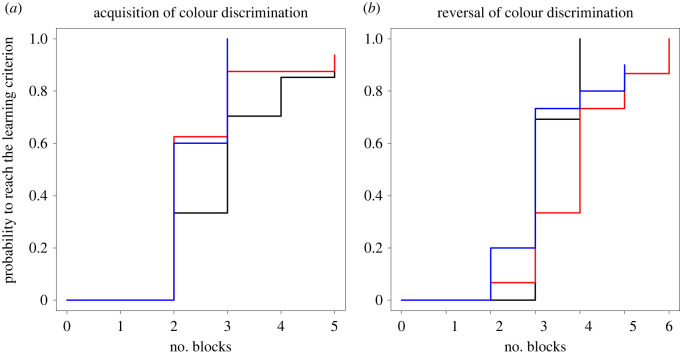
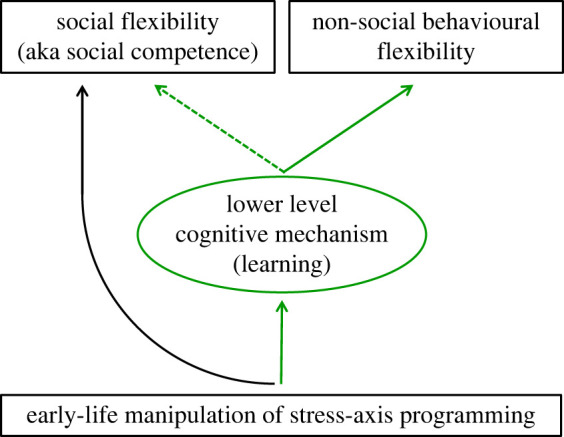
The ability to flexibly adjust behaviour to social and non-social challenges is important for successfully navigating variable environments. Social competence, i.e. adaptive behavioural flexibility in the social domain, allows individuals to optimize their expression of social behaviour. Behavioural flexibility outside the social domain aids in coping with ecological challenges. However, it is unknown if social and non-social behavioural flexibility share common underlying cognitive mechanisms. Support for such shared mechanism would be provided if the same neural mechanisms in the brain affected social and non-social behavioural flexibility similarly. We used individuals of the cooperatively breeding fish Neolamprologus pulcher that had undergone early-life programming of the hypothalamic-pituitary-interrenal axis by exposure to (i) cortisol, (ii) the glucocorticoid receptor antagonist mifepristone, or (iii) control treatments, and where effects of stress-axis programming on social flexibility occurred. One year after the treatments, adults learned a colour discrimination task and subsequently, a reversal-learning task testing for behavioural flexibility. Early-life mifepristone treatment marginally enhanced learning performance, whereas cortisol treatment significantly reduced behavioural flexibility. Thus, early-life cortisol treatment reduced both social and non-social behavioural flexibility, suggesting a shared cognitive basis of behavioural flexibility. Further our findings imply that early-life stress programming affects the ability of organisms to flexibly cope with environmental stressors.
Keywords: behavioural flexibility; cichlid; colour discrimination; reversal learning; social competence; stress-axis programming.
Conflict of interest statement
We declare we have no competing interests.
Figures
References
-
- Arnold C, Taborsky B. 2010. Social experience in early ontogeny has lasting effects on social skills in cooperatively breeding cichlids. Anim. Behav. 79, 621-630. (10.1016/j.anbehav.2009.12.008) - DOI
-
- Lehner SR, Rutte C, Taborsky M. 2011. Rats benefit from winner and loser effects. Ethology 117, 949-960. (10.1111/j.1439-0310.2011.01962.x) - DOI
-
- Cauchard L, Angers B, Boogert NJ, Lenarth M, Bize P, Doligez B. 2017. An experimental test of a causal link between problem-solving performance and reproductive success in wild great tits. Front. Ecol. Evol. 5, 1-8. (10.3389/fevo.2017.00107) - DOI
Publication types
MeSH terms
Substances
Associated data
LinkOut - more resources
Full Text Sources
