


Factors affecting prolonged time to extubation in patients given remimazolam
- PMID: 35584094
- PMCID: PMC9116664
- DOI: 10.1371/journal.pone.0268568
Factors affecting prolonged time to extubation in patients given remimazolam
Abstract
Purpose: To analyze the cause of prolonged recovery from general anesthesia with remimazolam.
Methods: We studied 65 patients under general anesthesia with remimazolam. According to time to extubation, patients were divided into short period (SP) (n = 34, < 15 min) and long period (LP) (n = 31, ≥ 15 min) groups. Variables affecting time to extubation such as age, sex, height, body weight, body mass index (BMI), plasma albumin concentration, ASA class, duration of surgery, and total duration of general anesthesia, and total dose of remimazolam were compared between SP and LP groups. At the end of remimazolam infusion and upon extubation, predictive remimazolam concentrations were calculated using pharmacokinetic/pharmacodynamic three compartment modeling.
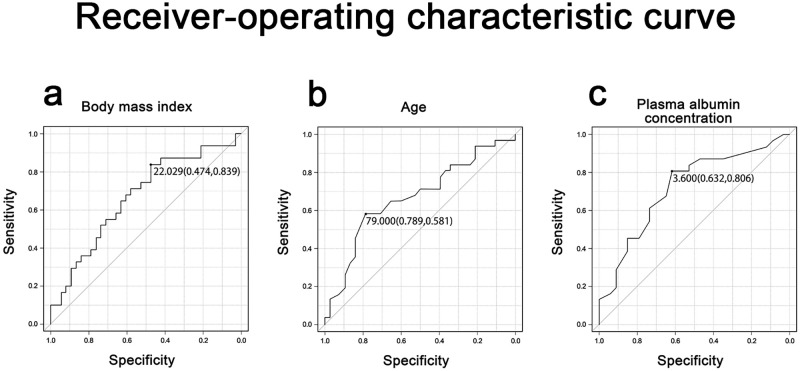
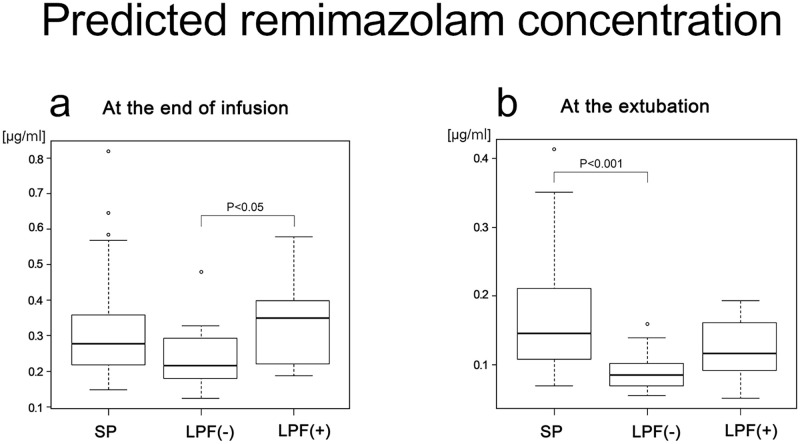
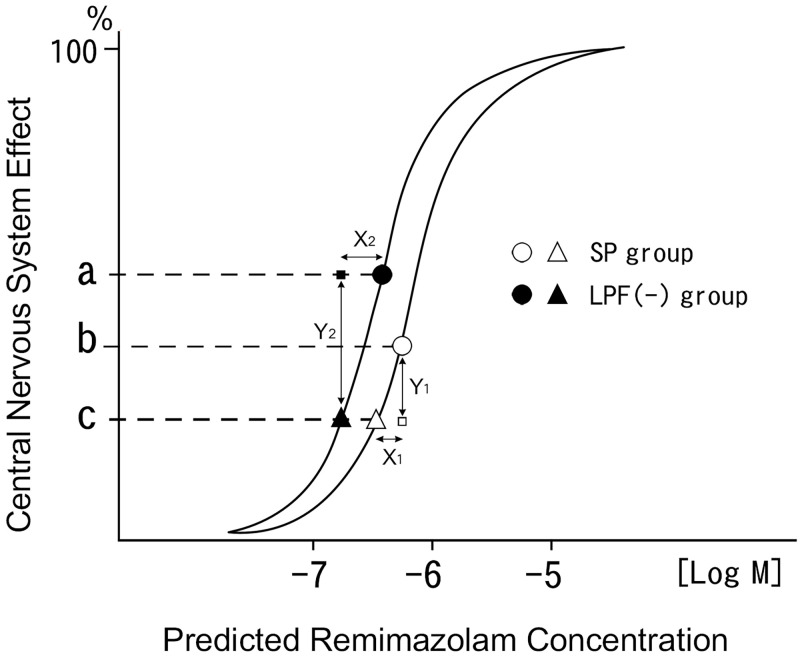
Results: LP group showed significantly higher BMI, older age, and lower plasma albumin concentration compared with those of SP group. Logistic regression analysis showed that the probability of time to extubation of ≥ 15 min was higher in patients with BMI greater than 22.0 kg/m2 (AUC 0.668, 95% CI 0.533‒0.803), ages older than 79.0 years (AUC 0.662, 95% CI 0.526‒0.798), and plasma albumin concentrations lower than 3.60 g/dl (AUC 0.720, 95% CI 0.593‒0.847). LP group showed significantly lower predicted remimazolam concentration than SP group upon extubation despite no difference in concentration between both groups at the end of infusion. Pharmacological analysis estimates that LP group is more sensitive to remimazolam than SP group through amplified responses.
Conclusions: Lower remimazolam doses should be considered for the overweight patients, elderly, and those with lower plasma albumin concentration.
Conflict of interest statement
The authors have declared that no competing interests exist.
Figures
References
-
- Antonik LJ, Goldwater DR, Kilpatrick GJ, Tilbrook GS, Borkett KM. A placebo- and midazolam-controlled phase I single ascending-dose study evaluating the safety, pharmacokinetics, and pharmacodynamics of remimazolam (CNS 7056): Part I. Safety, efficacy, and basic pharmacokinetics. Anesth Analg. 2012;115:274–83. doi: 10.1213/ANE.0b013e31823f0c28 - DOI - PubMed
-
- Schüttler J, Eisenried A, Lerch M, Fechner J, Jeleazcov C, Ihmsen H. Pharmacokinetics and pharmacodynamics of remimazolam (CNS 7056) after continusous infusion in healthy male volunteers; part 1. Pharmacokinetics and clinical pharmacodynamics. Anesthesiology. 2020;132:636–51. doi: 10.1097/ALN.0000000000003103 - DOI - PubMed
MeSH terms
Substances
LinkOut - more resources
Full Text Sources
