Electronic Health Record-Embedded, Behavioral Science-Informed System for Smoking Cessation for the Parents of Pediatric Patients
- PMID: 35584789
- PMCID: PMC9117010
- DOI: 10.1055/s-0042-1748148
Electronic Health Record-Embedded, Behavioral Science-Informed System for Smoking Cessation for the Parents of Pediatric Patients
Abstract
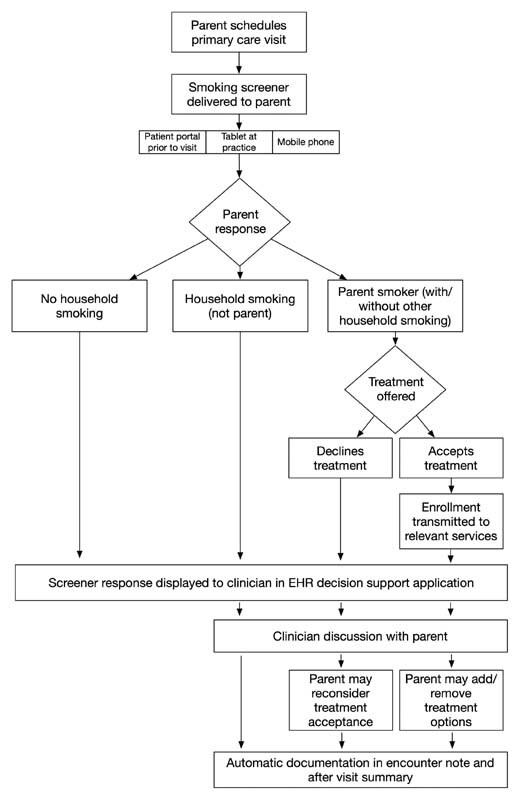
Background: Helping parents quit smoking is a public health priority. However, parents are rarely, if ever, offered tobacco use treatment through pediatric settings. Clinical decision support (CDS) systems developed for the workflows of pediatric primary care may support consistent screening, treatment, and referral.
Objectives: This study aimed to develop a CDS system by using human-centered design (HCD) that identifies parents who smoke, provides motivational messages to quit smoking (informed by behavioral science), and supports delivery of evidence-based tobacco treatment.
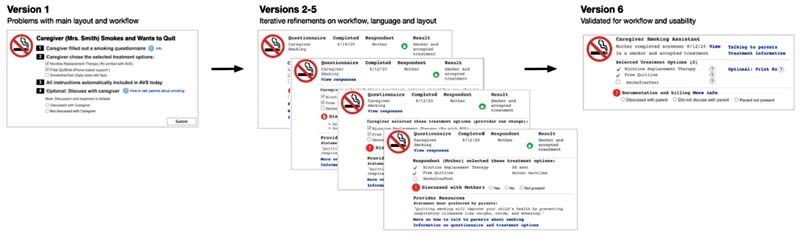
Methods: Our multidisciplinary team applied a rigorous HCD process involving analysis of the work environment, user involvement in formative design, iterative improvements, and evaluation of the system's use in context with the following three cohorts: (1) parents who smoke, (2) pediatric clinicians, and (3) clinic staff. Participants from each cohort were presented with scenario-based, high-fidelity mockups of system components and then provided input related to their role in using the CDS system.
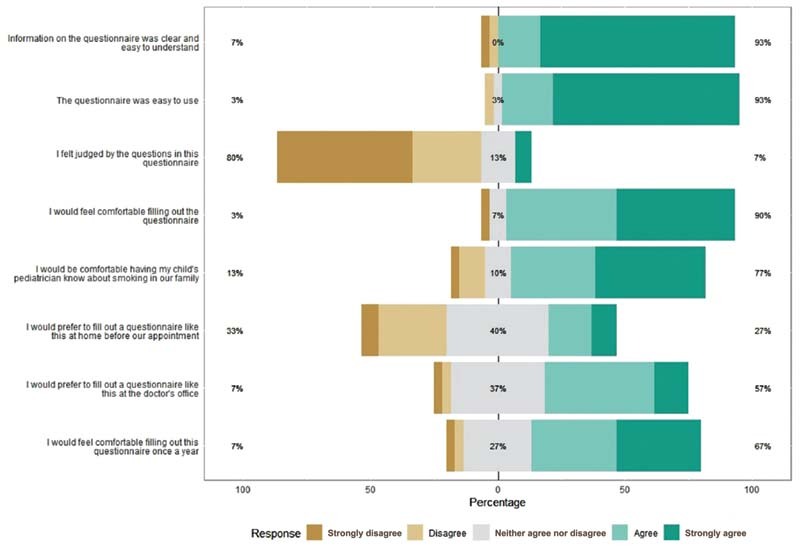
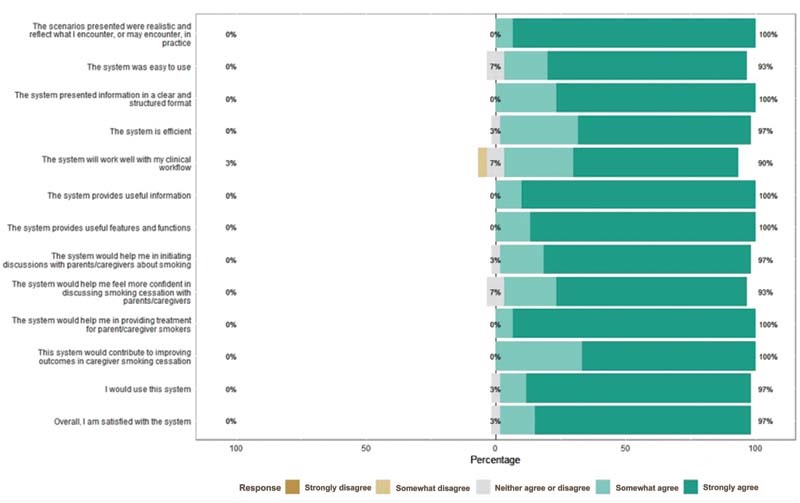
Results: We engaged 70 representative participants including 30 parents, 30 clinicians, and 10 clinic staff. A key theme of the design review sessions across all cohorts was the need to automate functions of the system. Parents emphasized a system that presented information in a simple way, highlighted benefits of quitting smoking, and allowed direct connection to treatment. Pediatric clinicians emphasized automating tobacco treatment. Clinical staff emphasized screening for parent smoking via several modalities prior to the patient's visit. Once the system was developed, most parents (80%) reported that it was easy to use, and the majority of pediatricians reported that they would use the system (97%) and were satisfied with it (97%).
Conclusion: A CDS system to support parental tobacco cessation in pediatric primary care, developed through an HCD process, proved easy to use and acceptable to parents, clinicians, and office staff. This preliminary work justifies evaluating the impact of the system on helping parents quit smoking.
Thieme. All rights reserved.
Conflict of interest statement
None declared.
Figures
References
-
- National Center for Chronic Disease Prevention and Health Promotion (US) Office on Smoking and Health. . Atlanta, GA: Centers for Disease Control and Prevention (US); 2014. The Health Consequences of Smoking—50 Years of Progress: A Report of the Surgeon General. - PubMed
-
- Office on Smoking and Health (US) . Atlanta, GA: Centers for Disease Control and Prevention (US); 2006. Health Consequences of Involuntary Exposure to Tobacco Smoke: A Report of the Surgeon General. - PubMed
-
- den Exter Blokland E AW, Engels R CME, Hale W W, III, Meeus W, Willemsen M C. Lifetime parental smoking history and cessation and early adolescent smoking behavior. Prev Med. 2004;38(03):359–368. - PubMed
-
- Jha P, Ramasundarahettige C, Landsman V. 21st-century hazards of smoking and benefits of cessation in the United States. N Engl J Med. 2013;368(04):341–350. - PubMed
MeSH terms
Substances
Grants and funding
LinkOut - more resources
Full Text Sources
Medical