


Health risk assessment of polycyclic aromatic hydrocarbons in individuals living near restaurants: a cross-sectional study in Shiraz, Iran
- PMID: 35585178
- PMCID: PMC9117185
- DOI: 10.1038/s41598-022-12040-8
Health risk assessment of polycyclic aromatic hydrocarbons in individuals living near restaurants: a cross-sectional study in Shiraz, Iran
Erratum in
-
Publisher Correction: Health risk assessment of polycyclic aromatic hydrocarbons in individuals living near restaurants: a cross-sectional study in Shiraz, Iran.Sci Rep. 2022 Jun 30;12(1):11068. doi: 10.1038/s41598-022-15434-w. Sci Rep. 2022. PMID: 35773396 Free PMC article. No abstract available.
Abstract
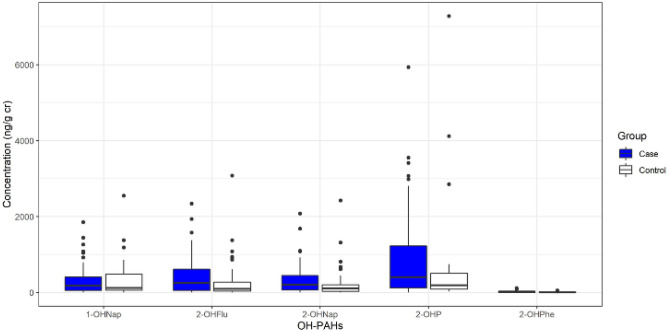
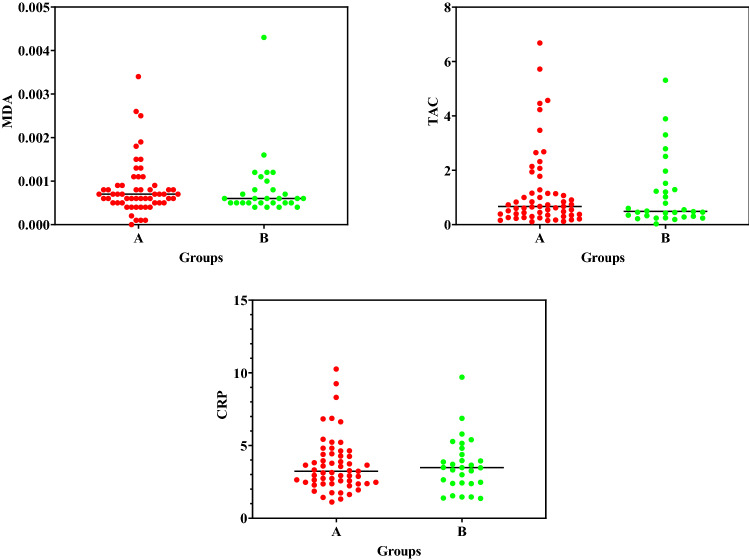
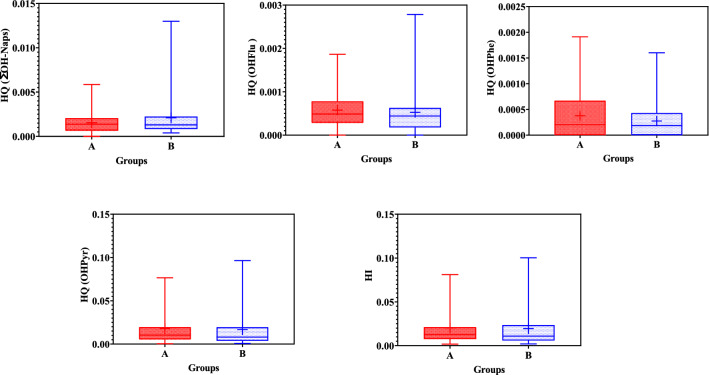
Polycyclic aromatic hydrocarbons (PAHs) are persistent toxic substances that have ubiquitous presence in water, air, soil, and sediment environments, posing serious environmental risks. The present study aimed to investigate the concentrations of urinary PAHs and their health effects in individuals living near restaurants via a health risk assessment analysis. This cross-sectional study was performed on 57 people living near restaurants and 30 individuals as the control group. Five urinary metabolites of PAHs were monitored. In order to evaluate the effects of the urinary metabolites of PAHs on Malondialdehyde (MDA) concentration, Total Anti-oxidation Capacity (TAC) in urine samples, and C-Reactive Protein (CRP) in serum samples, regression model was used by considering the effects of the possible confounding factors. Non-carcinogenic health risk was calculated, as well. The median concentration of urinary PAHs was 1196.70 and 627.54 ng/g creatinine in the people living near restaurants and the control group, respectively. Among the metabolites, the lowest and highest mean concentrations were related to 9-OHPhe and 1-OHP, respectively in the two study groups. Moreover, PAHs were significantly associated with MDA level and TAC (p < 0.05). Hazard Quotient (HQ) and Hazard Index (HI) were less than 1. Long-term studies are required to determine the actual health effects by identifying the sources of PAHs emission and to find ways to decrease the production of these compounds.
© 2022. The Author(s).
Conflict of interest statement
The authors declare no competing interests.
Figures
References
-
- Ambade, B., Kumar, A., Latif, M. Emission sources, Characteristics and risk assessment of particulate bound Polycyclic Aromatic Hydrocarbons (PAHs) from traffic sites. Res. Squre (2021). 10.21203/rs.3.rs-328364/v1
-
- Shubhankar B, Ambade B. A review on deposition, distribution of polycyclic aromatic hydrocarbons in different environmental matrix and study its toxicity and carcinogenic effect. Asian J. Chem. 2016;28(11):2341–2345. doi: 10.14233/ajchem.2016.20096. - DOI
-
- Ambade B, ShankarSethi S, Kurwadkarb S, Kumara A, KumarSankar T. Toxicity and health risk assessment of polycyclic aromatic hydrocarbons in surface water, sediments and groundwater vulnerability in Damodar River Basin. Groundw. Sustain. Dev. 2021;136:100553. doi: 10.1016/j.gsd.2021.100553. - DOI
Publication types
MeSH terms
Substances
LinkOut - more resources
Full Text Sources
Research Materials
Miscellaneous
