


Is Workload Associated With Hamstring and Calf Strains in Professional Baseball Players? An Analysis of Days of Rest, Innings Fielded, and Plate Appearances
- PMID: 35587100
- PMCID: PMC10293563
- DOI: 10.1177/19417381221093557
Is Workload Associated With Hamstring and Calf Strains in Professional Baseball Players? An Analysis of Days of Rest, Innings Fielded, and Plate Appearances
Abstract
Background: The influence of player workload on hamstring and calf injuries in professional baseball players remains unknown.
Hypothesis: Increased workload would significantly increase hamstring and calf strain injury risk.
Study design: Case-control.
Level of evidence: Level 3.
Methods: All professional baseball players who sustained a hamstring or calf injury between 2011 and 2017 were identified using the Major League Baseball (MLB) Health and Injury Tracking System (HITS). A separate player usage dataset was used to determine workload. We then compared these variables between player games 2, 6, 12, and >12 weeks before a documented calf strain to player games from a noncalf injury control group. In a paired analysis, we compared the acute workload (2, 6, and 12 weeks) before injury with the injured player's workload >12 weeks before injury.
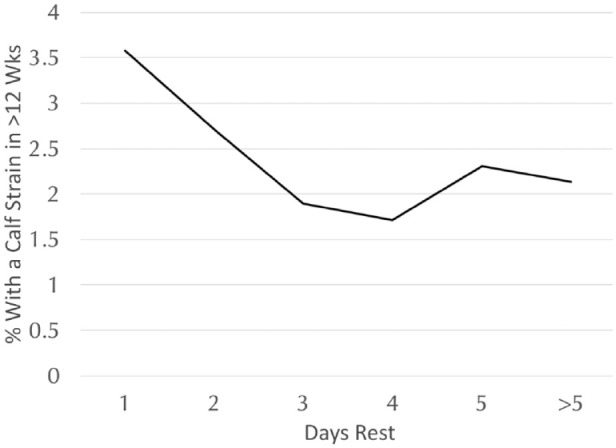
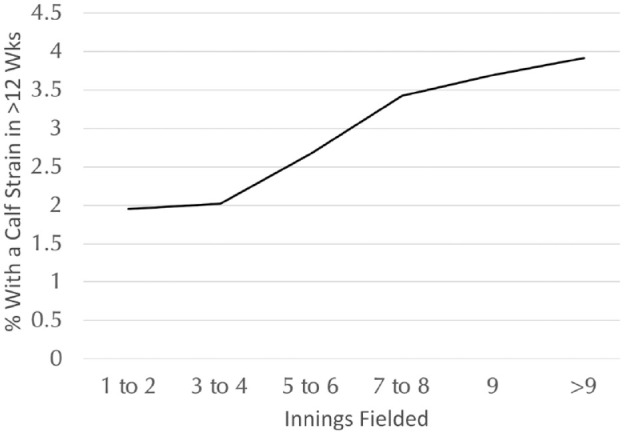
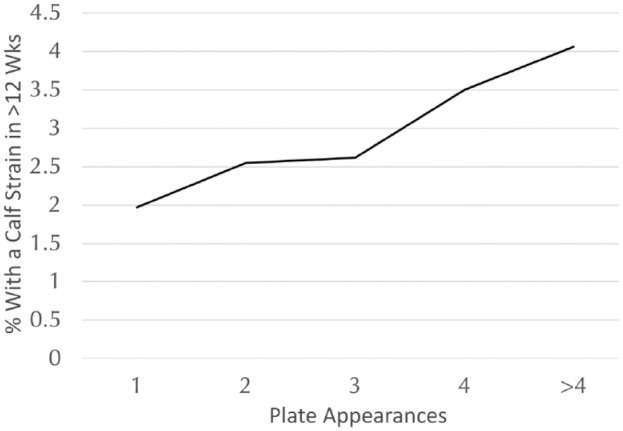
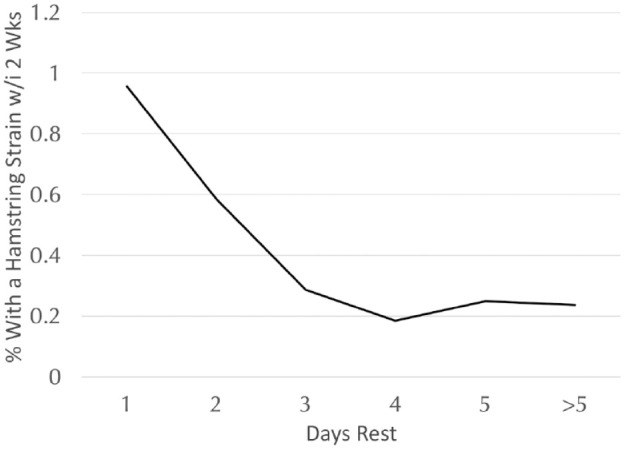
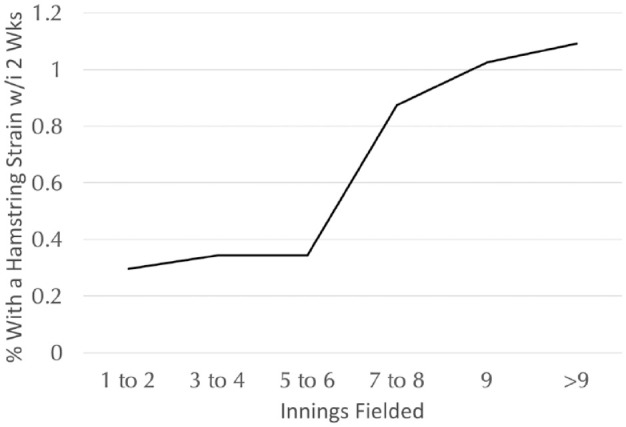
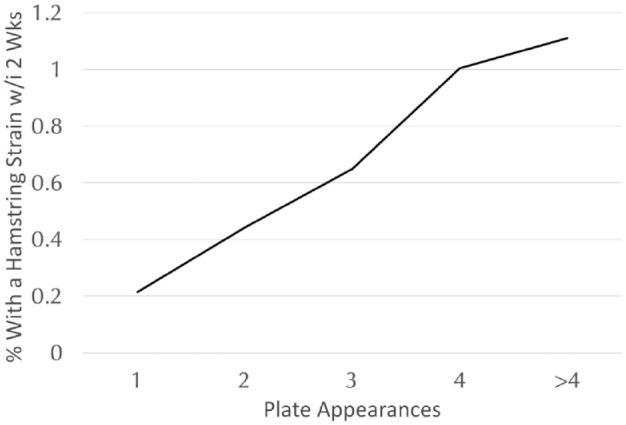
Results: There were 175 unique calf strains (71% occurred in position players) and 1042 unique hamstring strains (97.8% occurred in position players) documented in the MLB HITS database from 2011 to 2017. In all time periods, position players with fewer days rest, more innings fielded, and more plate appearances were associated with a higher risk of subsequent hamstring and calf strains. Having only 1 day rest was associated with a 2.08-fold increase in percentage of players who sustained a subsequent calf strain compared with those with 4 days rest. Position players with >5 days of rest had a 4.03-fold decrease in percentage of players who sustained a hamstring strain compared with players with 1 day rest. Position players who fielded >9 innings per game had a 2.01-fold increase in percentage of players with a subsequent calf strain and a 3.68-fold increase in percentage of players who sustained a subsequent hamstring strain compared with players who only fielded 1 innings per game.
Conclusion: Position players with fewer days rest, more innings fielded, and more plate appearance per game had an increased risk of sustaining a hamstring or calf injury.
Clinical relevance: Increased workload had a direct relationship with risk of hamstring and calf strains in professional baseball players. Teams should consider more days rest for position players to avoid calf injuries.
Keywords: baseball; calf; hamstring; injury; workload.
Conflict of interest statement
The authors report no potential conflicts of interest in the development and publication of this article.
Figures
References
-
- Ahmad CS, Dick RW, Snell E, et al. Major and Minor League Baseball hamstring injuries: epidemiologic findings from the Major League Baseball injury surveillance system. Am J Sports Med. 2014;42:1464-1470. - PubMed
-
- Camp CL, Conte S, D’Angelo J, Fealy SA. Epidemiology of ulnar collateral ligament reconstruction in Major and Minor League Baseball pitchers: comprehensive report of 1429 cases. J Shoulder Elbow Surg. 2018;27:871-878. - PubMed
-
- Camp CL, Dines JS, van der List JP, et al. Summative report on time out of play for Major and Minor League Baseball: an analysis of 49,955 injuries from 2011 through 2016. Am J Sports Med. 2018;46:1727-1732. - PubMed
-
- Chalmers PN, Erickson BJ, D’Angelo J, Ma K, Romeo AA. Epidemiology of shoulder surgery among professional baseball players. Am J Sports Med. 2019:363546519832525. - PubMed
-
- Chauhan A, McQueen P, Chalmers PN, et al. Nonoperative treatment of elbow ulnar collateral ligament injuries with and without platelet-rich plasma in professional baseball players: a comparative and matched cohort analysis. Am J Sports Med. 2019;47(13):3107-3119. - PubMed
MeSH terms
LinkOut - more resources
Full Text Sources
Medical
Research Materials
