


Molecular plant immunity against biotrophic, hemibiotrophic, and necrotrophic fungi
- PMID: 35587147
- PMCID: PMC9528087
- DOI: 10.1042/EBC20210073
Molecular plant immunity against biotrophic, hemibiotrophic, and necrotrophic fungi
Abstract
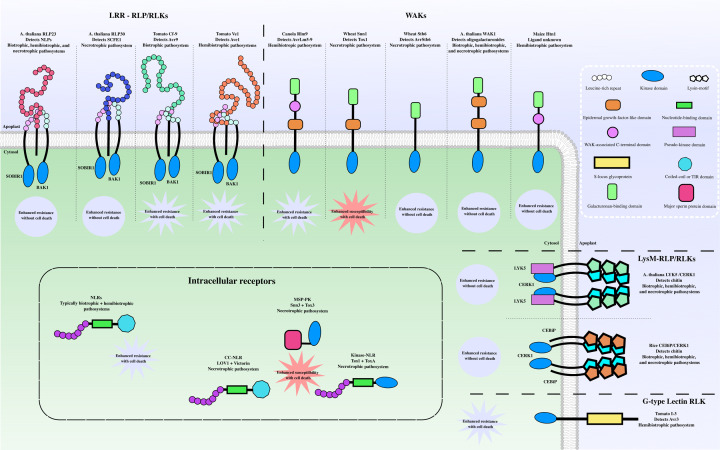
Pathogenic fungi use diverse infection strategies to obtain nutrients from plants. Biotrophic fungi feed only on living plant tissue, whereas necrotrophic fungi kill host cells to extract nutrients. To prevent disease, plants need to distinguish between pathogens with different life cycles, as a successful defense against a biotroph, which often involves programmed cell-death around the site of infection, is not an appropriate response to some necrotrophs. Plants utilize a vast collection of extracellular and intracellular receptors to detect the signatures of pathogen attack. In turn, pathogens are under strong selection to mask or avoid certain receptor responses while enhancing or manipulating other receptor responses to promote virulence. In this review, we focus on the plant receptors involved in resistance responses to fungal pathogens and highlight, with examples, how the infection strategy of fungal pathogens can determine if recognition responses are effective at preventing disease.
Keywords: biotroph; necrotroph; plant immunity.
© 2022 The Author(s).
Conflict of interest statement
The authors declare that there are no competing interests associated with this manuscript.
Figures
References
Publication types
MeSH terms
LinkOut - more resources
Full Text Sources
