Comparison of Amitriptyline and US Food and Drug Administration-Approved Treatments for Fibromyalgia: A Systematic Review and Network Meta-analysis
- PMID: 35587348
- PMCID: PMC9121190
- DOI: 10.1001/jamanetworkopen.2022.12939
Comparison of Amitriptyline and US Food and Drug Administration-Approved Treatments for Fibromyalgia: A Systematic Review and Network Meta-analysis
Abstract
Importance: Amitriptyline is an established medication used off-label for the treatment of fibromyalgia, but pregabalin, duloxetine, and milnacipran are the only pharmacological agents approved by the US Food and Drug Administration (FDA) to treat fibromyalgia.
Objective: To investigate the comparative effectiveness and acceptability associated with pharmacological treatment options for fibromyalgia.
Data sources: Searches of PubMed/MEDLINE, Cochrane Library, Embase, and Clinicaltrials.gov were conducted on November 20, 2018, and updated on July 29, 2020.
Study selection: Randomized clinical trials (RCTs) comparing amitriptyline or any FDA-approved doses of investigated drugs.
Data extraction and synthesis: This study follows the Preferred Reporting Items for Systematic Reviews and Meta-analyses reporting guideline. Four independent reviewers extracted data using a standardized data extraction sheet and assessed quality of RCTs. A random-effects bayesian network meta-analysis (NMA) was conducted. Data were analyzed from August 2020 to January 2021.
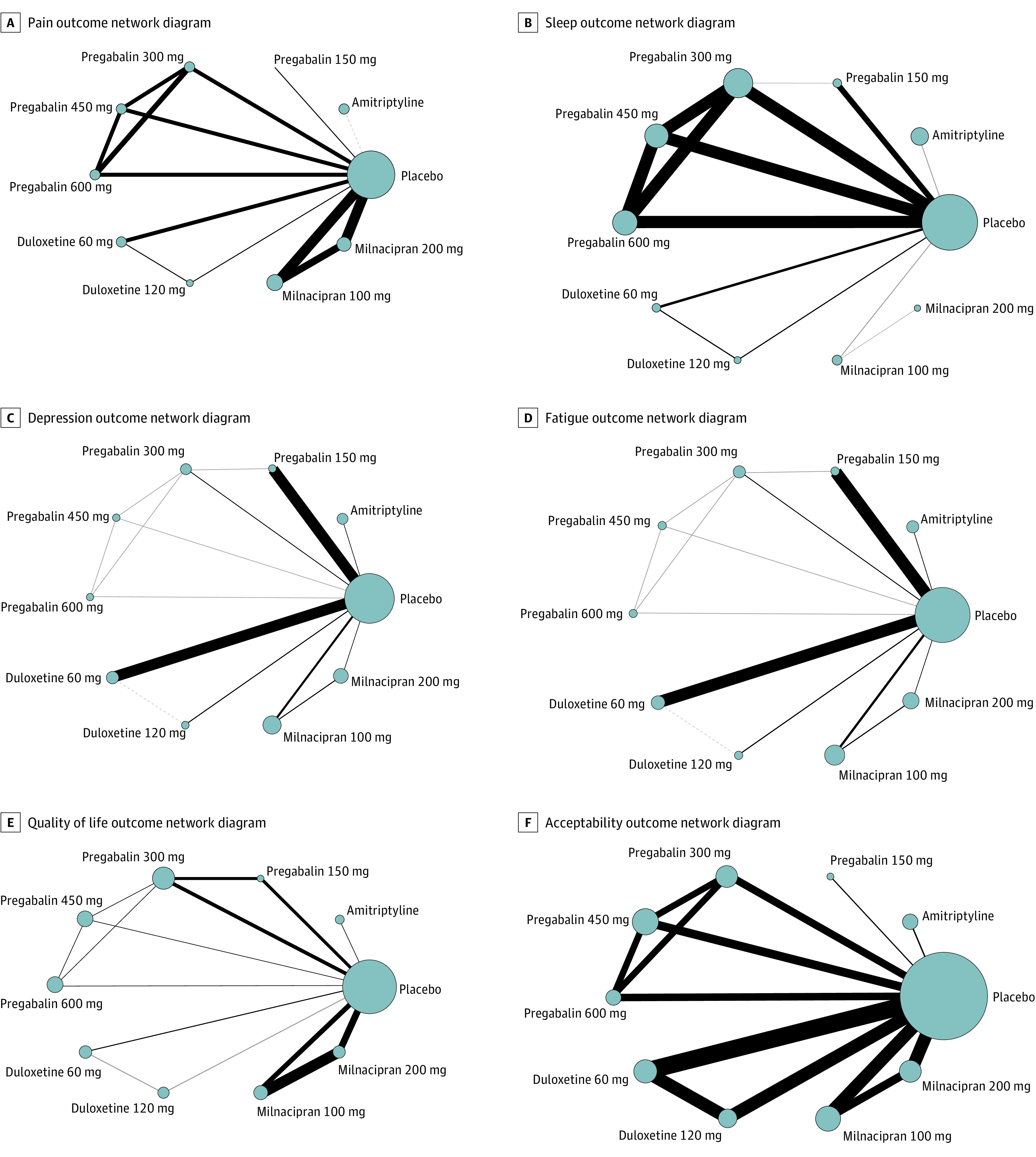
Main outcomes and measures: Comparative effectiveness and acceptability (defined as discontinuation of treatment owing to adverse drug reactions) associated with amitriptyline (off-label), pregabalin, duloxetine, and milnacipran (on-label) in reducing fibromyalgia symptoms. The following doses were compared: 60-mg and 120-mg duloxetine; 150-mg, 300-mg, 450-mg, and 600-mg pregabalin; 100-mg and 200-mg milnacipran; and amitriptyline. Effect sizes are reported as standardized mean differences (SMDs) for continuous outcomes and odds ratios (ORs) for dichotomous outcomes with 95% credible intervals (95% CrIs). Findings were considered statistically significant when the 95% CrI did not include the null value (0 for SMD and 1 for OR). Relative treatment ranking using the surface under the cumulative ranking curve (SUCRA) was also evaluated.
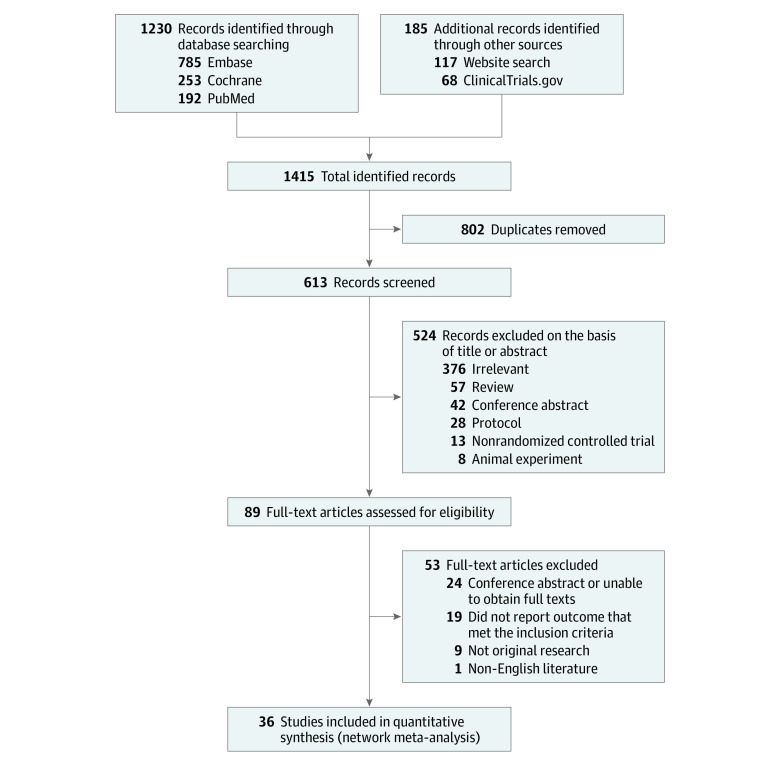
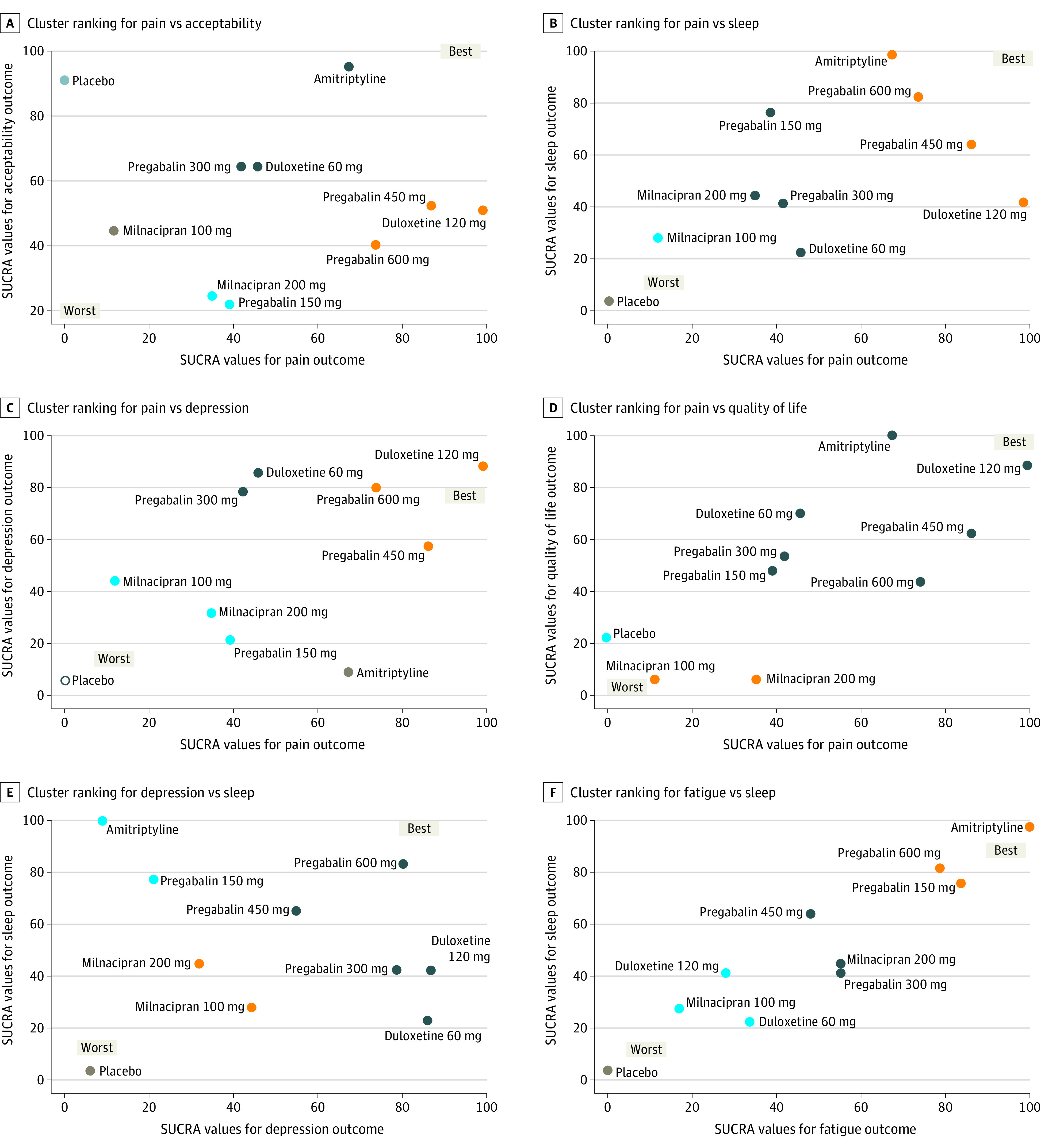
Results: A total of 36 studies (11 930 patients) were included. The mean (SD) age of patients was 48.4 (10.4) years, and 11 261 patients (94.4%) were women. Compared with placebo, amitriptyline was associated with reduced sleep disturbances (SMD, -0.97; 95% CrI, -1.10 to -0.83), fatigue (SMD, -0.64; 95% CrI, -0.75 to -0.53), and improved quality of life (SMD, -0.80; 95% CrI, -0.94 to -0.65). Duloxetine 120 mg was associated with the highest improvement in pain (SMD, -0.33; 95% CrI, -0.36 to -0.30) and depression (SMD, -0.25; 95% CrI, -0.32 to -0.17) vs placebo. All treatments were associated with inferior acceptability (higher dropout rate) than placebo, except amitriptyline (OR, 0.78; 95% CrI, 0.31 to 1.66). According to the SUCRA-based relative ranking of treatments, duloxetine 120 mg was associated with higher efficacy for treating pain and depression, while amitriptyline was associated with higher efficacy for improving sleep, fatigue, and overall quality of life.
Conclusions and relevance: These findings suggest that clinicians should consider how treatments could be tailored to individual symptoms, weighing the benefits and acceptability, when prescribing medications to patients with fibromyalgia.
Conflict of interest statement
Figures
Comment in
-
In fibromyalgia, amitriptyline is comparable to FDA-approved drugs for symptoms and acceptability.Ann Intern Med. 2022 Oct;175(10):JC118. doi: 10.7326/J22-0071. Epub 2022 Oct 4. Ann Intern Med. 2022. PMID: 36191311
-
Amitriptyline for fibromyalgia: Off-label treatment, but non-inferior to approved medication.Int J Rheum Dis. 2023 Apr;26(4):607-608. doi: 10.1111/1756-185X.14618. Int J Rheum Dis. 2023. PMID: 37002904 No abstract available.
References
-
- Frost & Sullivan Health and Life Sciences . Assessment of the U.S. fibromyalgia market in support of S1 filing (Phase 2). 2010. Accessed July 20, 2021. https://www.sec.gov/Archives/edgar/data/1430306/000101376211002697/exh99...
Publication types
MeSH terms
Substances
LinkOut - more resources
Full Text Sources
Medical