


Absence of increased genomic variants in the cyanobacterium Chroococcidiopsis exposed to Mars-like conditions outside the space station
- PMID: 35589950
- PMCID: PMC9120168
- DOI: 10.1038/s41598-022-12631-5
Absence of increased genomic variants in the cyanobacterium Chroococcidiopsis exposed to Mars-like conditions outside the space station
Abstract
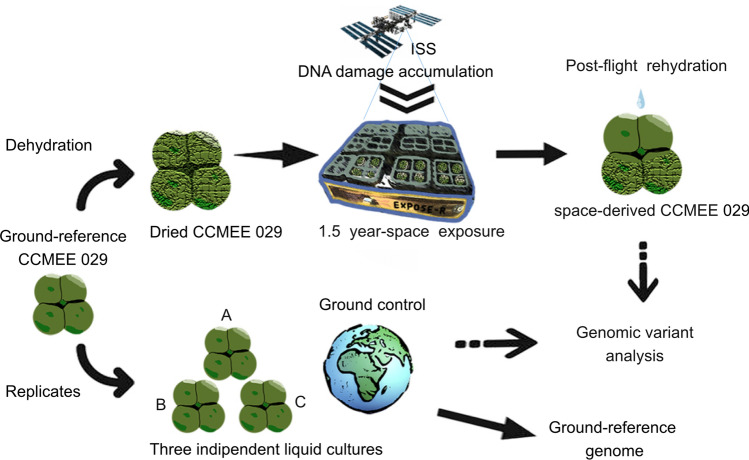
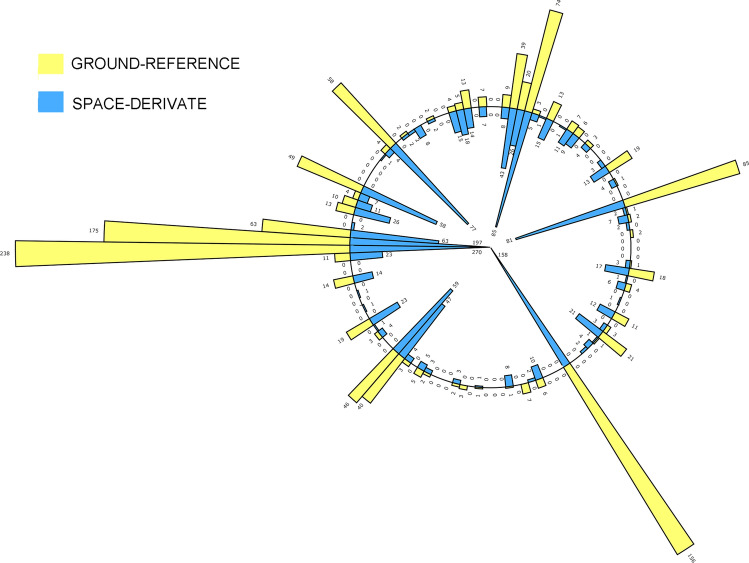
Despite the increasing interest in using microbial-based technologies to support human space exploration, many unknowns remain not only on bioprocesses but also on microbial survivability and genetic stability under non-Earth conditions. Here the desert cyanobacterium Chroococcidiopsis sp. CCMEE 029 was investigated for robustness of the repair capability of DNA lesions accumulated under Mars-like conditions (UV radiation and atmosphere) simulated in low Earth orbit using the EXPOSE-R2 facility installed outside the International Space Station. Genomic alterations were determined in a space-derivate of Chroococcidiopsis sp. CCMEE 029 obtained upon reactivation on Earth of the space-exposed cells. Comparative analysis of whole-genome sequences showed no increased variant numbers in the space-derivate compared to triplicates of the reference strain maintained on the ground. This result advanced cyanobacteria-based technologies to support human space exploration.
© 2022. The Author(s).
Conflict of interest statement
The authors declare no competing interests.
Figures
References
-
- Verseux C, et al. Sustainable life support on Mars—The potential roles of cyanobacteria. Int. J. Astrobiol. 2016;15:65–92. doi: 10.1017/S147355041500021X. - DOI
-
- Cottin H, et al. Space as a tool for astrobiology: Review and recommendations for experimentations in earth orbit and beyond. Space Sci. Rev. 2017;209:83–181. doi: 10.1007/s11214-017-0365-5. - DOI
Publication types
MeSH terms
LinkOut - more resources
Full Text Sources
Molecular Biology Databases
Miscellaneous
