


In-utero co-exposure to toxic metals and micronutrients on childhood risk of overweight or obesity: new insight on micronutrients counteracting toxic metals
- PMID: 35589962
- PMCID: PMC9329205
- DOI: 10.1038/s41366-022-01127-x
In-utero co-exposure to toxic metals and micronutrients on childhood risk of overweight or obesity: new insight on micronutrients counteracting toxic metals
Abstract
Background/objectives: Low-level, in-utero exposure to toxic metals such as lead (Pb) and mercury (Hg) is widespread in the US and worldwide; and, individually, was found to be obesogenic in children. To address the literature gaps on the health effects of co-exposure to low-level toxic metals and the lack of intervention strategy, we aimed to investigate the association between in-utero co-exposure to Hg, Pb, cadmium (Cd) and childhood overweight or obesity (OWO) and whether adequate maternal micronutrients (selenium (Se) and folate) can be protective.
Subjects/methods: This study included 1442 mother-child pairs from the Boston Birth Cohort, a predominantly urban, low-income, Black, and Hispanic population, who were enrolled at birth and followed prospectively up to age 15 years. Bayesian kernel machine regression (BKMR) was applied to estimate individual and joint effects of exposures to metals and micronutrients on childhood OWO while adjusting for pertinent covariables. Stratified analyses by maternal OWO and micronutrient status were performed to identify sensitive subgroups.
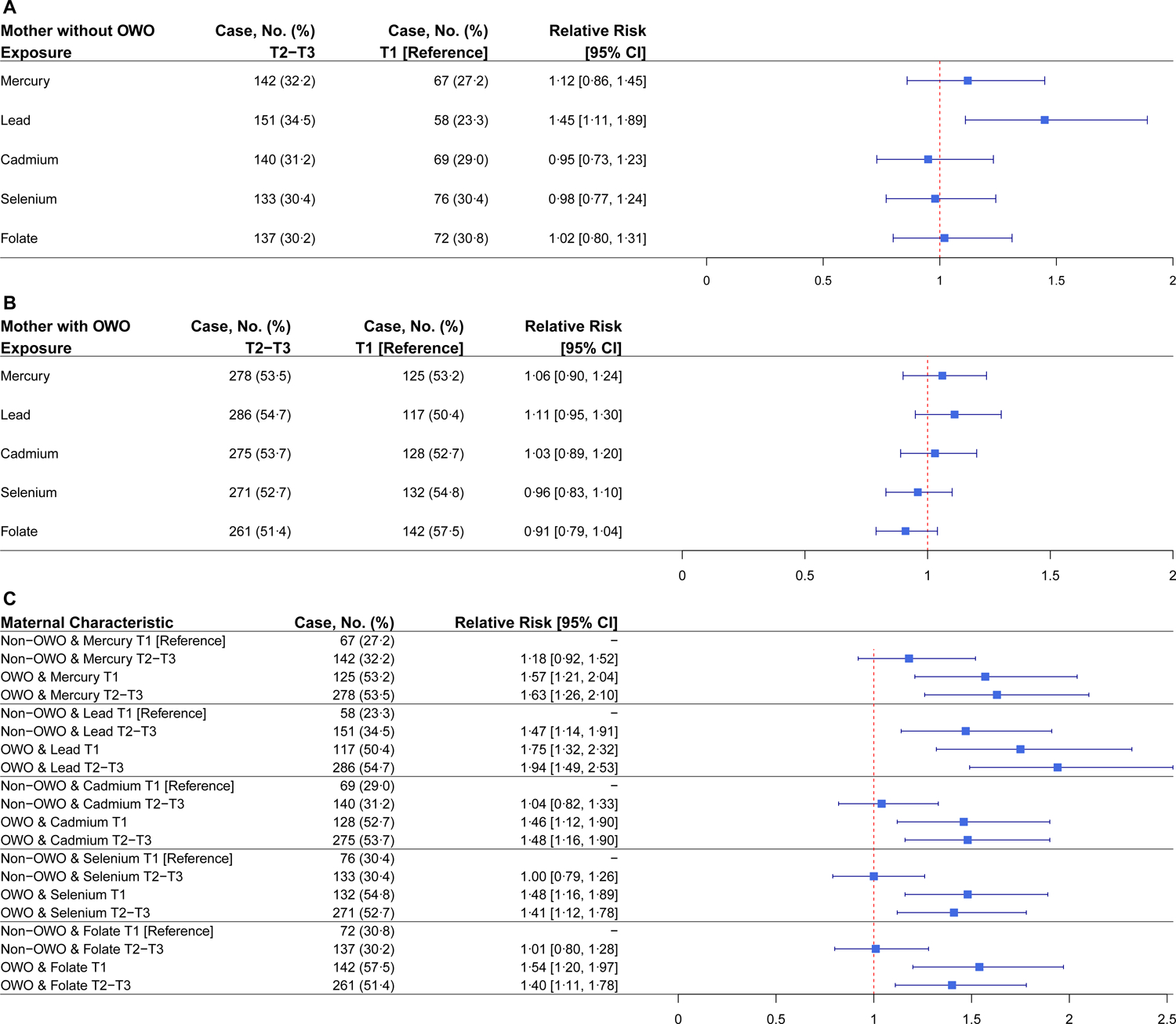
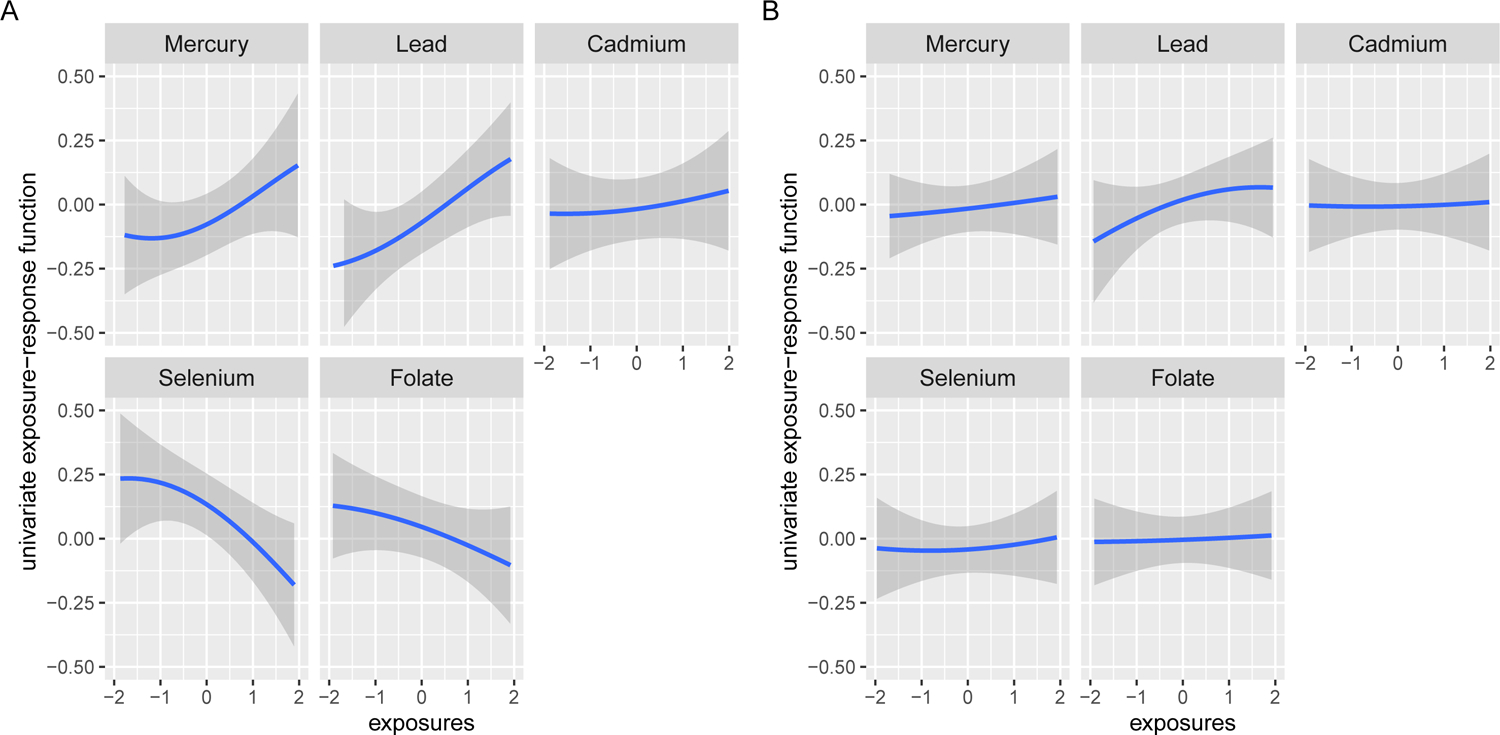
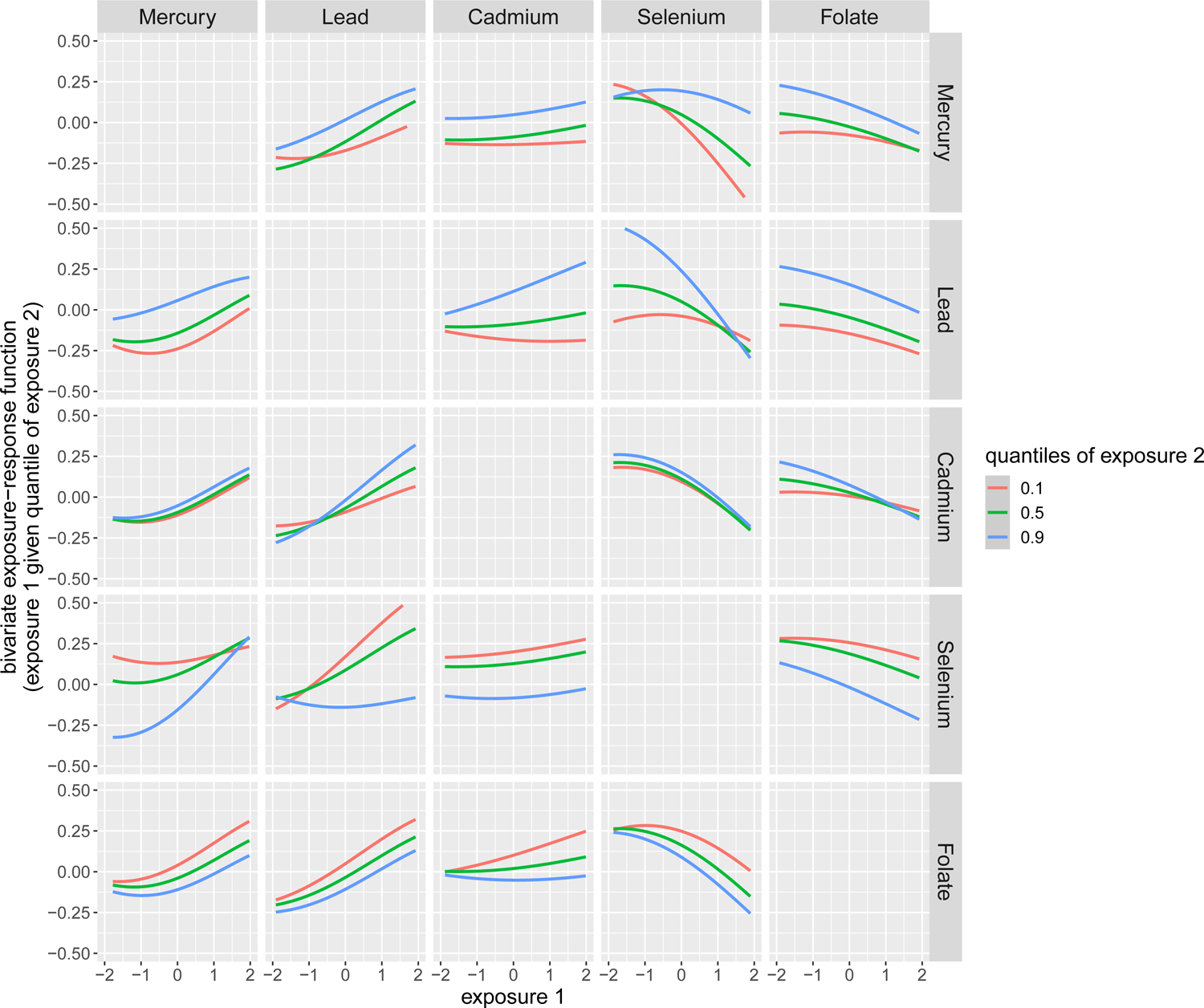
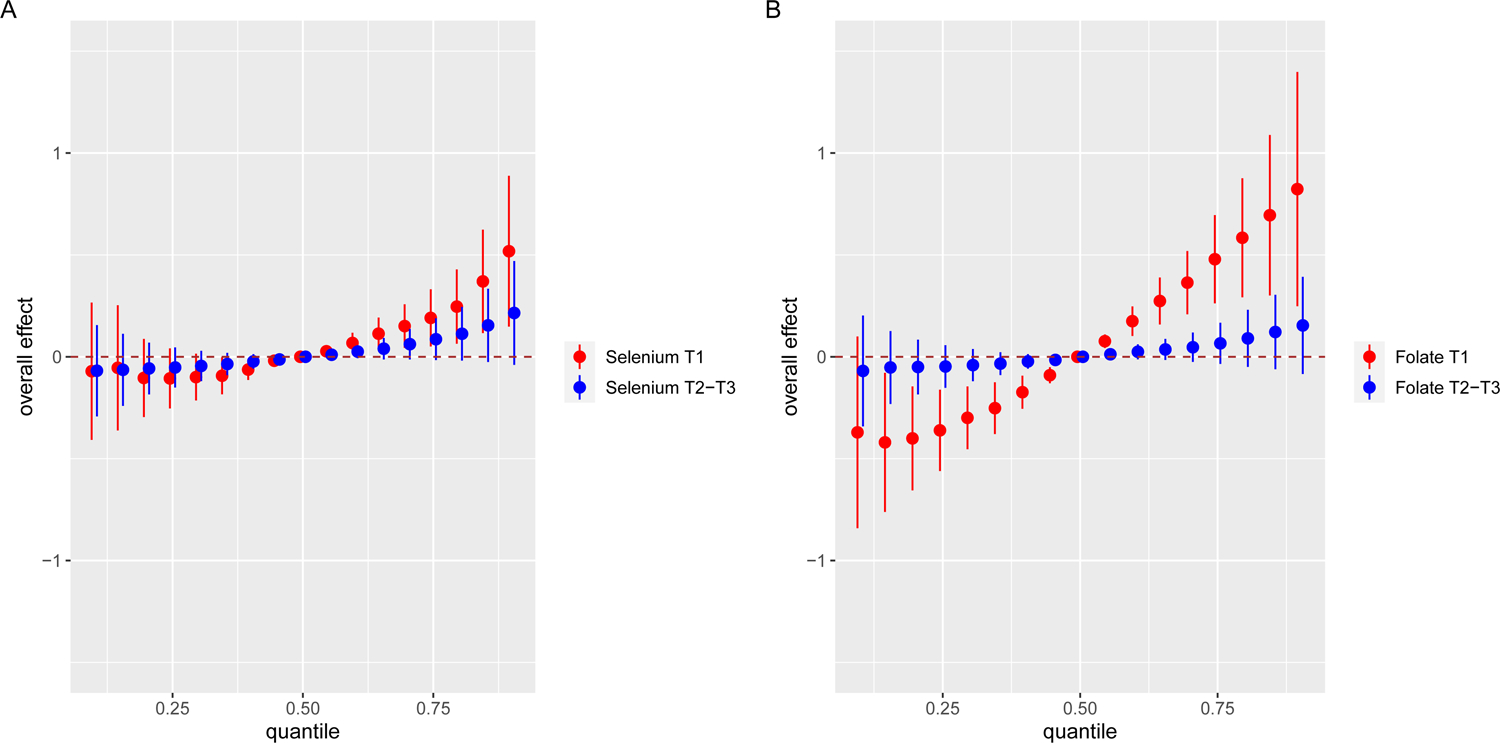
Results: In this sample of understudied US children, low-level in-utero co-exposure to Hg, Pb, and Cd was widespread. Besides individual positive associations of maternal Hg and Pb exposure with offspring OWO, BKMR clearly indicated a positive dose-response association between in-utero co-exposure to the three toxic metals and childhood OWO. Notably, the metal mixture-OWO association was more pronounced in children born to mothers with OWO; and in such a setting, the association was greatly attenuated if mothers had higher Se and folate levels.
Conclusions: In this prospective cohort of US children at high-risk of toxic metal exposure and OWO, we demonstrated that among children born to mothers with OWO, low-level in-utero co-exposure to Hg, Pb, and Cd increased the risk of childhood OWO; and that adequate maternal Se and folate levels mitigated the risk of childhood OWO.
Clinical trial registry number and website where it was obtained: NCT03228875.
© 2022. The Author(s), under exclusive licence to Springer Nature Limited.
Conflict of interest statement
Competing Financial Interests
The authors declare they have no actual or potential competing financial interests.
Figures
References
-
- WHO (World Health Organization). Preventing disease through healthy environment: Action is needed on chemicals of major public health concern 2010. [Available from: http://www.who.int/ipcs/features/chemicals_concern/en/.
-
- ATSDR (Agency for Toxic Substances and Disease Registry). Substance Priority List 2020. [Available from: https://www.atsdr.cdc.gov/spl/index.html.
-
- Shim YK, Lewin MD, Ruiz P, Eichner JE, Mumtaz MM. Prevalence and associated demographic characteristics of exposure to multiple metals and their species in human populations: The United States NHANES, 2007–2012. J Toxicol Environ Health A. 2017;80(9):502–12. 10.1080/15287394.2017.1330581. - DOI - PMC - PubMed
Publication types
MeSH terms
Substances
Associated data
Grants and funding
LinkOut - more resources
Full Text Sources
Medical
