Review
. 2022 May 19;22(1):196.
doi: 10.1186/s12935-022-02605-y.

Recent advances in targeted drug delivery systems for resistant colorectal cancer

Affiliations
Review

Recent advances in targeted drug delivery systems for resistant colorectal cancer

Masoumeh Sharifi-Azad et al. Cancer Cell Int. .

Abstract

Colorectal cancer (CRC) is one of the deadliest cancers in the world, the incidences and morality rate are rising and poses an important threat to the public health. It is known that multiple drug resistance (MDR) is one of the major obstacles in CRC treatment. Tumor microenvironment plus genomic instability, tumor derived exosomes (TDE), cancer stem cells (CSCs), circulating tumor cells (CTCs), cell-free DNA (cfDNA), as well as cellular signaling pathways are important issues regarding resistance. Since non-targeted therapy causes toxicity, diverse side effects, and undesired efficacy, targeted therapy with contribution of various carriers has been developed to address the mentioned shortcomings. In this paper the underlying causes of MDR and then various targeting strategies including exosomes, liposomes, hydrogels, cell-based carriers and theranostics which are utilized to overcome therapeutic resistance will be described. We also discuss implication of emerging approaches involving single cell approaches and computer-aided drug delivery with high potential for meeting CRC medical needs.

Keywords: Artificial intelligence; Cancer stem cells; Circulating tumor cells; Colorectal cancer; Drug delivery; Exosome; Single cell approaches.


Conflict of interest statement

The authors declare no competing interests.

Figures

Fig. 1
Fig. 1
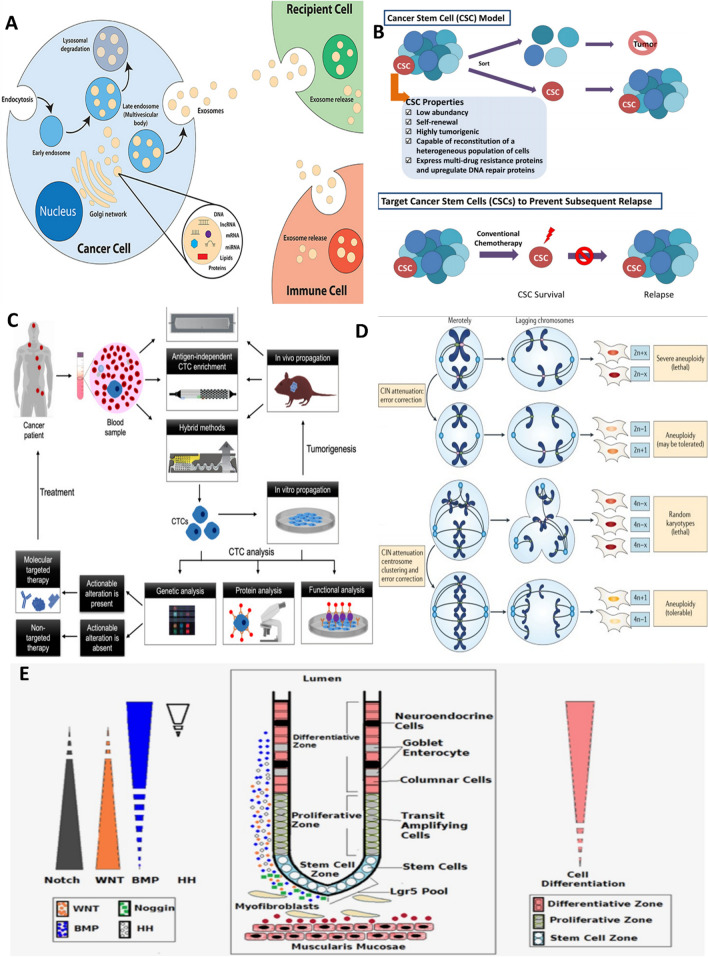
Representation of different drug resistance mechanisms in CRC. a cancer-derived exosome. Reprinted from [24] under Creative Commons Attribution License.4.0. Copyright (2019) Frontiers. b Cancer stem cells. Reprinted from [25] with permission, Copyright (2018) John Wiley and Sons. c Circulating tumor cells. Reprinted from [26] under Creative Commons Attribution License.4.0. Copyright (2021) John Wiley and Sons. d Genomic instability. Reprinted from [27] with permission, Copyright (2018) Springer Nature. e Signaling pathways. Reprinted from [28] with permission, Copyright (2015) John Wiley and Sons
Fig. 2
Fig. 2
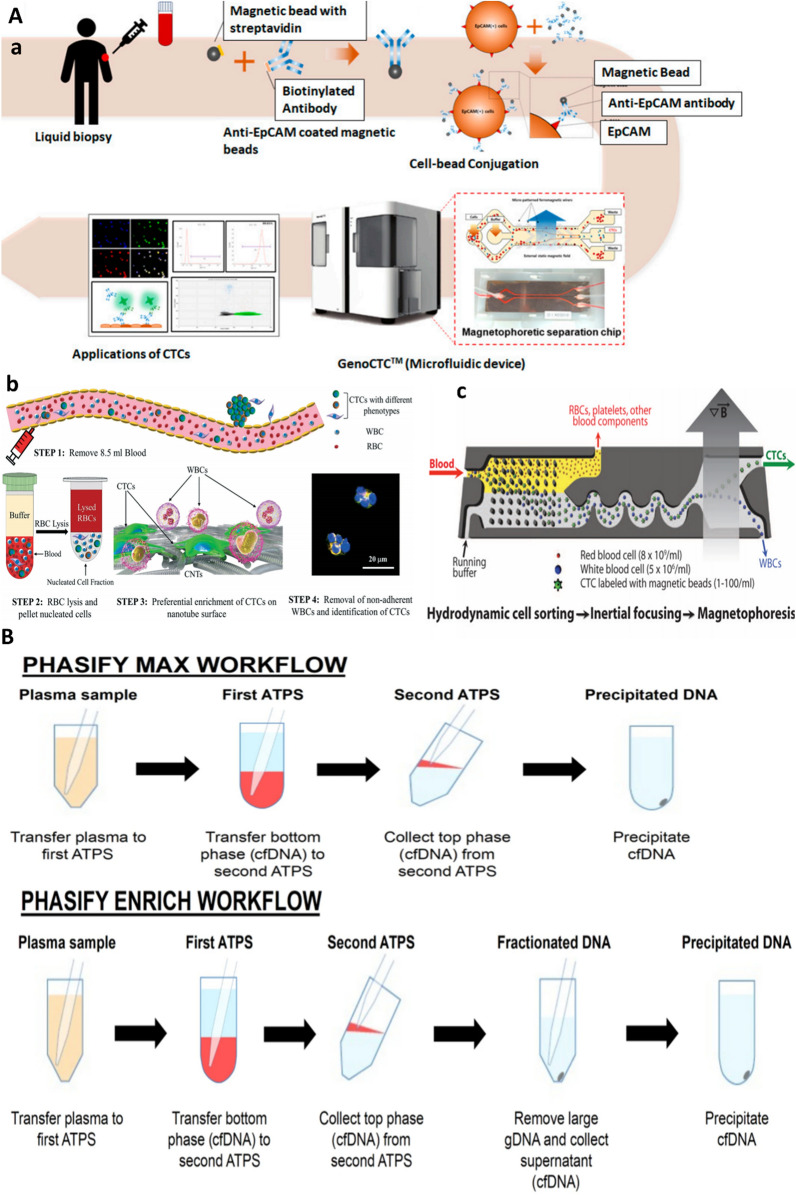
Methods for circulating materials analysis for cancer precision therapy. A. CTC enrichment methods. a Antigen-dependent (immunoaffinity-based). From [46] under Creative Common Attribution License.3.0. Copyright (2020) MDPI, b Antigen-independent methods (e.g. density and size based). Preferential attachment of CTCs on a nanotube chip. Adopted from [47] under Creative Common Attribution License.3.0. Copyright (2019) RSC. c Combination approach. Inertial microfluidic focusing for tumor antigen-dependent and independent capture of CTC. Adopted with permission from [48] Copyright (2013) AAAS. B Schematic of DNA isolation process with PHASIFY MAX and PHASIFY ENRICH. The PHASIFY method uses serial two-phase liquid extraction systems to isolate and purify cfDNA from a starting plasma sample. In the first aqueous two-phase systems (ATPSs), DNA partitions to the bottom phase (red), which is then extracted and transferred to a second ATPS. After phase separation, the DNA partitions to the top phase (red), which is then extracted. In the PHASIFY MAX workflow, all extracted DNA undergoes DNA precipitation. In the PHASIFY ENRICH workflow, the extracted DNA is first mixed with a fractionation solution to remove contaminating DNA and enrich the sample with potential tumor cfDNA. The enriched sample then undergoes DNA precipitation. Reprinted from [40] with permission, Copyright (2021) Springer Nature
Fig. 3
Fig. 3
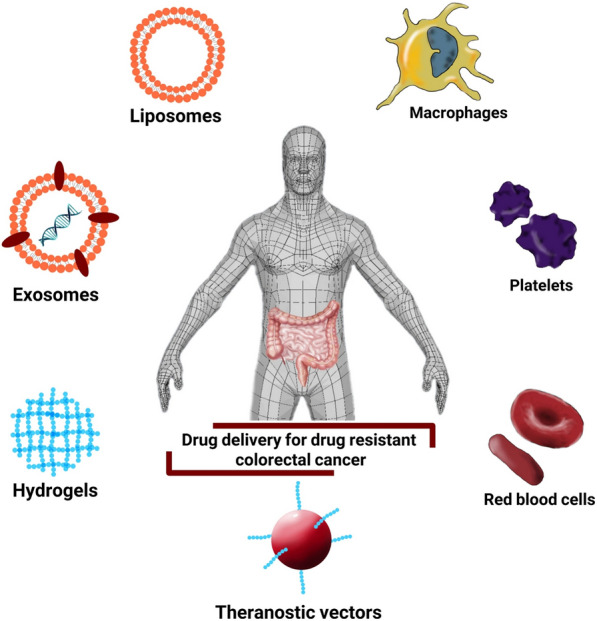
Variety of advanced NTDDs for targeting resistant colorectal cancer
Fig. 4
Fig. 4
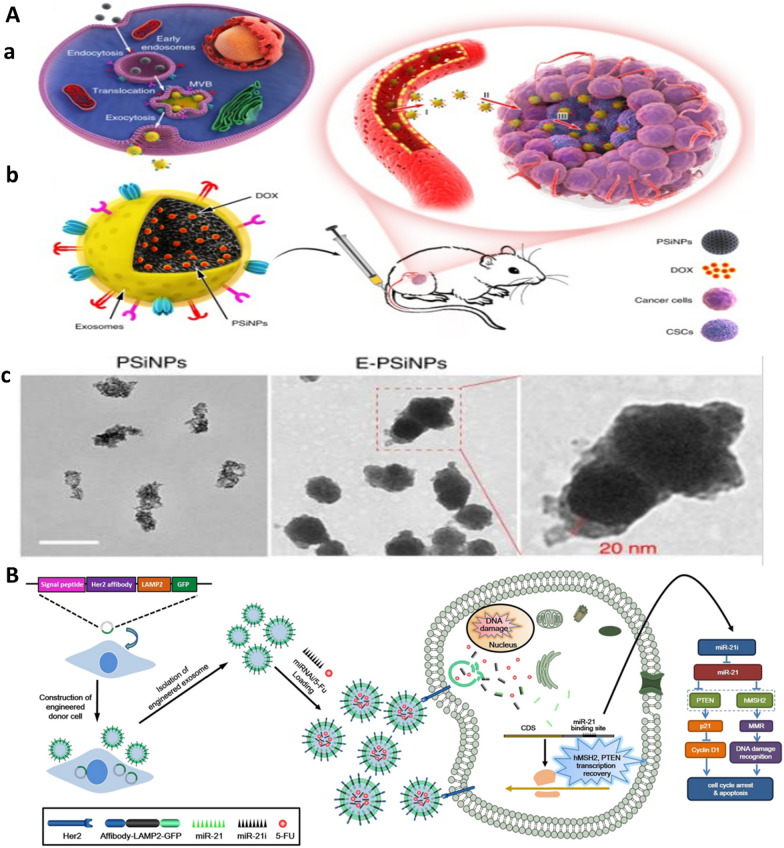
Exosome-based drug carriers for targeted resistant CRC treatment. A. a Illustration of the preparation of DOX@E-PSiNPs. DOX@PSiNPs are endocytosed into cancer cells after incubation, then localized in MVBs and autophagosomes. After MVBs or amphisomes fuse with cell membrane, DOX@E-PSiNPs are exocytosed into extracellular space. b Schematics showing how DOX@E-PSiNPs efficiently target tumor cells after intravenous injection into tumor-bearing mice. (I) DOX@E-PSiNPs efficiently accumulate in tumor tissues; (II) DOX@E-PSiNPs penetrate deeply into tumor parenchyma; and (III) DOX@E-PSiNPs are efficiently internalized into bulk cancer cells and CSCs to produce strong anticancer efficacy. c TEM images of PSiNPs and E-PSiNPs. Adopted from [94] under Creative Common Attribution License.4.0. Copyright (2019), Springer Nature. B Engineered exosome specifically target CSCs and reverse CRC drug resistance. From [95] with permission. Copyright (2020) Springer Nature
Fig. 5
Fig. 5
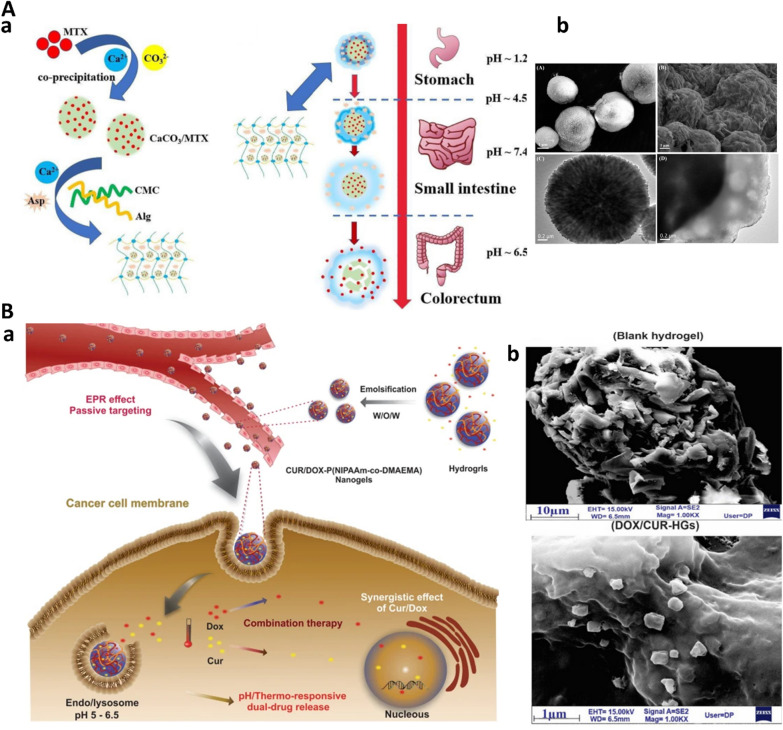
Advanced hydrogel-based drug delivery systems for CRC. A. Hybrid hydrogel. Dual hydrogel-based drug delivery system (DDDS). a Schematic design and working principle. b TEM images of DDDS. From [120] with permission. Copyright (2021) Elsevier. B. Bioresponsive hydrogel. pH/thermo-sensitive hydrogels for CRC treatment. a. schematic design of dual-responsive nanogel. b. TEM images of blank nanogel and DOX/CUR- pH thermosensitive nanogel. From [121] under Creative Common Attribution License.4.0. Copyright (2021) Springer Nature
Fig. 6
Fig. 6
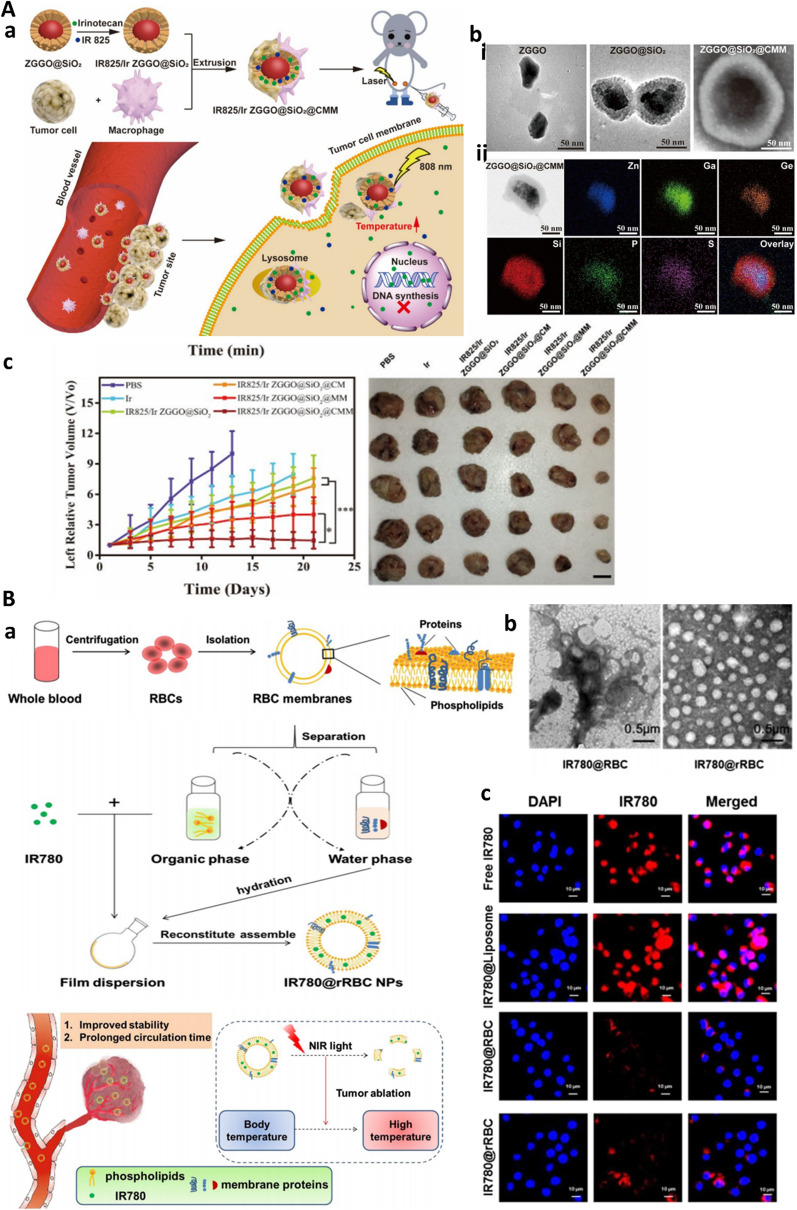
Bionic-based drug delivery to CRC affords immune-cell evasion for efficient NP penetration into CRC microenvironment. A Macrophage based drug delivery. a, Schematics of cancer cell-macrophage hybrid membrane camouflaged IR825/Ir ZGGO@SiO2@CMM nanoplatform for resistant CRC therapy. b TEM images of (i) developed nanomaterials and (ii) element mapping images, c The antitumor effect of combined chemo- and photothermal therapy using hybrid camouflaged system on CT26 cancer in mice. Reproduced from [127] with permission. Copyright (2020) American Chemical Society. B Biomimetic recombinant red blood cell membranes for improved photothermal therapy of colon cancer. a The scheme and procedure for the preparation of IR780 loaded reconstitute RBC membrane nanoparticles (IR780@rRBC NPs). b TEM images of IR780@rRBC NPs. c In vivo cellular uptake and immune-cell escape potential of RBC-stealth NPs on Raw264.7 macrophage cells. Reprinted with permission from [130] under Creative Common Attribution License.4.0. Copyright (2021), Springer Nature

References

    1. Siegel RL, Miller KD, Sauer AG, Fedewa SA, Butterly LF, Anderson JC, Cercek A, Smith RA, Jemal A. Colorectal cancer statistics, 2020, CA. Cancer J Clin. 2020;70:145–164. doi: 10.3322/CAAC.21601. - DOI - PubMed
    1. Thanikachalam K, Khan G. Colorectal cancer and nutrition. Nutrients. 2019;11:164. doi: 10.3390/nu11010164. - DOI - PMC - PubMed
    1. AbouAitah K, Hassan HA, Swiderska-Sroda A, Gohar L, Shaker OG, Wojnarowicz J, Opalinska A, Smalc-Koziorowska J, Gierlotka S, Lojkowski W. Targeted nano-drug delivery of colchicine against colon cancer cells by means of mesoporous silica nanoparticles. Cancers. 2020 doi: 10.3390/cancers12010144. - DOI - PMC - PubMed
    1. Mehrgou A, Ebadollahi S, Seidi K, Ayoubi-Joshaghani MH, Yazdi AA, Zare P, Jaymand M, Jahanban-Esfahlan R. Roles of miRNAs in colorectal cancer: therapeutic implications and clinical opportunities. Adv Pharm Bull. 2021;11:233–247. doi: 10.34172/APB.2021.029. - DOI - PMC - PubMed
    1. Majidinia M, Darband SG, Kaviani M, Nabavi SM, Jahanban-Esfahlan R, Yousefi B. Cross-regulation between Notch signaling pathway and miRNA machinery in cancer. DNA Repair (Amst) 2018;66–67:30–41. doi: 10.1016/J.DNAREP.2018.04.002. - DOI - PubMed

LinkOut - more resources