


Mg(OH)2 nanosheets on Ti with immunomodulatory function for orthopedic applications
- PMID: 35592137
- PMCID: PMC9113411
- DOI: 10.1093/rb/rbac027
Mg(OH)2 nanosheets on Ti with immunomodulatory function for orthopedic applications
Abstract
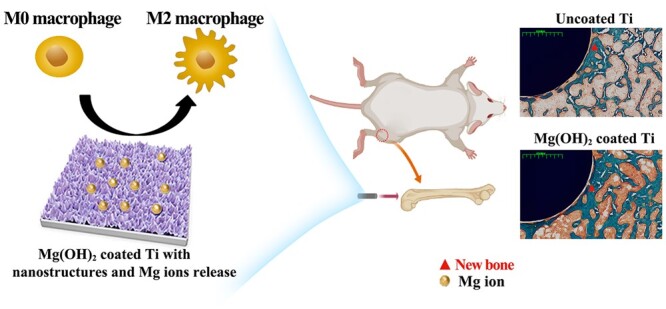
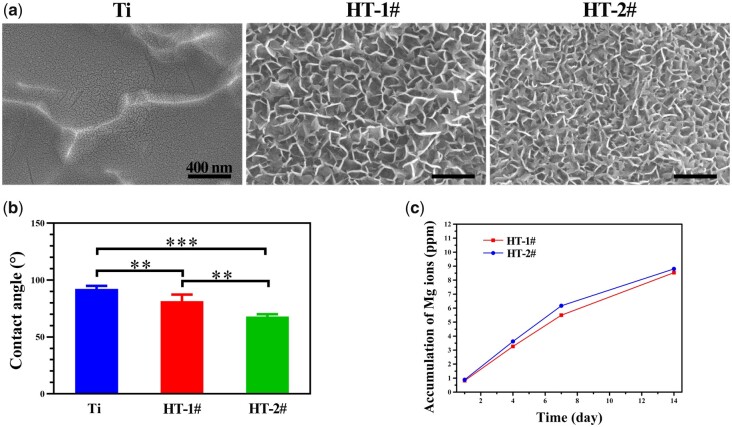
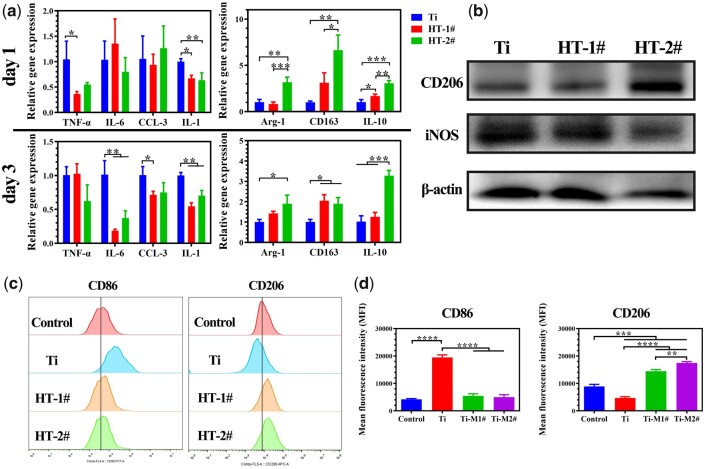
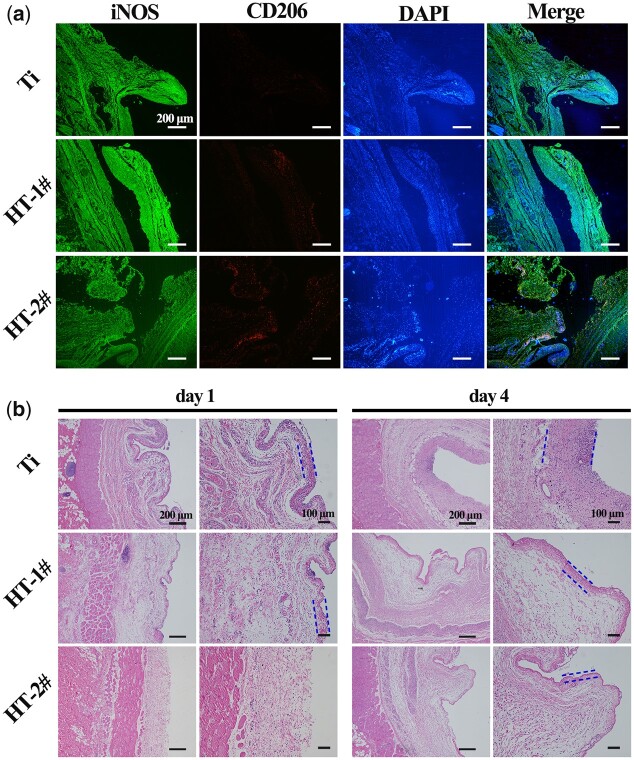
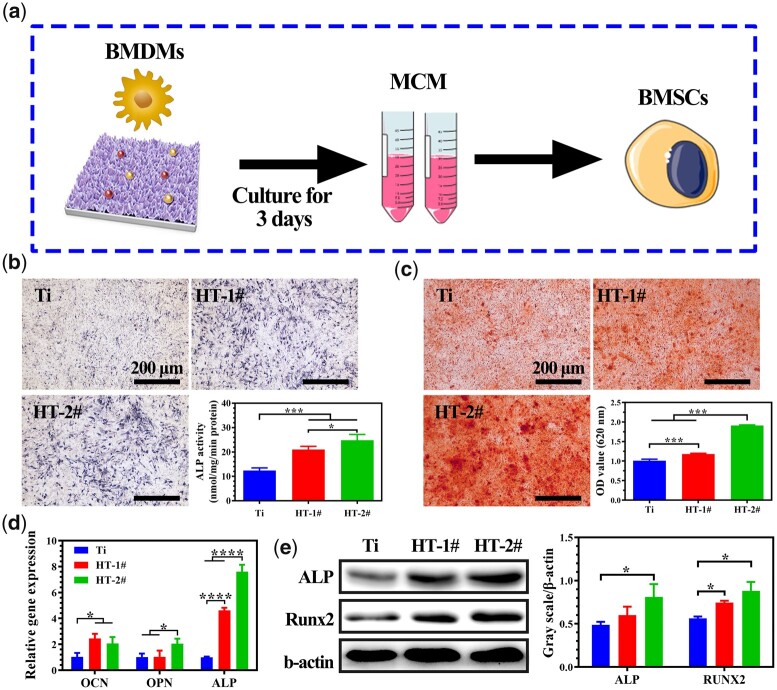
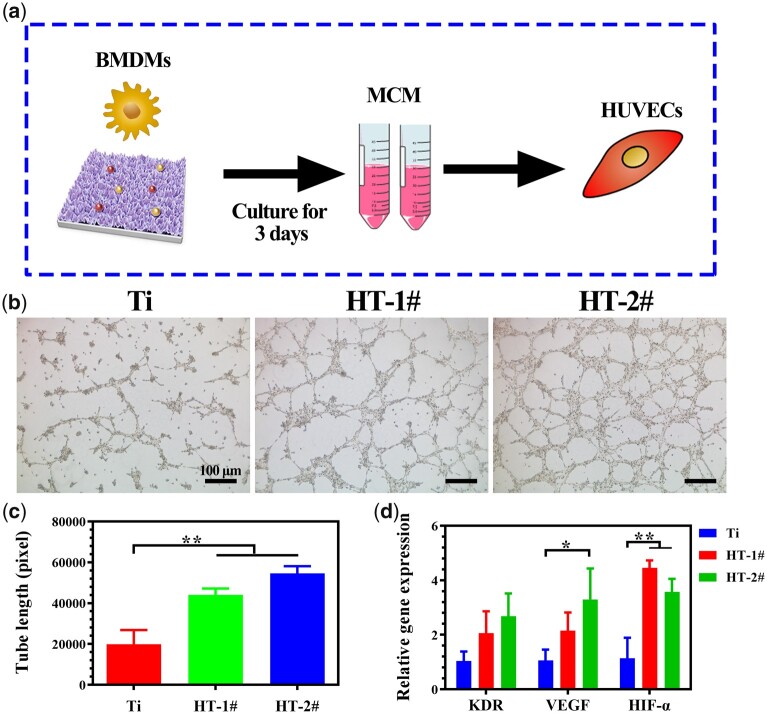
Macrophages play a vital role for guiding the fate of osteogenesis- related cells. It is well known that nano-topography and bioactive ions can directly enhance osteogenic behavior. However, the effects of nano-structure combined with bioactive ions release on macrophage polarization and the following osteogenesis and angiogenesis are rarely reported. Herein, Mg(OH)2 films with nano-sheet structures were constructed on the surface of Ti using hydrothermal treatment. The film presented nano-sheet topography and sustained release of Mg ions. The results of in vitro culture of bone marrow-derived macrophages (BMDMs), including PCR, western blot and flow cytometry suggested that the nano-Mg(OH)2 films were more favorable for macrophages polarizing to tissue healing M2 phenotype. Moreover, air-pouch model confirmed that the nano-Mg(OH)2 film coated Ti would induce milder inflammation and thinner fibrous layer in vivo, compared with untreated Ti. Furthermore, macrophages-conditioned culture mediums were collected from nano-Mg(OH)2 coated Ti group was superior for the osteogenic behaviors of mice bone marrow stem cells and the angiogenic behaviors of human umbilical vein endothelial cells. With harmonious early inflammatory response and subsequently improved osteogenesis and angiogenesis, the nano-Mg(OH)2 coated Ti is promising for orthopedic applications.
Keywords: immunomodulation; nano-magnesium hydroxide; osteogenesis; titanium.
© The Author(s) 2022. Published by Oxford University Press.
Figures
References
-
- Geetha M, Singh AK, Asokamani R, Gogia AK.. Ti based biomaterials, the ultimate choice for orthopaedic implants—a review. Prog Mater Sci 2009;54:397–425.
-
- Barik A, Chakravorty N.. Targeted drug delivery from titanium implants: a review of challenges and approaches. In: Pokorski M (ed). Trends Biomed Res, 2020, 1–17. - PubMed
-
- Spriano S, Yamaguchi S, Baino F, Ferraris S.. A critical review of multifunctional titanium surfaces: new frontiers for improving osseointegration and host response, avoiding bacteria contamination. Acta Biomater 2018;79:1–22. - PubMed
-
- Wei Y, Liu Z, Zhu X, Jiang L, Shi W, Wang Y, Xu N, Gang F, Wang X, Zhao L, Lin J, Sun X.. Dual directions to address the problem of aseptic loosening via electrospun PLGA @ aspirin nanofiber coatings on titanium. Biomaterials 2020;257:120237. - PubMed
LinkOut - more resources
Full Text Sources
