


Distribution of polyphenolic compounds, antioxidant potential, and free amino acids in Ziziphus fruits extract; a study for determining the influence of wider geography
- PMID: 35592302
- PMCID: PMC9094459
- DOI: 10.1002/fsn3.2726
Distribution of polyphenolic compounds, antioxidant potential, and free amino acids in Ziziphus fruits extract; a study for determining the influence of wider geography
Abstract
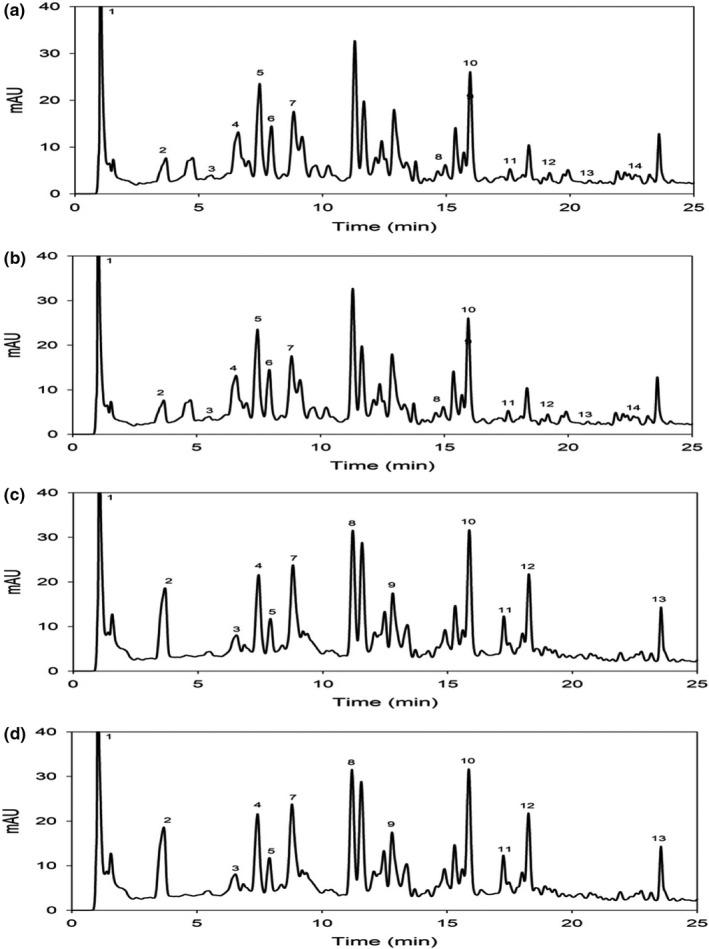
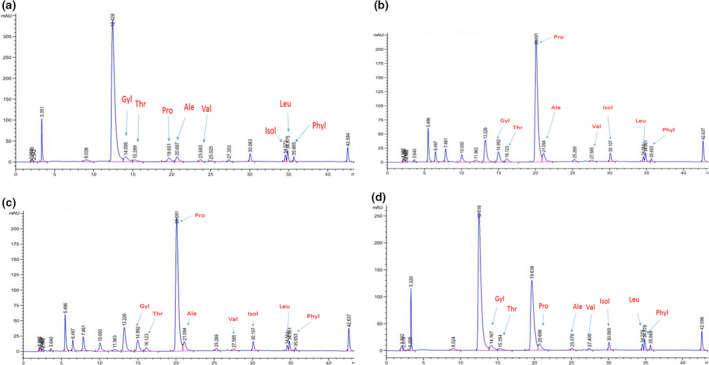
Ziziphus fruits have attracted much attention within the field of medicine due to their high potential against central nervous system disorders. Abundance of secondary metabolites and their composition is key to the pharmaceutical potential and commercial qualities of plants. The in vitro antioxidant activities of Ziziphus nummularia (Burm. f.) and Ziziphus oxyphylla Edgew fruit extract were analyzed using 2,2-diphenil-1-pycrilhydrazyl (DPPH) and 2,2'-azino-bis (3-ethylbenzothiazoline)-6-sulfonic acid (ABTS) free radical scavenging assay methods. Phenolic profiles were explored using high-performance liquid chromatography-diode array detector (HPLC-DAD). The result revealed high concentration of polyphenols and their antioxidant potential. In Z. nummularia, the total phenolic content (TPC) (80.270 ± 0.422 μg/ml), DPPH (62.03 ± 0.98 μg/ml), ABTS (66.32 ± 0.73 μg/ml), and TFC (90.683 ± 0.274 μg/ml) were recorded. However, in Z. oxyphylla, DPPH and ABTS values were 60.66 ± 0.56 μg/ml and 61.55 ± 0.77 μg/ml, respectively, indicative of the impacts of climate and soil nutrients. The overall screening of phytochemicals revealed that both the Ziziphus species contain diverse bioactive compounds, including spinacetine-3-O-(2 feruloyl glucopyranosyl)-glucopyranoside, kaempferol-3-O-glucoside-7-O-glucoside, and caffeic acid; p-hydroxybenzoyl hexose, p-coumaric acid, salicylic acid, and ellagic acid pentoxide. Additionally, the highest concentrated amino acid noted was of Lue 0.19 g/100 g with 596.00 retention time (RT), followed by Thr>Ale>Isl>Phya>Val in Z. nummularia. Similarly, the highest concentration of Lue amino acid was recorded as 0.18/100 g with 564.52 RT followed by Pr>Thr>Ale>Lue>Isl>Phya>Val in all genotypes of Z. oxyphylla. Reporting of polyphenols rich and stable species along with identification of favorable regions of cultivation for amino acid, polyphenols, and higher antioxidant potential may lead the way for the identification of elite clones of the species as well as may result in new drug discovery.
Keywords: Ziziphus; antioxidative effects; ecological regions; free amino acid; functional food; phenolic compounds.
© 2022 The Authors. Food Science & Nutrition published by Wiley Periodicals LLC.
Conflict of interest statement
The authors declare that they have no conflict of interest.
Figures

References
-
- Aaby, K. , Ekeberg, D. , & Skrede, G. (2007). Characterization of phenolic compounds in strawberry (Fragaria× ananassa) fruits by different HPLC detectors and contribution of individual compounds to total antioxidant capacity. Journal of Agricultural and Food Chemistry, 55(11), 4395–4406. - PubMed
-
- Abbaszadeh, S. , Radjabian, T. , & Taghizadeh, M. (2013). Antioxidant activity, phenolic and flavonoid contents of Echium species from different geographical locations of Iran. Journal of Medicinal Plants and By‐Products, 2(1), 23–31.
-
- Ahmad, S. , Ullah, F. , Sadiq, A. , Ayaz, M. , Imran, M. , Ali, I. , Shah, M. R. (2016). Chemical composition, antioxidant and anticholinesterase potentials of essential oil of Rumex hastatus D. Don collected from the Northwest of Pakistan. BMC Complementary and Alternative Medicine, 16(1), 1–11. - PMC - PubMed
LinkOut - more resources
Full Text Sources
Research Materials
Miscellaneous
