


Left ventricular outflow tract thrombus in a patient with COVID-19-a ticking time bomb: a case report
- PMID: 35592751
- PMCID: PMC9113322
- DOI: 10.1093/ehjcr/ytac191
Left ventricular outflow tract thrombus in a patient with COVID-19-a ticking time bomb: a case report
Abstract
Background: Coronavirus disease 2019 (COVID-19) is a manifestation of severe acute respiratory syndrome coronavirus 2, which results in many different complications including left ventricular (LV) thrombi.
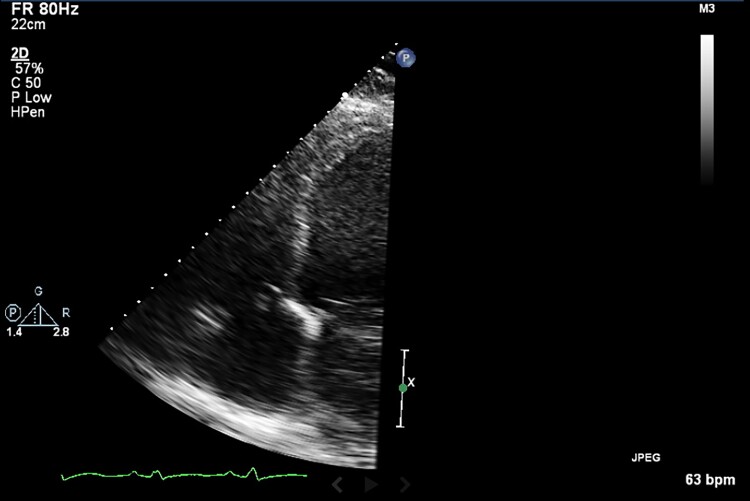
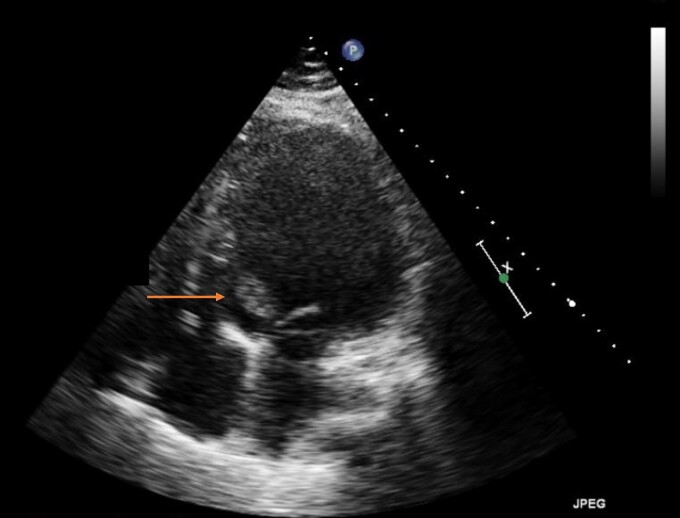
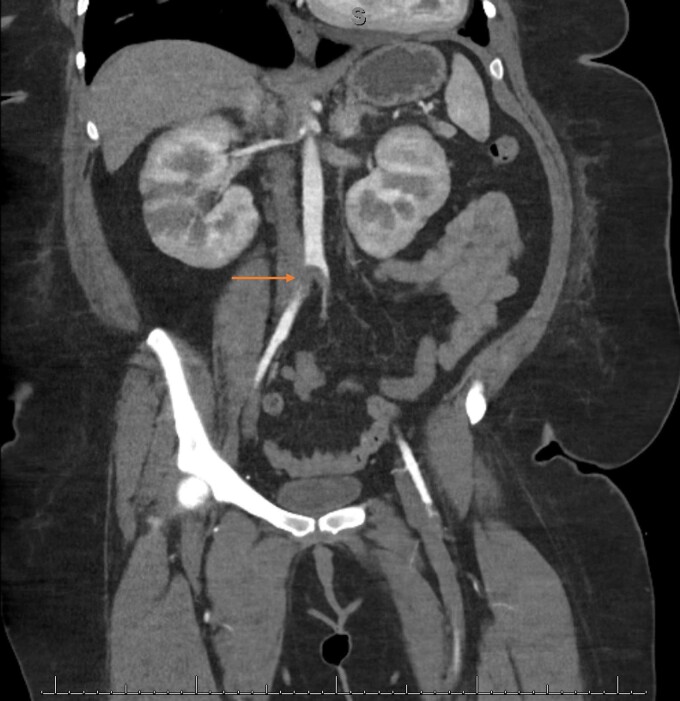
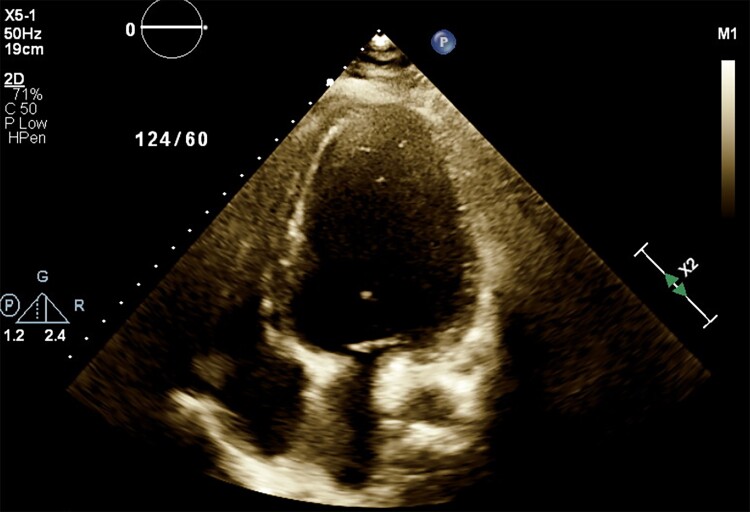
Case summary: We present a 30-year-old female presenting with chest pain and shortness of breath. Patient had an extensive history including heart failure with an ejection fraction 15-20% and COVID-19 2 months ago. Echocardiogram revealed a 3.3 cm × 1.7 cm LV thrombus which was not present 4 months ago before her diagnosis of COVID-19. The LV thrombus embolized resulting in an embolus extending from the distal infrarenal abdominal aorta to the common iliac arteries bilaterally. Repeat COVID pre-procedure was positive. She underwent bilateral femoral artery cutdown, bilateral iliac artery embolectomy, superficial femoral artery embolectomy, and bilateral lower extremity fasciotomy. An extensive workup for the aetiology of the LV thrombus turned out to be negative and COVID-19 was deemed to be the aetiology of the thrombus. The patient was bridged from apixaban to warfarin and was successfully discharged within a few weeks.
Discussion: Hypercoagulability is a known complication of COVID-19 causing thrombi in various parts of the body including the LV. Early recognition with echocardiography, especially in patients with heart failure, and prompt treatment is key to avoid further complications such as embolization.
Keywords: COVID-19; Case report; Embolization; Heart failure; Hypercoagulability; Left ventricular thrombus.
© The The Author(s) 2022. Published by Oxford University Press on behalf of the European Society of Cardiology.
Figures

References
-
- John Hopkins Coronavirus Resource Center. John Hopkins University & Medicine. https://coronavirus.jhu.edu/(02 April 2022).
-
- Wiersinga WJ, Rhodes A, Cheng AC, Peacock SJ, Prescott HC. Pathophysiology, transmission, diagnosis, and treatment of coronavirus disease 2019 (COVID-19): a review. JAMA 2020;324:782–793. - PubMed
-
- Panigada M, Bottino N, Tagliabue P, Grasselli G, Novembrino C, Chantarangkul V, Pesenti A, Peyvandi F, Tripodi A. Hypercoagulability of COVID-19 patients in intensive care unit. A report of thromboelastography findings and other parameters of hemostasis. J Thromb Haemost 2020;18:1738–1742. - PMC - PubMed
Publication types
LinkOut - more resources
Full Text Sources